
News
Cargill extends deforestation commitment
22 Sep 2015Cargill has taken the next step forward in meeting its commitment to do its part to end deforestation by 2030 with a new Policy on Forests. Backed by forest protection action plans for Cargill’s priority commodity supply chains, the policy is said to set a comprehensive approach for the company in its efforts to prevent […]

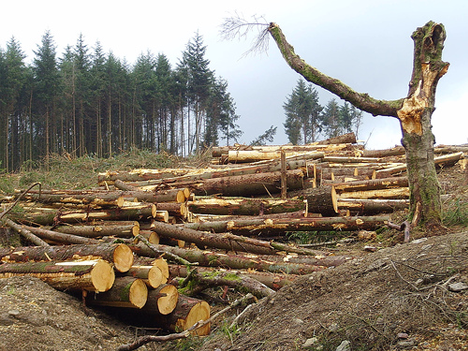 Cargill has taken the next step forward in meeting its commitment to do its part to end deforestation by 2030 with a new Policy on Forests. Backed by forest protection action plans for Cargill’s priority commodity supply chains, the policy is said to set a comprehensive approach for the company in its efforts to prevent forest loss.
“Deforestation is a global issue, but a local challenge. We’re committed to working with farmers, government, business, advocacy organizations and consumers to help craft and implement solutions tailored to the diverse landscapes we seek to protect,” said Paul Conway, Cargill’s vice chairman. “Our Policy on Forests is one of the ways we are working to feed a growing population while also sustaining vital forest ecosystems for generations to come.”
In September 2014, Cargill endorsed The New York Declaration on Forests at the United Nations Climate Summit, pledging to do its part to halve deforestation by 2020 and end it completely by 2030. The new policy and action plans go a step further by outlining specific measures that will help the company reach its goal, including the following:
- Employing a multi-stakeholder approach, from grower to consumer. Cargill will work with customers – ensuring we help them meet their goals and timeframes for deforestation-free supply chains – farmers and suppliers, government and civil society organizations to find solutions that allow forests and agriculture to thrive.
- Evaluating future capital investments based on the policy’s forest protection principles.
- Continuing efforts to ensure a sustainable palm supply chain in Indonesia and Malaysia; the company is on track to meet its commitment of traceability to mill for all the palm it ships by December 31, 2015.
- Supporting an extension of the Brazilian soy moratorium indefinitely until a viable alternative approach is reached while moving forward with efforts to help implement the Brazilian Forest Code.
- Continuing to grow a sustainable soy program in Paraguay by mapping its total footprint in the country and working with government and public institutions to fully comply with the existing local forest code.
- Helping farmers in Zambia adopt best practices in agriculture, where Cargill directly sources cotton and maize from more than 70,000 farmers.
- Evaluating its strategic sourcing of fiber-based packaging and performing a risk analysis of its corrugated, paper bag and folding carton supply chains.
“We are working to be the most trusted source of sustainable products and services,” Conway said. “We believe healthy agricultural systems, healthy ecosystems and healthy communities are critical elements in sustainably feeding the world.”
Cargill’s focus on deforestation is part of a broader sustainability program. Earlier this year, David MacLennan, Cargill’s chairman and chief executive officer, convened a working group of senior leaders from across the organisation to identify the next generation of sustainability efforts at Cargill. The working group solicited input from key stakeholders, including customers and NGOs. It identified four focus areas where Cargill can best leverage its expertise and global scale to drive positive change: land use (including deforestation), water, climate change and farmer livelihoods.