
Ingredients Categories
Finished Products
Finished Food Categories
- Bakery
- Beverages / Juices
- Cereal and grain products
- Confectionery
- Cooking Fats & Oils
- Dairy
- Egg products
- Fruits & Vegetables
- Infant & Baby food
- Meat, Poultry & Fish
- Nuts & Seeds products
- Other Finished Food Categories
- Pet Food
- Plant-based foods
- Prepared foods
- Sauces & Seasonings
- Sweet & Savoury Spreads
Specialised Finished Products
- Bee products
- Biotic products
- Dietary supplements
- Energy drinks
- Functional beverages
- Functional confectionery
- Functional food
- Functional powders
- Meal replacement products
- Nutricosmetics
- Other Specialised Finished Products
- Pet Dietary Supplements
- Pharma and OTC products
- Protein products
- Sugar replacers / Sweeteners
Health & Wellness Areas
Delivery Formats
Operations & Services
- 3D printing
- Analysis/ Testing
- Auditing & certifications
- Blending & mixing
- Bottling
- Certification
- Clinical trials
- Co-packing
- Coating
- Consulting
- Contract manufacturing
- Drying
- Electrospinning
- Encapsulating
- Enzymatic processing
- Extracting
- Extrusion
- Fat structuring
- Fermentation
- Filling
- Flavour development
- Freeze drying
- Granulating/ grinding/ milling / mixing
- High-pressure processing
- Labelling
- Other Operations & Services
- Packaging
- Packet filling
- Pasturising
- Quality assurance
- Saccharification
- Shear cell processing
- Spray drying
- Sterilisation
- Storage & Logistics
- Tabletting
- Toasting / roasting
- Ultra-high temperature processing
Sponsored Content
4 advantages of sea salt for organic products
20 Nov 2023
Organic products are the big thing right now. Both in restaurants and at home, sustainability and pure products have been a hot topic in recent years. However, this also means that competition between organic food processors is at an unprecedented level. That's why it is essential to extend your company's sustainable philosophy to the smallest details, for example by using high-quality sea salt instead of conventional kitchen salt (PDV salt). We outline 4 specific advantages.
Organic products are the big thing right now. Both in restaurants and at home, sustainability and pure products have been a hot topic in recent years. However, this also means that competition between organic food processors is at an unprecedented level. That's why it is essential to extend your company's sustainable philosophy to the smallest details, for example by using high-quality sea salt instead of conventional kitchen salt (PDV salt). We outline 4 specific advantages.
Sea salt vs PDV salt
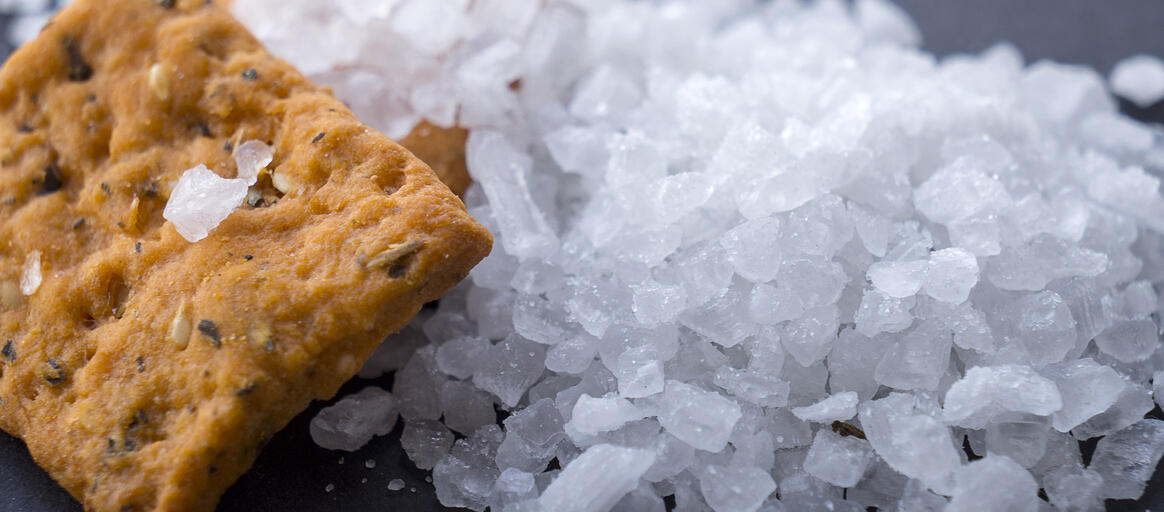
To get the most out of this article, it is important to understand the difference between sea salt and PDV salt. They both consist of sodium and chloride, but sea salt and conventional kitchen salt have a very different extraction process. For sea salt, natural seawater is evaporated in salt basins. The heat from the sun and wind help the water evaporate, forming a salt crust which is subsequently harvested. On the other hand, to extract PDV salt, brine from underground salt deposits is brought to the surface to be chemically purified, evaporated and crystallised into fine salt granules.
Sea salt ≠ sea salt
Precisely because sea salt is extracted from seawater, it contains slightly more natural impurities (such as grains of sand or shell fragments) than PDV salt. As a result, there are also major differences in quality and purity between the types of sea salt available.
MARSEL®, for example, the sea salt from Belgian manufacturer ZOUTMAN, stands out as it is refined using state-of-the-art techniques. This means that MARSEL® sea salt rivals the purity of PDV salt, and at the same time offers all the advantages of sea salt. The following advantages are therefore specifically applicable to high-quality sea salt such as MARSEL®.
1. No additives
When sea salt is refined, the raw salt crystals are only washed with pure water. In other words, unlike the refining process for PDV salt, no chemical substances are used. In addition, anti-caking agents are usually added to PDV salt. That's not necessary for sea salt such as MARSEL®. The crystal structure of the sea salt prevents clumps from forming. So there are no 'E' numbers indicated on the packaging of your organic product! This is a future-oriented and strategic choice, because more and more retailers are banning products that contain additives.
2. Low CO2 impact
People who buy organic products usually do so for two reasons: their own health, but above all the well-being of the environment. The fact that sea salt extraction has a smaller CO2 impact in comparison with PDV (vacuum) salt is clearly an extra bonus in that respect. To obtain PDV salt - the conventional kitchen salt - much more energy is required. In addition, soil layers are excavated in the process, which damages the environment. Sea salt, on the other hand, is happy to use natural forces in the form of sun and wind. The perfect addition to your sustainable philosophy.
3. Unrivalled taste sensation
How do you stand out from your competitors selling organic products? With the taste of your products of course. Sea salt gives you a helping hand. Especially in uses where coarser grains of salt are needed, you can really taste the difference between sea salt and PDV salt. Sea salt is nice and crunchy, creating an unrivalled taste sensation in your mouth. Apart from that, sea salt contains numerous minerals and trace elements which the human body needs, such as magnesium. These give sea salt a more subtle and smoother taste. Moreover, various studies have shown that consumers experience sea salt as tastier, healthier and more sustainable than traditional PDV salt in any case. More and more food producers are making good use of this by incorporating 'sea salt' on the packaging as an advantage.
4. The right grain size for every use
When sea salt is extracted, coarse, irregular salt crystals are formed. What is the advantage? During refining, sea salt can be broken up as fine or as coarse as you wish, unlike PDV salt. That way, you can obtain the right grain size for every product. Whether you season snacks with it, complement your spice mix, season sourdough bread to taste or any other product you want to give an extra kick: you can easily use sea salt for every purpose.
Sea salt is therefore clearly a sustainable and tasty choice for your organic products. So why doesn't MARSEL® have an organic label yet? The simple answer is that there is no organic certification for salt. It therefore can’t be certified organic (yet). At the European level, however, an expert group has been set up to make this possible.
Companies mentioned

Related categories

Get more of our news on Google
Set Ingredients Network as a 'Preferred Source' to get quicker access to the news you value.
Related news
A new standard for omega-3 experience
13 Apr 2026
Omega-3 quality is no longer just about purity or concentration. Senses™ by Naturmega delivers ultra-pure, sensory-optimised omega-3 with no taste, no odour, and improved stability.
Read more
PharmaLinea’s iron supplement delivers improvements in hemoglobin comparable to ferrous sulfate with fewer side effects
23 Feb 2026
PharmaLinea, a Slovenian developer and manufacturer of private label food supplements, has announced the completion of a clinical study evaluating its finished formulation for iron deficiency.
Read more
LomaChelateX® – power in magnesium bisglycinate
12 Feb 2026
Gentle and effective: magnesium bisglycinate is setting a new standard. Through its LomaChelateX® brand, Dr. Paul Lohmann® delivers magnesium bisglycinate and a broad range of fully reacted mineral bisglycinates made in Germany.
Read more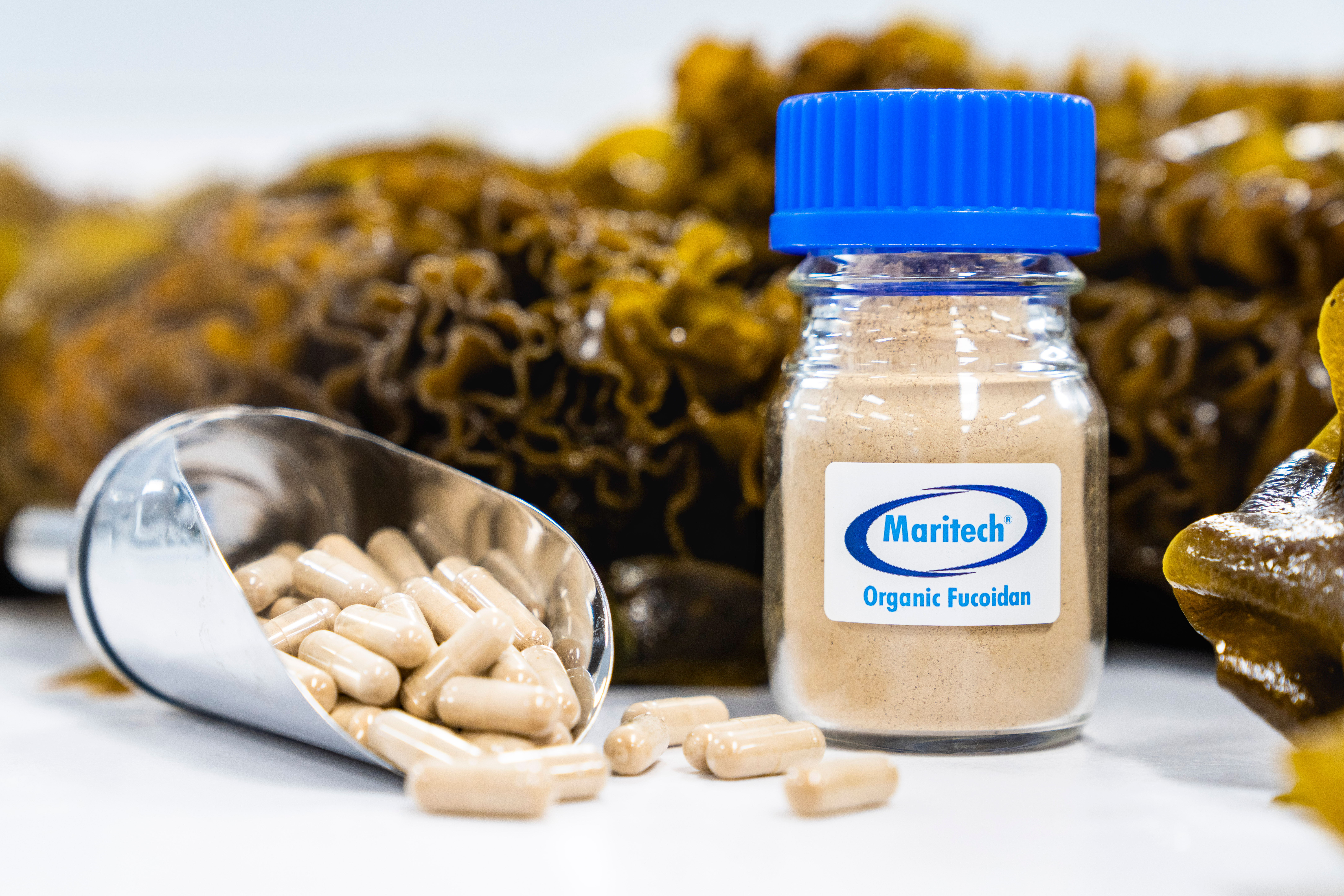
Fucoidan leader reports record production
22 Jan 2026
The global leader in fucoidan science, Marinova Pty Ltd, reported record annual fucoidan production for 2025. The company's total production volume has more than doubled over the past three years.
Read more
India Honours Ashwagandha with Commemorative Postal Stamp at WHO Global Summit
6 Jan 2026
HYDERABAD, December 20, 2025 – India’s Prime Minister Mr. Narendra Modi, alongside WHO Director-General Dr. Tedros Adhanom Ghebreyesus, released a commemorative postal stamp honoring ashwagandha at the recently concluded Second WHO Global Traditional...
Read more
PharmaLinea delivers actionable 2026 insights at the first ever NutraLoop™ Summit
22 Dec 2025
PharmaLinea held its first-ever NutraLoop™ Summit this December. The virtual event featured 12 speakers from companies such as IQVIA, NHCO, Radicle Science, and BeyondBrands, who provided comprehensive insights across the scientific and commercia...
Read more
FrieslandCampina strengthens its global protein position with acquisition of Wisconsin Whey Protein
11 Dec 2025
Royal FrieslandCampina N.V. intends to acquire Wisconsin Whey Protein, a respected producer of whey protein isolates in the United States. Wisconsin Whey Protein will become part of FrieslandCampina Ingredients, a global leader in proteins and prebioti...
Read more
dsm-firmenich names ‘Frosted Star Anise’ as Flavor of the Year 2026, capturing a global desire for warmth and freshness
11 Dec 2025
Kaiseraugst (Switzerland), Maastricht (Netherlands), December 5, 2025 dsm-firmenich, innovators in nutrition, health, and beauty, announces ‘Frosted Star Anise’ as its Flavor of the Year for 2026. This...
Read more
Balchem Makes Strategic Investment in U.S. Food Ingredients Market with New Microencapsulation Manufacturing Facility
11 Dec 2025
Montvale, New Jersey, (10 December, 2025) – Balchem, a leading global manufacturer of specialty ingredients for human nutrition and health, is pleased to announce the development of a new, high-capacity man...
Read more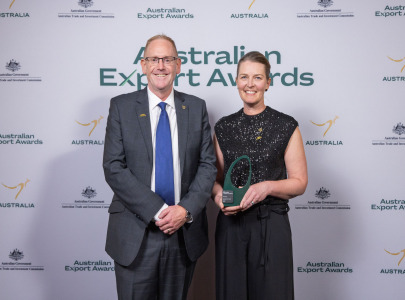
Fucoidan specialist takes out top international health award
4 Dec 2025
Marinova has been named Australia's most outstanding contributor to international health in the nation's prestigious Australian Export Awards.
Read more