
Ingredients Categories
Finished Products
Finished Food Categories
- Bakery
- Beverages / Juices
- Cereal and grain products
- Confectionery
- Cooking Fats & Oils
- Dairy
- Egg products
- Fruits & Vegetables
- Infant & Baby food
- Meat, Poultry & Fish
- Nuts & Seeds products
- Other Finished Food Categories
- Pet Food
- Plant-based foods
- Prepared foods
- Sauces & Seasonings
- Sweet & Savoury Spreads
Specialised Finished Products
- Bee products
- Biotic products
- Dietary supplements
- Energy drinks
- Functional beverages
- Functional confectionery
- Functional food
- Functional powders
- Meal replacement products
- Nutricosmetics
- Other Specialised Finished Products
- Pet Dietary Supplements
- Pharma and OTC products
- Protein products
- Sugar replacers / Sweeteners
Health & Wellness Areas
Delivery Formats
Operations & Services
- 3D printing
- Analysis/ Testing
- Auditing & certifications
- Blending & mixing
- Bottling
- Certification
- Clinical trials
- Co-packing
- Coating
- Consulting
- Contract manufacturing
- Drying
- Electrospinning
- Encapsulating
- Enzymatic processing
- Extracting
- Extrusion
- Fat structuring
- Fermentation
- Filling
- Flavour development
- Freeze drying
- Granulating/ grinding/ milling / mixing
- High-pressure processing
- Labelling
- Other Operations & Services
- Packaging
- Packet filling
- Pasturising
- Quality assurance
- Saccharification
- Shear cell processing
- Spray drying
- Sterilisation
- Storage & Logistics
- Tabletting
- Toasting / roasting
- Ultra-high temperature processing
Sponsored Content
Protein Shifting and Enrichment with the use of Dry Grinding and Classifying
16 Feb 2023
Fine grinding - Fracturing of united cell structures with the aim of separating the starch granules from the proteins. The result are singular starch and protein granules as well as cell fragments gained from protein granules that partially contain starch granules.
Classifying - Efficient separation of the starch-protein-mixture into a coarse fraction with a high starch content and a fine fraction with a high protein content.
Worldwide, the food supply chain is being faced with change. On the one hand, the increasing growth of the worldwide population creates an increasing need for foodstuffs, including a supply of proteins. This increasing need cannot be covered by animal proteins/products alone, due to the land requirements of livestock. On the other hand, the growing demand by consumers for sustainable production methods must be taken into account. The criticism of the sustainability of animal products in particular is expanding: The land usage and water consumption as well as greenhouse gas emissions of these products, in comparison to those of cultivated crops, are many times higher. Alternative sources of protein are being sought, and they play an important role for meeting future population needs. In addition to plant products, mushrooms, algae or insects, can be placed in this category.
Currently, soy
is the most common of the crops used as a meat substitute based on plant
material. They are processed into isolates with high protein contents of >
80%. The typical method for obtaining these is wet extraction. The use of large
amounts of water, chemicals and energy for drying, makes this method a
laborious, complex and resource consuming process. An alternative process is
dry fractionation - a process that has been used to process flour for quite
some time. NETZSCH has successfully been able to carry over the experience
obtained from this process to the processing requirements of crops.
The goal of
the application is to achieve a protein rich fraction in which the portion of
protein is considerably higher than that of the initial material, by means of
grinding and subsequent separation.
The beans or
grains of a chosen crop are cleaned and dehulled, and afterward passed on for
dry grinding, the objective of which is to break up the cells and to separate
the starch granules from the proteins and fibrous cell parts. The most energy-efficient
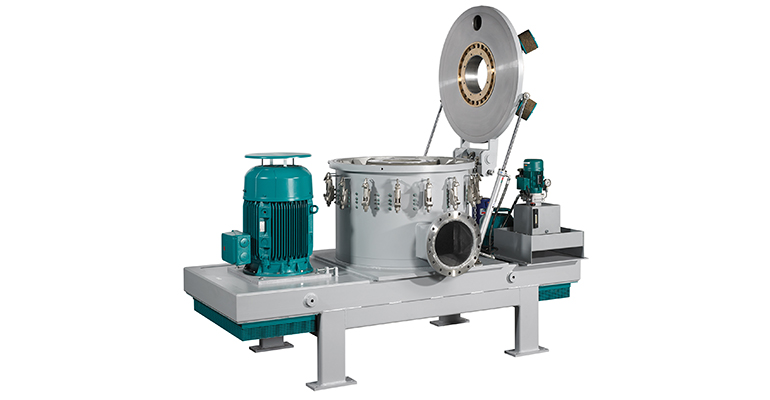
method for achieving this, is impact grinding using the NETZSCH classifier mill
type CSM.
The integrated classifier of this mill type assures that the coarse cell fragments remain in the grinding chamber for the duration necessary to destroy them, and to separate the starch and protein particles from one another. Only in this manner, can a high yield be achieved in the subsequent separation step, with an optimum amount of energy expenditure.
It is decisive for the separation step, that during the grinding process, the size difference between the protein and the starch granules remain as large as possible. Depending on the type of crop, the particle size of the protein is < 3 µm, whereas the size of the starch granules range from 3 µm to 40 µm. The force applied to the starch in the NETZSCH Classifier Mill, is far more gentle than that of a pin mill. This maintains the size difference between the protein and starch particles to the greatest possible extent, through which highest degrees of efficiency during separation are possible.
Separation is achieved using the NETZSCH High-Efficiency Fine Classifier CFS/HD-S. This classifier uses a stream of air to disperse the solid particles. Only through effective dispersion is it possible to optimally separate all of the particles and classify them according to size and/or weight. For this purpose, the ground product is passed into a ring gap, charged with air. The ring gap accelerates both particles into a circulatory motion, and the additional centrifugal forces separate them from one another. The particles are separated considerably more effectively, and thereby higher protein values and yields achieved, as compared to other design forms of classifiers. Once the processing parameters have been optimized to the product characteristics, on average, protein values of over 55% can be obtained, depending on the product.
Therefore, dry fractionation offers possibilities for cost effective, sustainable processing of premium quality products that have a high protein content. In addition, this type of process offers the invaluable advantage of flexible processing of diverse crops, simply by varying the processing parameters.
About NETZSCH Grinding & Dispersing
The
Grinding & Dispersing Business Unit, one of three business units of the
global NETZSCH Group, offers a comprehensive program for the many challenges in
mechanical process engineering. Here the Business Unit is primarily involved in
the areas of wet and dry grinding, mixing, dispersing, de-aeration and
classifying. The laboratory- and production-scale machines, as well as complete
production lines, are used in almost all areas of industry, such as the
forward-looking nanotechnology, the production of ink, minerals or foods.
The
bundling of processing know-how, our extensive machine program, solutions for
customer-specific problems and our global presence are unique and hence the
strength of the business unit.
Our
performance standards are high. We promise our customers Proven Excellence –
exceptional performance in everything we do, proven time and again since 1873.
Companies mentioned

Related categories

Get more of our news on Google
Set Ingredients Network as a 'Preferred Source' to get quicker access to the news you value.
Related news
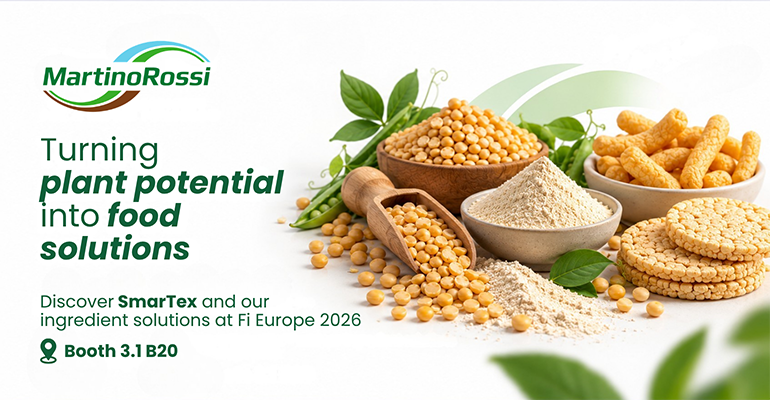
Turning plant potential into food solutions
1 Oct 2026
Today, plant-based and free-from ingredients must do more than replace. MartinoRossi combines nutrition, functionality, and processing performance to address new formulation challenges.
Read more
Hügli Food Industry: Innovations at Fi Europe 2026
1 Oct 2026
Taste 90 years of culinary mastery at Fi Europe (Booth 41G44), where Hügli will feature chilled Bresc Umami compounds alongside Sauce Culture, its newest snack seasoning concept.
Read more.jpg)
Nactarome: New possibilities in natural innovation
24 Sep 2026
As food innovation becomes increasingly multi-dimensional, Nactarome's expanding expertise reflects a growing industry focus on integrated natural ingredient solutions.
Read more
A new standard for omega-3 experience
13 Apr 2026
Omega-3 quality is no longer just about purity or concentration. Senses™ by Naturmega delivers ultra-pure, sensory-optimised omega-3 with no taste, no odour, and improved stability.
Read more
PharmaLinea’s iron supplement delivers improvements in hemoglobin comparable to ferrous sulfate with fewer side effects
23 Feb 2026
PharmaLinea, a Slovenian developer and manufacturer of private label food supplements, has announced the completion of a clinical study evaluating its finished formulation for iron deficiency.
Read more
LomaChelateX® – power in magnesium bisglycinate
12 Feb 2026
Gentle and effective: magnesium bisglycinate is setting a new standard. Through its LomaChelateX® brand, Dr. Paul Lohmann® delivers magnesium bisglycinate and a broad range of fully reacted mineral bisglycinates made in Germany.
Read more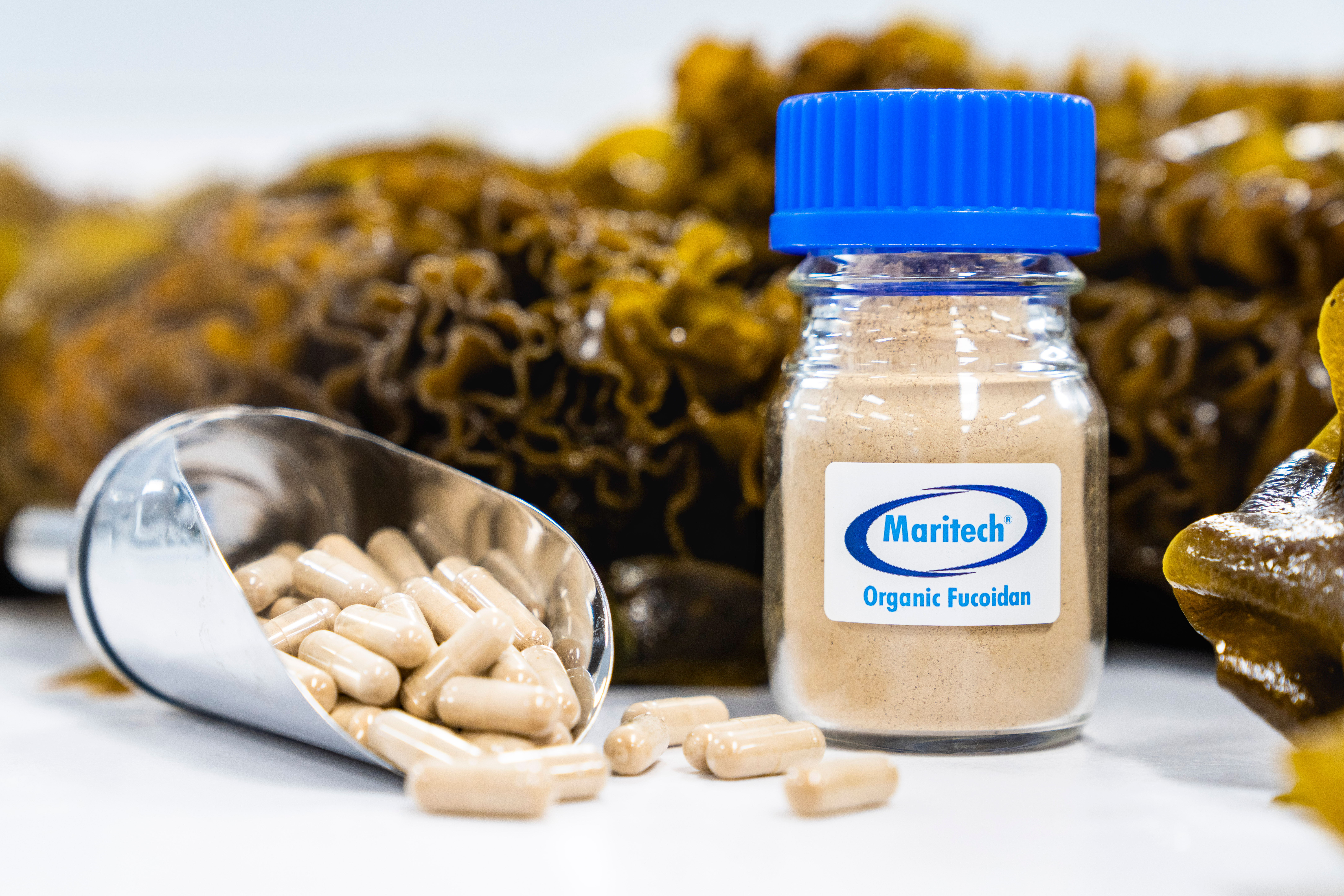
Fucoidan leader reports record production
22 Jan 2026
The global leader in fucoidan science, Marinova Pty Ltd, reported record annual fucoidan production for 2025. The company's total production volume has more than doubled over the past three years.
Read more
India Honours Ashwagandha with Commemorative Postal Stamp at WHO Global Summit
6 Jan 2026
HYDERABAD, December 20, 2025 – India’s Prime Minister Mr. Narendra Modi, alongside WHO Director-General Dr. Tedros Adhanom Ghebreyesus, released a commemorative postal stamp honoring ashwagandha at the recently concluded Second WHO Global Traditional...
Read more
PharmaLinea delivers actionable 2026 insights at the first ever NutraLoop™ Summit
22 Dec 2025
PharmaLinea held its first-ever NutraLoop™ Summit this December. The virtual event featured 12 speakers from companies such as IQVIA, NHCO, Radicle Science, and BeyondBrands, who provided comprehensive insights across the scientific and commercia...
Read more
FrieslandCampina strengthens its global protein position with acquisition of Wisconsin Whey Protein
11 Dec 2025
Royal FrieslandCampina N.V. intends to acquire Wisconsin Whey Protein, a respected producer of whey protein isolates in the United States. Wisconsin Whey Protein will become part of FrieslandCampina Ingredients, a global leader in proteins and prebioti...
Read more