
Ingredients Categories
Finished Products
Finished Food Categories
- Bakery
- Beverages / Juices
- Cereal and grain products
- Confectionery
- Cooking Fats & Oils
- Dairy
- Egg products
- Fruits & Vegetables
- Infant & Baby food
- Meat, Poultry & Fish
- Nuts & Seeds products
- Other Finished Food Categories
- Pet Food
- Plant-based foods
- Prepared foods
- Sauces & Seasonings
- Sweet & Savoury Spreads
Specialised Finished Products
- Bee products
- Biotic products
- Dietary supplements
- Energy drinks
- Functional beverages
- Functional confectionery
- Functional food
- Functional powders
- Meal replacement products
- Nutricosmetics
- Other Specialised Finished Products
- Pet Dietary Supplements
- Pharma and OTC products
- Protein products
- Sugar replacers / Sweeteners
Health & Wellness Areas
Delivery Formats
Operations & Services
- 3D printing
- Analysis/ Testing
- Auditing & certifications
- Blending & mixing
- Bottling
- Certification
- Clinical trials
- Co-packing
- Coating
- Consulting
- Contract manufacturing
- Drying
- Electrospinning
- Encapsulating
- Enzymatic processing
- Extracting
- Extrusion
- Fat structuring
- Fermentation
- Filling
- Flavour development
- Freeze drying
- Granulating/ grinding/ milling / mixing
- High-pressure processing
- Labelling
- Other Operations & Services
- Packaging
- Packet filling
- Pasturising
- Quality assurance
- Saccharification
- Shear cell processing
- Spray drying
- Sterilisation
- Storage & Logistics
- Tabletting
- Toasting / roasting
- Ultra-high temperature processing
Sponsored Content
"We will get important answers concerning the mysteries of truffles during the following years"
15 Sep 2022Mónica Sánchez is the director of Micofora, a biotechnology company that researches, develops and markets technologies and products for truffle cultivation. In addition to acting as a director, Mónica also controls the quality of plants, the production of inoculums and the control of truffles and mycorrhizal trees. She is a biologist and specializes in applied mycology.
How did you get into the truffle business?
When I was a student, I was particularly interested in applied mycology and decided to specialize in this field. I first started working with mushroom cultivation but over time I have specialized in truffle cultivation: it is a much more profitable crop, and we already have scientific data that show us that profiting from truffle cultivation is a matter of mathematics.
What's special about the world of truffles?
The mystery that surrounds it. We are scientists but we also do field work, and we know what it's like to go and harvest truffles because we are also producers. Going in search of truffles is not like going in search of mushrooms: the mystery lies in not knowing if the dog will mark the truffle and if you will find it.
What is the principle of Micofora?
We started 25 years ago, and we are essentially proposing everything concerning the cultivation of truffles and more particularly mushrooms. We are producers, suppliers and researchers.
We produce bio stimulants, substrates, products to increase the production of truffles and mycorrhizal plants (we produce about 100,000 black truffle plants per year). We also have a laboratory where we work to improve our own products and we also offer a national and international advisory service to anyone wishing to obtain information on the cultivation of black truffles. And as I have already said, we are also truffle producers: we have 8 hectares in production and we have recently planted an additional 10 hectares.
How many kilos of black truffle per year does it take to produce the 100,000 annual plants?
We generally use about 200 kg of black truffle each year to obtain plants, substrates or to sell inoculums to other nurseries. We normally analyze 400 kg of black truffles from Laumont to select only the best truffles on the market. Those that are not suitable for creating our products, we simply return them.
What is the nature of your collaboration with Laumont?
We work with Laumont because we are looking for the best quality truffle. They offer us a clean truffle and also previously selected, because they have a lot of experience in the selection of truffles and they choose for us the most mature pieces... When we receive their truffle, we analyze their DNA to see if it is optimal for inoculation. Those that are not in good condition can be returned to Laumont: it helps us a lot and is not proposed by anyone else.
Do you think the truffle industry has already reached its peak?
I think truffle growing will reach a point where it will stabilise as the plantations age and stop producing after a few years. It is true that more and more truffles of better quality are being planted, but we now know that truffle production is limited by water. We know that if the plant has no water in the summer, the results will be very poor.
How does a truffle plant mycorrhize?
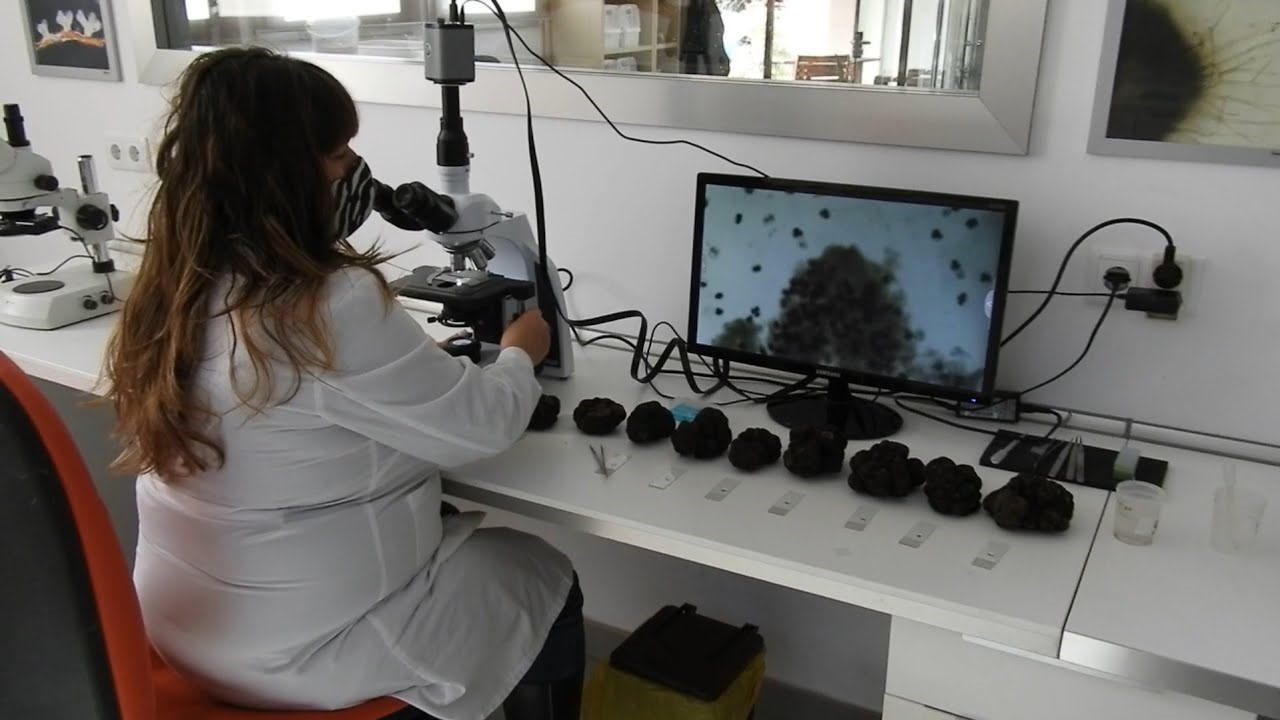
First, a sterilized substrate must be prepared, then the seeds of the holm oaks, which are the acorns, are removed and placed in the substrate so that they germinate. When they have germinated, after a few weeks, the plant is transferred to the final substrate and the truffle powder is added and mixed into the substrate. This plant is kept in a nursery under very controlled temperature and watering conditions for about 6 months. At this point, the roots are examined plant by plant under the microscope to see if they have been mycorrhised. In other words: if the truffle has been associated with the roots of the holm oak. Once this process is complete, the plant is ready to be planted in a truffle field.
What are the ideal conditions for truffle production?
The ideal conditions are that the soil is calcareous (although this is not really a problem as soils can be treated and lime can be added), that the mycorrhized holm oak is of high quality, that there are good substrates... and water. You can be sure that if you have water, you can get truffles from a plantation. We calculate that during the summer season, more than 2,000,000 litres of water per hectare must be applied.
And where is the truffle industry headed?
The sector tends towards professionalisation. Traditionally, people did not attach much importance to irrigation, but over the years, we see the results and there is no doubt. Beliefs, previously without a scientific basis, are changing. Today, there are trainings in informative conferences, fairs, courses... The truffle-harvester look at their "neighbours" who get good results and "copy" them, in the right sense of the word.
What do you recommend to fight the formidable Leods, these Beetle Insects, associated with underground fungi including truffles?
You just must learn to live with it and control the population. This is a very complicated issue because more and more truffles are produced and the plantations are more and more irrigated, which promotes their proliferation. There are pitfalls that work well but this involves a significant investment for the truffle-harvester, who is not sure that it is profitable. We can also see that the substrates are also improving, because the beetle does not like peat: during part of its cycle, it needs to surround itself with clay, and there is no clay in the peat.
Last year, there were reports of successful planting of white truffles (Tuber Magnatum). Is it possible to grow white truffle?
It is very complicated. Last year, they managed to harvest a few white truffles in a culture in France, but, we have been trying to grow white truffles for 25 years and no one has managed to ensure continuity. Moreover, the cost of producing a white truffle tree has nothing to do with that of a black truffle tree: the Italian white truffle is very expensive, and the probability of producing it is very low, and therefore very risky. However, we will try to mycorhize the trees with white truffle this year, to see if it works.
Do you think that in a few years there will be many more answers concerning the great mysteries of the truffle?
Undoubtedly it does. Now we're off and running. With the whole issue of DNA, much progress has been made. Every year we discover something new: how to prune, how to water... in the end, one of the secrets that remains to be discovered is whether we can use a fertilizer that can fatten the truffles and produce more. It is not yet clear whether the size of the truffles is obtained from ater or a nutrient: we will have to continue to investigate as we have always done and draw conclusions.
Thank you very much Monica for this interesting interview.
Thank you for the interview.
Companies mentioned

Related categories

Get more of our news on Google
Set Ingredients Network as a 'Preferred Source' to get quicker access to the news you value.
Related news

A new standard for omega-3 experience
13 Apr 2026
Omega-3 quality is no longer just about purity or concentration. Senses™ by Naturmega delivers ultra-pure, sensory-optimised omega-3 with no taste, no odour, and improved stability.
Read more
PharmaLinea’s iron supplement delivers improvements in hemoglobin comparable to ferrous sulfate with fewer side effects
23 Feb 2026
PharmaLinea, a Slovenian developer and manufacturer of private label food supplements, has announced the completion of a clinical study evaluating its finished formulation for iron deficiency.
Read more
LomaChelateX® – power in magnesium bisglycinate
12 Feb 2026
Gentle and effective: magnesium bisglycinate is setting a new standard. Through its LomaChelateX® brand, Dr. Paul Lohmann® delivers magnesium bisglycinate and a broad range of fully reacted mineral bisglycinates made in Germany.
Read more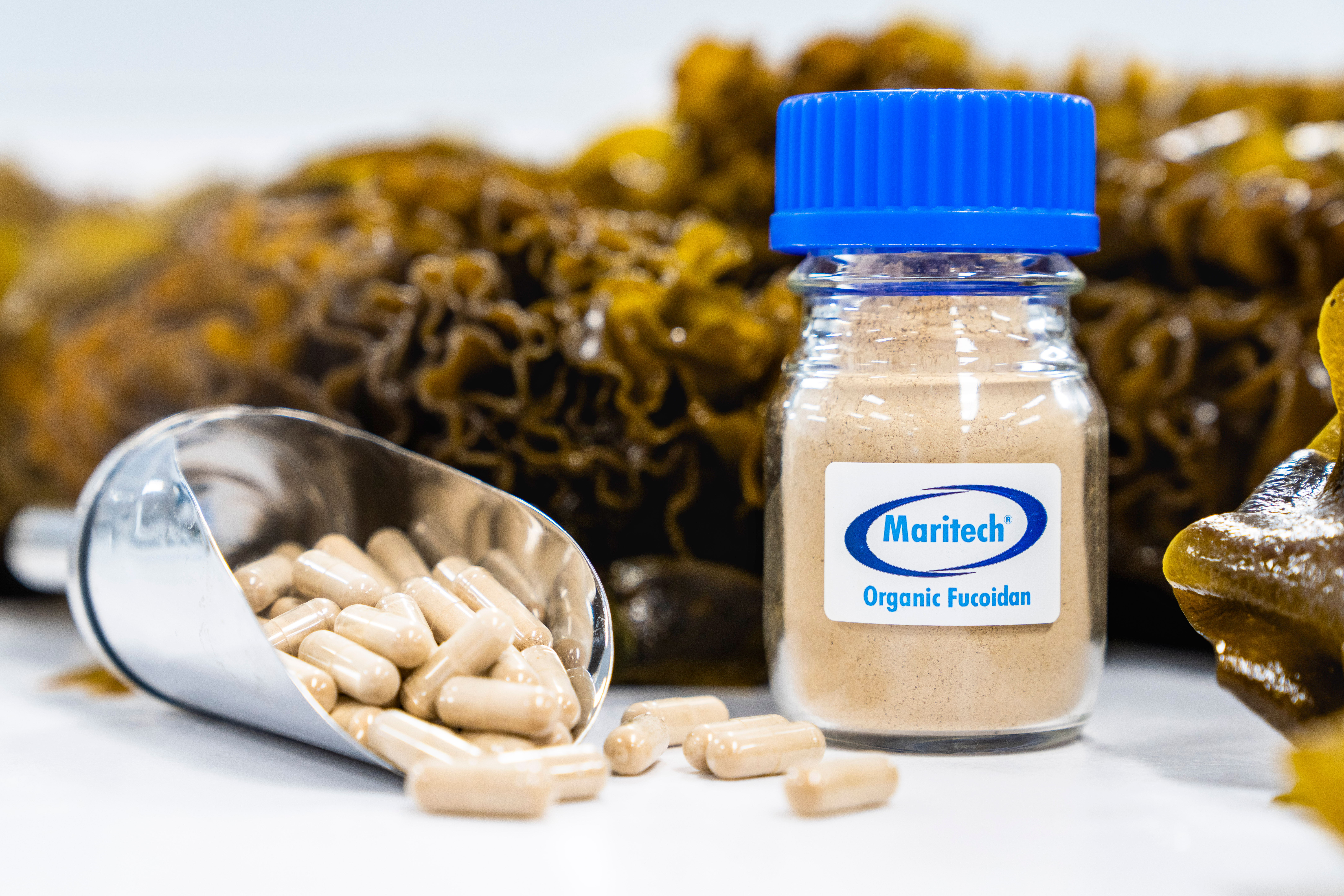
Fucoidan leader reports record production
22 Jan 2026
The global leader in fucoidan science, Marinova Pty Ltd, reported record annual fucoidan production for 2025. The company's total production volume has more than doubled over the past three years.
Read more
India Honours Ashwagandha with Commemorative Postal Stamp at WHO Global Summit
6 Jan 2026
HYDERABAD, December 20, 2025 – India’s Prime Minister Mr. Narendra Modi, alongside WHO Director-General Dr. Tedros Adhanom Ghebreyesus, released a commemorative postal stamp honoring ashwagandha at the recently concluded Second WHO Global Traditional...
Read more
PharmaLinea delivers actionable 2026 insights at the first ever NutraLoop™ Summit
22 Dec 2025
PharmaLinea held its first-ever NutraLoop™ Summit this December. The virtual event featured 12 speakers from companies such as IQVIA, NHCO, Radicle Science, and BeyondBrands, who provided comprehensive insights across the scientific and commercia...
Read more
FrieslandCampina strengthens its global protein position with acquisition of Wisconsin Whey Protein
11 Dec 2025
Royal FrieslandCampina N.V. intends to acquire Wisconsin Whey Protein, a respected producer of whey protein isolates in the United States. Wisconsin Whey Protein will become part of FrieslandCampina Ingredients, a global leader in proteins and prebioti...
Read more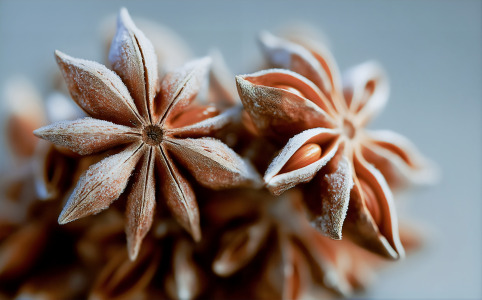
dsm-firmenich names ‘Frosted Star Anise’ as Flavor of the Year 2026, capturing a global desire for warmth and freshness
11 Dec 2025
Kaiseraugst (Switzerland), Maastricht (Netherlands), December 5, 2025 dsm-firmenich, innovators in nutrition, health, and beauty, announces ‘Frosted Star Anise’ as its Flavor of the Year for 2026. This...
Read more
Balchem Makes Strategic Investment in U.S. Food Ingredients Market with New Microencapsulation Manufacturing Facility
11 Dec 2025
Montvale, New Jersey, (10 December, 2025) – Balchem, a leading global manufacturer of specialty ingredients for human nutrition and health, is pleased to announce the development of a new, high-capacity man...
Read more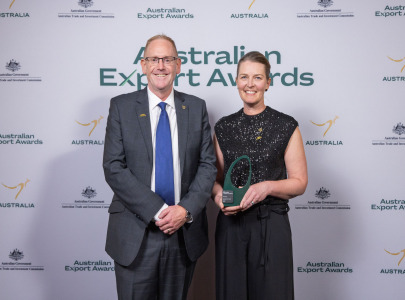
Fucoidan specialist takes out top international health award
4 Dec 2025
Marinova has been named Australia's most outstanding contributor to international health in the nation's prestigious Australian Export Awards.
Read more