
Ingredients Categories
Finished Products
Finished Food Categories
- Bakery
- Beverages / Juices
- Cereal and grain products
- Confectionery
- Cooking Fats & Oils
- Dairy
- Egg products
- Fruits & Vegetables
- Infant & Baby food
- Meat, Poultry & Fish
- Nuts & Seeds products
- Other Finished Food Categories
- Pet Food
- Plant-based foods
- Prepared foods
- Sauces & Seasonings
- Sweet & Savoury Spreads
Specialised Finished Products
- Bee products
- Biotic products
- Dietary supplements
- Energy drinks
- Functional beverages
- Functional confectionery
- Functional food
- Functional powders
- Meal replacement products
- Nutricosmetics
- Other Specialised Finished Products
- Pet Dietary Supplements
- Pharma and OTC products
- Protein products
- Sugar replacers / Sweeteners
Health & Wellness Areas
Delivery Formats
Operations & Services
- 3D printing
- Analysis/ Testing
- Auditing & certifications
- Blending & mixing
- Bottling
- Certification
- Clinical trials
- Co-packing
- Coating
- Consulting
- Contract manufacturing
- Drying
- Electrospinning
- Encapsulating
- Enzymatic processing
- Extracting
- Extrusion
- Fat structuring
- Fermentation
- Filling
- Flavour development
- Freeze drying
- Granulating/ grinding/ milling / mixing
- High-pressure processing
- Labelling
- Other Operations & Services
- Packaging
- Packet filling
- Pasturising
- Quality assurance
- Saccharification
- Shear cell processing
- Spray drying
- Sterilisation
- Storage & Logistics
- Tabletting
- Toasting / roasting
- Ultra-high temperature processing
Sponsored Content
Why is the use of antibiotics wrong and harmful in viral inflammation?
28 Feb 2023
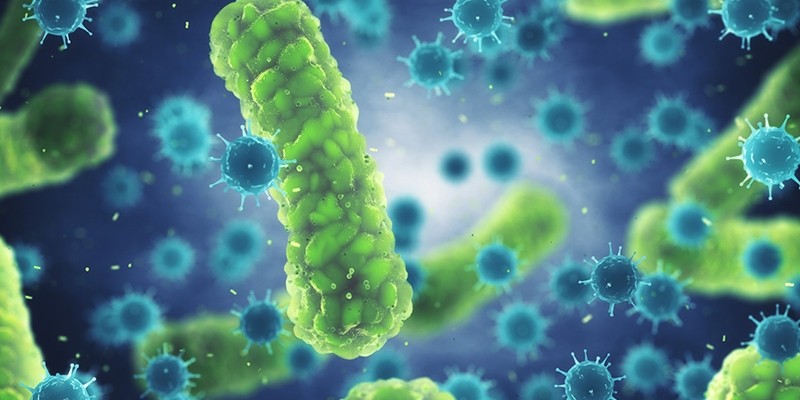
Bacteria and viruses are so different that it is often said, as a joke, that bacteria bear more resemblance to humans than to any virus.
Bacteria and viruses are so different that it is often said, as a joke, that bacteria bear more resemblance to humans than to any virus. Compared to viruses, bacteria are real giants. They can be up to 10 000 times bigger, but that does not matter to us, because in their micro world, they are both so small that we cannot see them with the naked eye. We can only speculate about their appearance and imagine them based on pictures. The only option to really see them is by using a microscope. Then it becomes clear that these are completely different tiny organisms.
The bacterium is a miniature living being. It has a cell wall, capable of dividing itself and lives independently, while it is problematic to say that virus is even alive – no cells, cannot feed or grow. It is actually a stationary particle that contains only a nucleic acid covered with capsid, and the only thing it can do is penetrate the cells of other living beings and take control of them. Then, the affected cells become machines for the reproduction of the virus.
This creates a viral infection whose symptoms are often similar to those caused by bacterial infection. Since they are treated differently, it is extremely important for the doctor to determine whether the body is attacked by a virus or a bacterium. If it is a virus, the following is recommended: a lot of fluid, resting and strengthening the body with natural supplements, while an antibiotic will be prescribed as an appropriate drug for bacterial infection.
Antibiotic is powerless against the virusAntibiotic does not work on viral infection for a simple reason – antibiotics can do nothing to viruses. This kind of medicine kills bacteria, but not viruses. And if we take it when we have a viral infection, we do more harm than good because antibiotics destroy good bacteria that contribute to our immune system.
Therefore, it is important to be careful with antibiotics and, if possible, not to take them too often and for longer periods because the disturbance of the natural balance of bacteria in the body leads to the weakening of the immune system. This means that when we get sick with some serious bacterial infection, bad bacteria may be already used to the effects of antibiotics and thus develop resistance. Then the medicine is no longer effective and the so-called antibiotic resistance occurs.
It is precisely this growing resistance of bacteria to medicines designed to kill them that took numerous lives. In the US alone, every year, two million people are diagnosed with bacterial infections caused by antibiotic-resistant bacteria, and at least 23,000 of them die of such an infection.
Resistance is also affected by the fact that when the antibiotic is necessary, many do not use it until the end, but after three days, as soon as they feel better, they stop taking the pills thinking they have recovered. It is precisely then that the bacteria not yet destroyed by the antibiotic develop resistance to the drug and can, thus strengthened, continue to multiply.
The use of antibiotics can also cause unpleasant side effects – it disrupts the intestinal flora producing stomach problems, which then have to be treated with other medications; there are rashes, swelling, and anaphylactic shock in severe reactions.
Companies mentioned


Get more of our news on Google
Set Ingredients Network as a 'Preferred Source' to get quicker access to the news you value.
Related news
A new standard for omega-3 experience
13 Apr 2026
Omega-3 quality is no longer just about purity or concentration. Senses™ by Naturmega delivers ultra-pure, sensory-optimised omega-3 with no taste, no odour, and improved stability.
Read more
PharmaLinea’s iron supplement delivers improvements in hemoglobin comparable to ferrous sulfate with fewer side effects
23 Feb 2026
PharmaLinea, a Slovenian developer and manufacturer of private label food supplements, has announced the completion of a clinical study evaluating its finished formulation for iron deficiency.
Read more
LomaChelateX® – power in magnesium bisglycinate
12 Feb 2026
Gentle and effective: magnesium bisglycinate is setting a new standard. Through its LomaChelateX® brand, Dr. Paul Lohmann® delivers magnesium bisglycinate and a broad range of fully reacted mineral bisglycinates made in Germany.
Read more
Fucoidan leader reports record production
22 Jan 2026
The global leader in fucoidan science, Marinova Pty Ltd, reported record annual fucoidan production for 2025. The company's total production volume has more than doubled over the past three years.
Read more
India Honours Ashwagandha with Commemorative Postal Stamp at WHO Global Summit
6 Jan 2026
HYDERABAD, December 20, 2025 – India’s Prime Minister Mr. Narendra Modi, alongside WHO Director-General Dr. Tedros Adhanom Ghebreyesus, released a commemorative postal stamp honoring ashwagandha at the recently concluded Second WHO Global Traditional...
Read more
PharmaLinea delivers actionable 2026 insights at the first ever NutraLoop™ Summit
22 Dec 2025
PharmaLinea held its first-ever NutraLoop™ Summit this December. The virtual event featured 12 speakers from companies such as IQVIA, NHCO, Radicle Science, and BeyondBrands, who provided comprehensive insights across the scientific and commercia...
Read more
FrieslandCampina strengthens its global protein position with acquisition of Wisconsin Whey Protein
11 Dec 2025
Royal FrieslandCampina N.V. intends to acquire Wisconsin Whey Protein, a respected producer of whey protein isolates in the United States. Wisconsin Whey Protein will become part of FrieslandCampina Ingredients, a global leader in proteins and prebioti...
Read more
dsm-firmenich names ‘Frosted Star Anise’ as Flavor of the Year 2026, capturing a global desire for warmth and freshness
11 Dec 2025
Kaiseraugst (Switzerland), Maastricht (Netherlands), December 5, 2025 dsm-firmenich, innovators in nutrition, health, and beauty, announces ‘Frosted Star Anise’ as its Flavor of the Year for 2026. This...
Read more
Balchem Makes Strategic Investment in U.S. Food Ingredients Market with New Microencapsulation Manufacturing Facility
11 Dec 2025
Montvale, New Jersey, (10 December, 2025) – Balchem, a leading global manufacturer of specialty ingredients for human nutrition and health, is pleased to announce the development of a new, high-capacity man...
Read more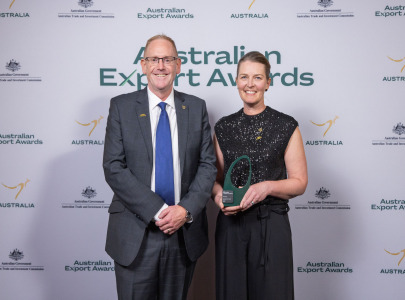
Fucoidan specialist takes out top international health award
4 Dec 2025
Marinova has been named Australia's most outstanding contributor to international health in the nation's prestigious Australian Export Awards.
Read more