
Ingredients Categories
Finished Products
Finished Food Categories
- Bakery
- Beverages / Juices
- Cereal and grain products
- Confectionery
- Cooking Fats & Oils
- Dairy
- Egg products
- Fruits & Vegetables
- Infant & Baby food
- Meat, Poultry & Fish
- Nuts & Seeds products
- Other Finished Food Categories
- Pet Food
- Plant-based foods
- Prepared foods
- Sauces & Seasonings
- Sweet & Savoury Spreads
Specialised Finished Products
- Bee products
- Biotic products
- Dietary supplements
- Energy drinks
- Functional beverages
- Functional confectionery
- Functional food
- Functional powders
- Meal replacement products
- Nutricosmetics
- Other Specialised Finished Products
- Pet Dietary Supplements
- Pharma and OTC products
- Protein products
- Sugar replacers / Sweeteners
Health & Wellness Areas
Delivery Formats
Operations & Services
- 3D printing
- Analysis/ Testing
- Auditing & certifications
- Blending & mixing
- Bottling
- Certification
- Clinical trials
- Co-packing
- Coating
- Consulting
- Contract manufacturing
- Drying
- Electrospinning
- Encapsulating
- Enzymatic processing
- Extracting
- Extrusion
- Fat structuring
- Fermentation
- Filling
- Flavour development
- Freeze drying
- Granulating/ grinding/ milling / mixing
- High-pressure processing
- Labelling
- Other Operations & Services
- Packaging
- Packet filling
- Pasturising
- Quality assurance
- Saccharification
- Shear cell processing
- Spray drying
- Sterilisation
- Storage & Logistics
- Tabletting
- Toasting / roasting
- Ultra-high temperature processing
Sponsored Content
New MUSHEEZ® review highlights reporting gaps in human mushroom studies
25 Sep 2026
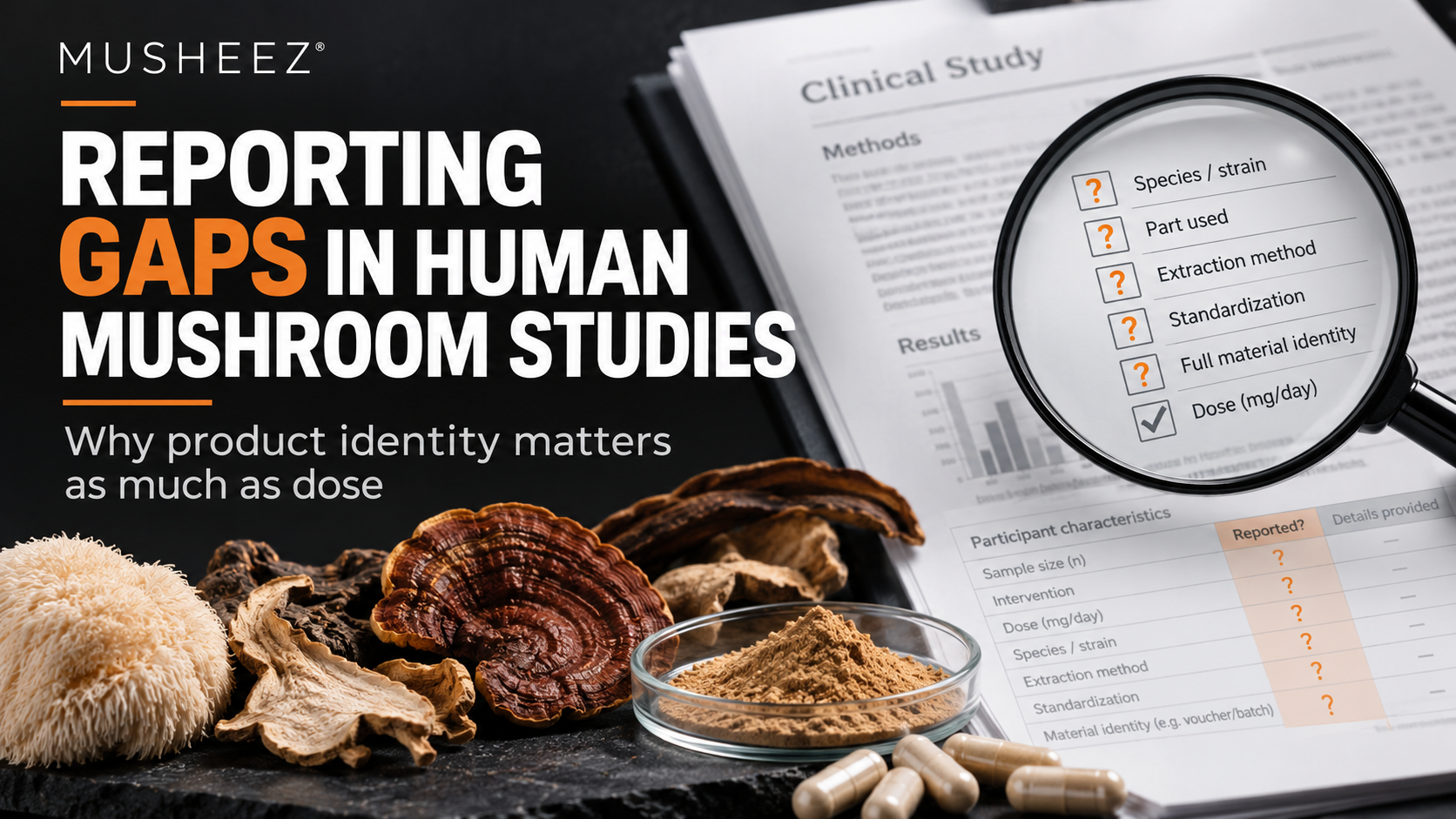
A new open-access review by MUSHEEZ® founder Robin Gurney examines how mushroom materials and dosages are reported in human studies involving Lion’s Mane and Reishi.
The review identifies inconsistencies around mushroom identity, fungal material, extraction, concentration and dose reporting, and proposes an eight-part framework for clearer reporting.
The aim is to help researchers, product developers and industry professionals to understand what was actually tested.
Human studies involving medicinal mushrooms are often discussed in terms of dose.
A paper may report that participants consumed 1 gram, 2 grams or 3 grams per day of Lion’s Mane or Reishi, and that figure is then repeated in articles, product development discussions and consumer guidance.
But dose alone can be misleading if the material being dosed is not adequately described.
A recent open-access review by Robin Gurney of Natural Chaga OÜ, trading as MUSHEEZ®, examined this problem across human studies involving Lion’s Mane and Reishi.
The paper, “Reporting Gaps in Human Medicinal Mushroom Studies: Implications for Interpretation, Formulation, and Real-World Use,” found that the numerical dose is often easier to identify than the precise nature of the mushroom material that participants actually consumed.
That distinction matters.
Two products both described as “Lion’s Mane” can differ in fungal material, cultivation method, extraction, concentration, carrier content, batch composition and analytical profile. The same is true of Reishi.
Without sufficient information about those variables, translating a research dose into a commercial formulation becomes difficult.
DOSE IS ONLY PART OF THE STORYIn human mushroom studies, dosage is often presented as a simple quantity such as milligrams or grams per day.
That number can look precise.
But 1 gram of a raw mushroom powder is not necessarily comparable with 1 gram of a concentrated extract.
Likewise, 1 gram of fruiting body material is not necessarily equivalent to 1 gram of mycelial biomass.
An extract containing a carrier or drying aid may also contain less fungal-derived material per gram than an otherwise similar carrier-free product.
The problem is therefore not necessarily that dose is unreported.
In many cases, dose is among the clearest parts of the intervention description.
The larger problem is that the identity and composition of the material behind that dose may not be described with the same level of precision.
This makes interpretation more difficult for researchers, formulators and companies attempting to develop products based on published human evidence.
LION’S MANE AND REISHI SHOW DIFFERENT PATTERNS
The review examined human intervention studies involving Lion’s Mane and Reishi.
One of the observations was that the dosage history for Lion’s Mane studies using fruiting-body-relevant materials appeared more clustered than the corresponding Reishi literature.
Reishi interventions were more heterogeneous.
Different studies used different preparations, processing approaches and material types, making direct comparison more difficult.
This does not mean that all Lion’s Mane studies are directly comparable, nor that a single standard dose can be inferred from the literature.
It does show why describing the intervention in detail is important.
When the material changes, the meaning of the dose can change with it.
WHAT WAS THE FUNGAL MATERIAL?
One of the most important reporting questions is also one of the simplest:
What part of the fungus was actually used?
Possible materials may include:
• Fruiting body
• Mycelium
• Fermented mycelial biomass
• Sclerotium or conk
• Whole culture material
• A combination of fungal and growth-medium components
These materials are not interchangeable.
Their chemical composition can differ substantially, and they may also have different production histories.
For Lion’s Mane, for example, the distinction between fruiting body and mycelium may be highly relevant when attempting to compare commercial ingredients with the intervention used in a study.
For Reishi, the same issue arises when different fungal materials or extract types are grouped together under the common species name.
Simply reporting the species is therefore not always enough.
CULTIVATION METHOD ALSO MATTERS
How the fungus was cultivated can affect the resulting material.
For some products, mycelium may be produced through submerged liquid fermentation.
In other cases it may be cultivated on a solid substrate.
If substantial residual substrate remains in the finished material, the composition of that material may differ considerably from isolated fungal biomass.
Cultivation information is therefore relevant both scientifically and commercially.
Yet this information is not always included in sufficient detail in published human studies.
Where cultivation is not described, it may be difficult to determine how closely a commercial ingredient matches the researched intervention.
EXTRACTION AND PROCESSING CAN CHANGE THE MATERIAL
The word “extract” covers a very wide range of products.
A study may use:
• Hot-water extraction
• Alcohol extraction
• Dual extraction
• Concentrated aqueous extraction
• Fermented material
• Spray-dried extract powder
• Minimally processed mushroom powder
Each of these can produce a different chemical profile.
Even when an extraction ratio is reported, that ratio does not fully describe the finished ingredient.
An 8:1 or 10:1 ratio may indicate how much starting material was used relative to the finished extract, but it does not by itself show which compounds were extracted, what was removed during processing, whether carriers were added, or how reproducible the final material was.
This is one reason why the MUSHEEZ® review argues for more complete intervention reporting rather than relying on a single headline figure.
CARRIERS CAN AFFECT DOSE INTERPRETATION
Extract powders are often spray dried, and some processes use carriers or drying aids such as maltodextrin or other carbohydrates.
There can be legitimate technical reasons for doing this.
However, carrier content is important when interpreting dose.
If a study provides 1,000 milligrams of an extract preparation containing 20% carrier, the amount of fungal extract material in that preparation is not the same as in 1,000 milligrams of a carrier-free extract.
Without this information, a commercial formulator may unintentionally compare two materially different interventions as though they were equivalent.
Carrier disclosure should therefore be considered part of meaningful intervention reporting.
BATCH INFORMATION IS OFTEN LIMITED
Another challenge is batch integrity.
Commercial mushroom ingredients can vary between production batches because of differences in raw material, cultivation, harvest, extraction and processing.
For human research, ideally the intervention material should be linked to a specific production batch with supporting analytical information.
Without this, it can be difficult to establish exactly what was administered.
A product name or commercial description may not be sufficient.
For future research, stronger batch documentation could make study results easier to interpret and reproduce.
ANALYTICAL CHARACTERISATION CAN HELPThe review also highlights the value of analytical information.
Depending on the mushroom and intervention, useful measurements may include:
• Alpha-glucans and beta-glucans
• Species-related metabolites
• Known compounds of interest
• Broader metabolite profiles
• Identity testing
• Composition of carriers or excipients
No single analytical method answers every question.
For example, Nuclear Magnetic Resonance can provide information about chemical identity and overall composition, while Liquid Chromatography Mass Spectrometry can provide detailed metabolite profiling.
Enzymatic assays can be used for glucan measurements.
The point is not that every future clinical study must perform every possible test.
It is that the intervention should be characterised sufficiently for another researcher or product developer to understand what was actually tested.
AN EIGHT-PART REPORTING FRAMEWORK
To address these gaps, the review proposes an eight-part framework for describing mushroom interventions more clearly.
The framework covers:
What material was used, such as fruiting body, mycelium or another structure?
How was species identity established?
How and where was the fungal material grown?
What happened to the material before extraction or processing?
What manufacturing steps were used to produce the intervention?
Were substances such as maltodextrin or other processing aids present?
Was the intervention linked to a defined production batch?
What analytical information was available about the finished material?
It is to provide enough information for readers to know what was actually administered.
WHY THIS MATTERS FOR PRODUCT DEVELOPMENT
The reporting problem has practical consequences beyond academic publication.
A product developer may read that a study used 2 grams per day of Lion’s Mane and attempt to formulate a supplement around that number.
But unless the study clearly describes the mushroom material, the formulator may not know whether the intervention was:
• Raw powder
• Processed powder
• Concentrated extract
• Fruiting body
• Mycelium
• Carrier-containing extract preparation
• Material with a specific analytical composition
That can result in a commercial product that bears little resemblance to the intervention used in the research, even though the numerical daily dose looks similar.
A more useful question is therefore:
“2 grams of what?”
BETTER REPORTING COULD IMPROVE TRANSLATIONImproved reporting would benefit several groups.
Researchers could compare studies more meaningfully.
Systematic reviewers could distinguish between materially different interventions.
Product developers could better assess whether an ingredient corresponds to published research.
Procurement teams could ask more informed questions of suppliers.
Brands could describe the relationship between their formulation and the scientific literature more accurately.
It would also reduce the temptation to treat all products sharing the same common mushroom name as equivalent.
FROM RESEARCH TO REAL-WORLD PRODUCTSThe functional mushroom industry frequently refers to human research when selecting ingredients or communicating product concepts.
That makes intervention transparency particularly important.
Dose should remain part of the discussion, but dose cannot be separated from material identity.
A clearly reported 1 gram dose of a well-characterised mushroom preparation may be more useful scientifically than a higher dose of a poorly described material.
The MUSHEEZ® review argues that better reporting of fungal part, cultivation, extraction, carriers, batch information and chemical composition could significantly improve the translation of mushroom research into real-world products.
The paper is available open access on Zenodo:
Robin Gurney, “Reporting Gaps in Human Medicinal Mushroom Studies: Implications for Interpretation, Formulation, and Real-World Use.”
The work has also been accepted for presentation at the 13th International Medicinal Mushroom Conference (IMMC13).
For MUSHEEZ®, the broader objective is simple: better description of what is tested should lead to better interpretation of the evidence, and ultimately better-informed ingredient and formulation decisions.
Companies mentioned


Get more of our news on Google
Set Ingredients Network as a 'Preferred Source' to get quicker access to the news you value.
Related news
.jpg)
Nactarome: New possibilities in natural innovation
24 Sep 2026
As food innovation becomes increasingly multi-dimensional, Nactarome's expanding expertise reflects a growing industry focus on integrated natural ingredient solutions.
Read more
A new standard for omega-3 experience
13 Apr 2026
Omega-3 quality is no longer just about purity or concentration. Senses™ by Naturmega delivers ultra-pure, sensory-optimised omega-3 with no taste, no odour, and improved stability.
Read more
PharmaLinea’s iron supplement delivers improvements in hemoglobin comparable to ferrous sulfate with fewer side effects
23 Feb 2026
PharmaLinea, a Slovenian developer and manufacturer of private label food supplements, has announced the completion of a clinical study evaluating its finished formulation for iron deficiency.
Read more
LomaChelateX® – power in magnesium bisglycinate
12 Feb 2026
Gentle and effective: magnesium bisglycinate is setting a new standard. Through its LomaChelateX® brand, Dr. Paul Lohmann® delivers magnesium bisglycinate and a broad range of fully reacted mineral bisglycinates made in Germany.
Read more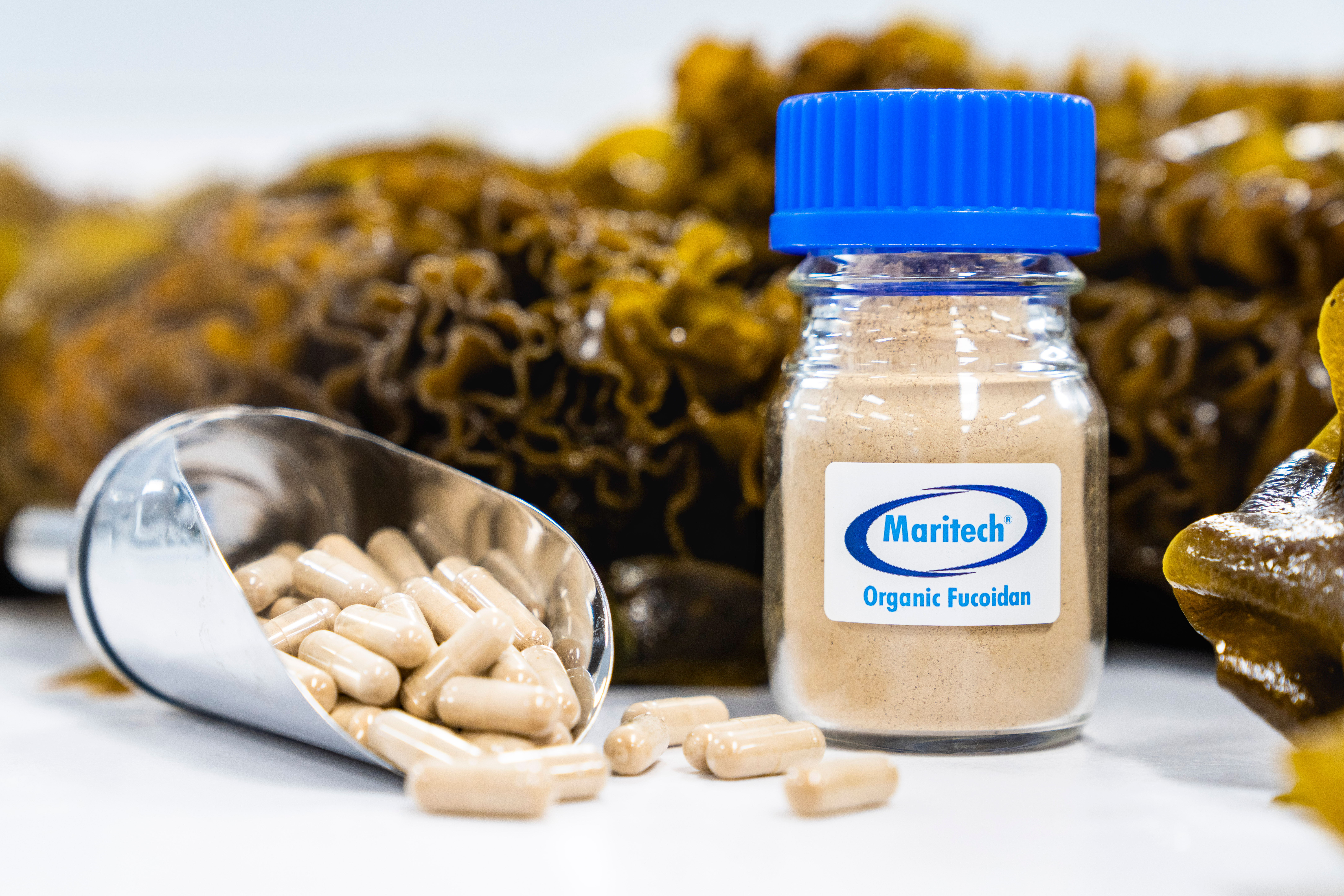
Fucoidan leader reports record production
22 Jan 2026
The global leader in fucoidan science, Marinova Pty Ltd, reported record annual fucoidan production for 2025. The company's total production volume has more than doubled over the past three years.
Read more
India Honours Ashwagandha with Commemorative Postal Stamp at WHO Global Summit
6 Jan 2026
HYDERABAD, December 20, 2025 – India’s Prime Minister Mr. Narendra Modi, alongside WHO Director-General Dr. Tedros Adhanom Ghebreyesus, released a commemorative postal stamp honoring ashwagandha at the recently concluded Second WHO Global Traditional...
Read more
PharmaLinea delivers actionable 2026 insights at the first ever NutraLoop™ Summit
22 Dec 2025
PharmaLinea held its first-ever NutraLoop™ Summit this December. The virtual event featured 12 speakers from companies such as IQVIA, NHCO, Radicle Science, and BeyondBrands, who provided comprehensive insights across the scientific and commercia...
Read more
FrieslandCampina strengthens its global protein position with acquisition of Wisconsin Whey Protein
11 Dec 2025
Royal FrieslandCampina N.V. intends to acquire Wisconsin Whey Protein, a respected producer of whey protein isolates in the United States. Wisconsin Whey Protein will become part of FrieslandCampina Ingredients, a global leader in proteins and prebioti...
Read more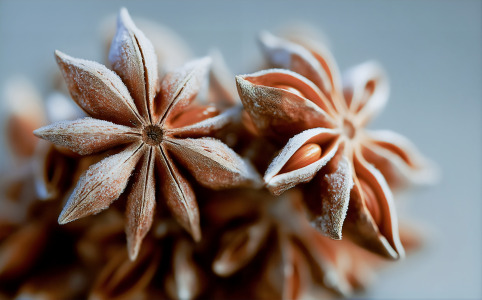
dsm-firmenich names ‘Frosted Star Anise’ as Flavor of the Year 2026, capturing a global desire for warmth and freshness
11 Dec 2025
Kaiseraugst (Switzerland), Maastricht (Netherlands), December 5, 2025 dsm-firmenich, innovators in nutrition, health, and beauty, announces ‘Frosted Star Anise’ as its Flavor of the Year for 2026. This...
Read more
Balchem Makes Strategic Investment in U.S. Food Ingredients Market with New Microencapsulation Manufacturing Facility
11 Dec 2025
Montvale, New Jersey, (10 December, 2025) – Balchem, a leading global manufacturer of specialty ingredients for human nutrition and health, is pleased to announce the development of a new, high-capacity man...
Read more