
Ingredients Categories
Finished Products
Finished Food Categories
- Bakery
- Beverages / Juices
- Cereal and grain products
- Confectionery
- Cooking Fats & Oils
- Dairy
- Egg products
- Fruits & Vegetables
- Infant & Baby food
- Meat, Poultry & Fish
- Nuts & Seeds products
- Other Finished Food Categories
- Pet Food
- Plant-based foods
- Prepared foods
- Sauces & Seasonings
- Sweet & Savoury Spreads
Specialised Finished Products
- Bee products
- Biotic products
- Dietary supplements
- Energy drinks
- Functional beverages
- Functional confectionery
- Functional food
- Functional powders
- Meal replacement products
- Nutricosmetics
- Other Specialised Finished Products
- Pet Dietary Supplements
- Pharma and OTC products
- Protein products
- Sugar replacers / Sweeteners
Health & Wellness Areas
Delivery Formats
Operations & Services
- 3D printing
- Analysis/ Testing
- Auditing & certifications
- Blending & mixing
- Bottling
- Certification
- Clinical trials
- Co-packing
- Coating
- Consulting
- Contract manufacturing
- Drying
- Electrospinning
- Encapsulating
- Enzymatic processing
- Extracting
- Extrusion
- Fat structuring
- Fermentation
- Filling
- Flavour development
- Freeze drying
- Granulating/ grinding/ milling / mixing
- High-pressure processing
- Labelling
- Other Operations & Services
- Packaging
- Packet filling
- Pasturising
- Quality assurance
- Saccharification
- Shear cell processing
- Spray drying
- Sterilisation
- Storage & Logistics
- Tabletting
- Toasting / roasting
- Ultra-high temperature processing
Sponsored Content
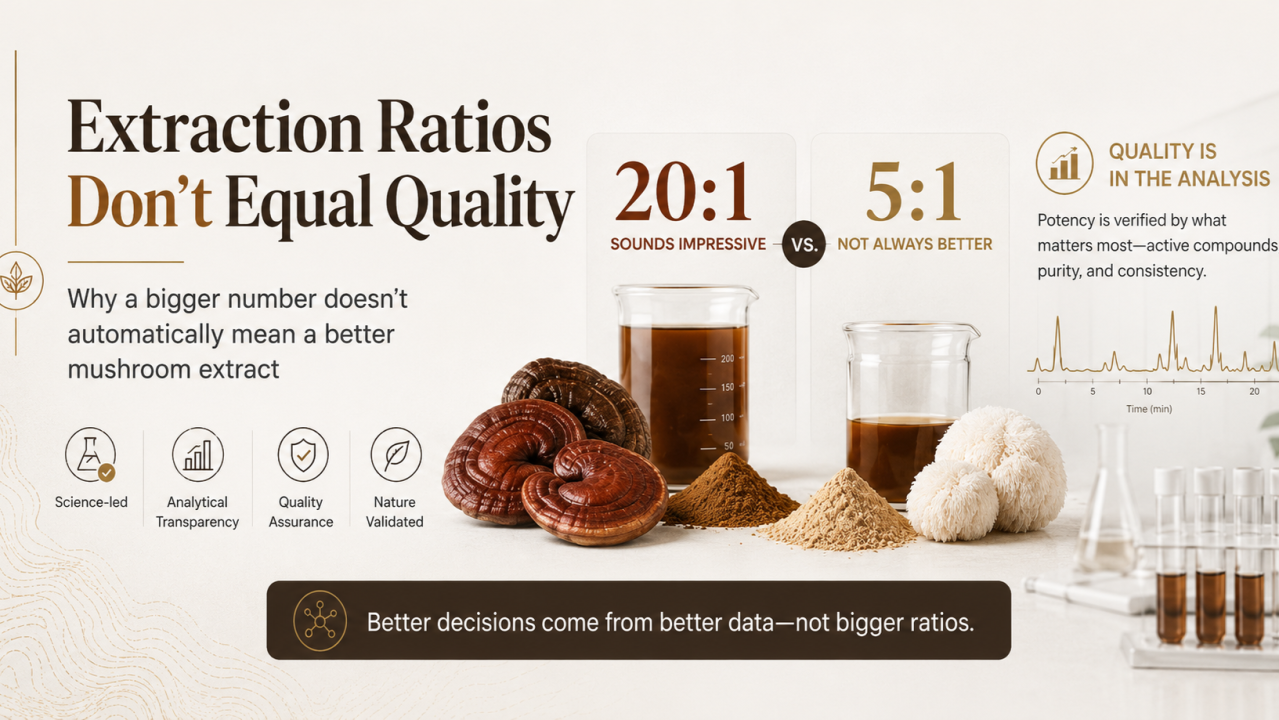
Why a 20:1 Mushroom Extract May Not Be Better Than a 5:1
25 Sep 2026
An 5:1, 10:1 or 15:1 extraction ratio can describe part of a manufacturing process, but it does not by itself establish identity, purity, composition or performance.
MUSHEEZ® looks at why extraction ratios should be interpreted alongside analytical testing, fungal material, production method and intended application.
Extraction ratios are one of the most visible numbers in the functional mushroom market.
5:1. 8:1. 10:1. 15:1. 20:1.
It is easy to assume that the larger number represents the stronger or better product.
That assumption is not reliable.
An extraction ratio can provide useful information about how an ingredient was manufactured, but it does not, by itself, establish the quality, purity or composition of the finished extract.
For buyers comparing mushroom ingredients, that difference is important.
What does an extraction ratio describe?Broadly, an extraction ratio expresses the relationship between the amount of starting mushroom material and the amount of extract produced.
A 10:1 extract, for example, may indicate that 10 kg of starting material was used to produce 1 kg of extract.
But even this apparently simple figure requires context.
Manufacturers do not always calculate or report extraction ratios in exactly the same way. In some cases the ratio relates to starting material and native extract. The finished powder may then contain additional mushroom material, carriers or processing aids.
That means an 8:1 extract from one supplier cannot automatically be compared directly with a 15:1 extract from another without first understanding how each figure was derived.
More importantly, the ratio does not tell the buyer very much about the actual composition of the finished powder.
The quality of the starting material comes firstExtraction can concentrate or separate compounds already present in the raw material. It cannot compensate for poor starting biomass.
Consider 20 kg of poorly characterised mushroom material processed into a concentrated extract.
The resulting product may carry an impressive 20:1 ratio.
That does not necessarily make it superior to an extract produced from a smaller quantity of carefully selected, correctly identified and well-handled mushroom material.
Factors that can influence the final extract include:
- Species identity
- The fungal material used
- Cultivation conditions
- Age and condition of the raw material
- Drying and storage
- General raw-material quality
Processing conditions influence the finished extractThe same starting mushroom can also produce very different extracts depending on how it is processed.
Variables include:
- Extraction temperature
- Extraction time
- Solvent
- Pressure
- Concentration
- Filtration
- Drying conditions
One example is the common claim that water extraction cannot recover meaningful quantities of Reishi triterpenoids.
Our own analytical work at MUSHEEZ® has made us cautious about generalisations of this kind.
Liquid Chromatography Mass Spectrometry analysis can identify ganoderic acids in appropriately produced Reishi water extracts.
That does not mean water and alcohol extraction are equivalent.
It does mean that the more useful question is not simply:
“Was alcohol used?”
It is:
“Which compounds are present in the finished extract, and at what levels?”
That moves the discussion from assumptions about process to evidence about the ingredient itself.
A larger ratio does not automatically mean greater potencyImagine two Reishi extracts.
Extract A: 5:1
It has good identity and purity data, meaningful beta-glucan content and analytically confirmed ganoderic acids.
Extract B: 20:1
It has limited analytical information and little evidence about its actual chemical composition.
There is no scientific basis for automatically selecting Extract B simply because 20 is larger than 5.
Yet extraction ratios are still frequently treated as though they are direct indicators of potency.
They are not.
The ratio describes part of the manufacturing history. It does not establish the concentration of the compounds that matter to the buyer.
What should procurement teams examine instead?A more robust evaluation looks at several forms of evidence together.
Identity
Is the material actually the species stated on the specification?
Raw material
Was the starting material fruiting body, mycelium, fermentation biomass, grain-associated biomass or a combination?
Purity
Does the finished powder contain fillers, carriers or other significant materials?
Glucan compositionWhat are the beta-glucan and alpha-glucan levels, and which analytical method was used to measure them?
Compounds of interestAre relevant compounds actually present?
Examples could include ganoderic acids in Reishi or hericenones in Lion’s Mane.
Safety testing
What information is available for heavy metals, pesticides, microbiology and other relevant contaminants?
Analytical method
A result is only as useful as the method behind it.
What was measured?
How was it measured?
Was the method sufficiently selective for the claim being made?
Transparency
Can the supplier provide the underlying analytical evidence rather than only a headline specification?
Why MUSHEEZ® uses multiple analytical approachesAt MUSHEEZ®, we increasingly evaluate mushroom ingredients using complementary analytical methods rather than relying on one specification number.
These include Nuclear Magnetic Resonance (NMR) for identity and purity assessment and Liquid Chromatography Mass Spectrometry Quadrupole Time-of-Flight (LC-MS-QTOF) for detailed analysis of compounds of interest, alongside glucan, microbiological, heavy metals and other relevant testing.
No single analytical method provides every answer.
Nuclear Magnetic Resonance does not replace Liquid Chromatography Mass Spectrometry.
Liquid Chromatography Mass Spectrometry does not replace microbiological testing.
Glucan analysis does not confirm species identity.
But used together, these approaches can provide a much more informative picture than an extraction ratio alone.
Extraction ratios still have a useful roleNone of this means extraction ratios should be ignored.
When clearly defined, they can provide useful information about the manufacturing process and the relationship between starting material and extract.
The problem begins when the ratio is treated as a quality ranking.
A 20:1 extract is not automatically richer in the compounds a formulator wants.
A 5:1 extract is not automatically inferior.
Dark colour, strong bitterness or a dramatic extraction ratio are also not substitutes for analytical evidence.
As the functional mushroom sector becomes more technically sophisticated, ingredient evaluation needs to become more sophisticated with it.
Instead of beginning with:
“What is the extraction ratio?”
A better starting point may be:
“What does the analytical evidence actually show?”
Companies mentioned

Related categories

Get more of our news on Google
Set Ingredients Network as a 'Preferred Source' to get quicker access to the news you value.
Related news
.jpg)
Nactarome: New possibilities in natural innovation
24 Sep 2026
As food innovation becomes increasingly multi-dimensional, Nactarome's expanding expertise reflects a growing industry focus on integrated natural ingredient solutions.
Read more
A new standard for omega-3 experience
13 Apr 2026
Omega-3 quality is no longer just about purity or concentration. Senses™ by Naturmega delivers ultra-pure, sensory-optimised omega-3 with no taste, no odour, and improved stability.
Read more
PharmaLinea’s iron supplement delivers improvements in hemoglobin comparable to ferrous sulfate with fewer side effects
23 Feb 2026
PharmaLinea, a Slovenian developer and manufacturer of private label food supplements, has announced the completion of a clinical study evaluating its finished formulation for iron deficiency.
Read more
LomaChelateX® – power in magnesium bisglycinate
12 Feb 2026
Gentle and effective: magnesium bisglycinate is setting a new standard. Through its LomaChelateX® brand, Dr. Paul Lohmann® delivers magnesium bisglycinate and a broad range of fully reacted mineral bisglycinates made in Germany.
Read more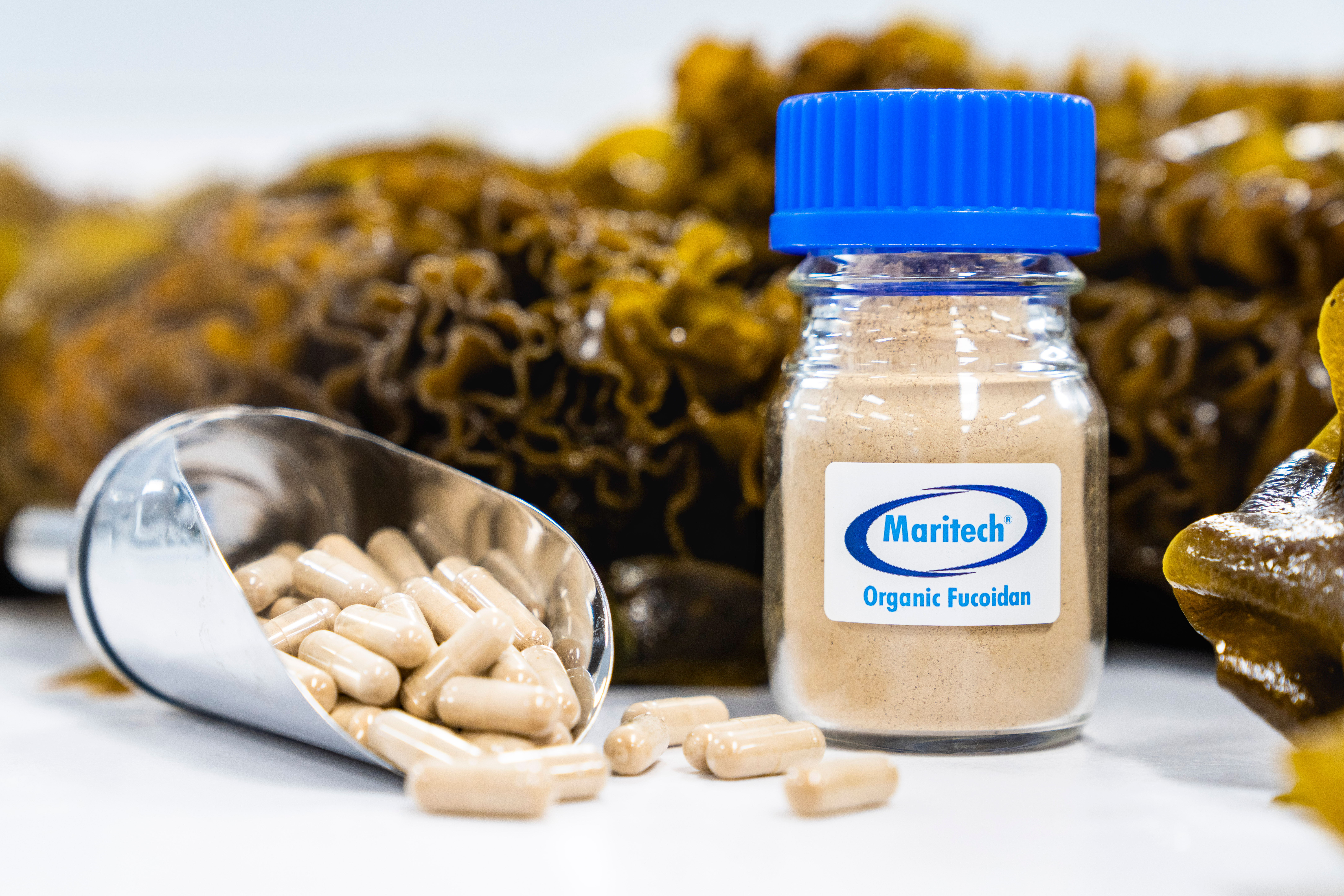
Fucoidan leader reports record production
22 Jan 2026
The global leader in fucoidan science, Marinova Pty Ltd, reported record annual fucoidan production for 2025. The company's total production volume has more than doubled over the past three years.
Read more
India Honours Ashwagandha with Commemorative Postal Stamp at WHO Global Summit
6 Jan 2026
HYDERABAD, December 20, 2025 – India’s Prime Minister Mr. Narendra Modi, alongside WHO Director-General Dr. Tedros Adhanom Ghebreyesus, released a commemorative postal stamp honoring ashwagandha at the recently concluded Second WHO Global Traditional...
Read more
PharmaLinea delivers actionable 2026 insights at the first ever NutraLoop™ Summit
22 Dec 2025
PharmaLinea held its first-ever NutraLoop™ Summit this December. The virtual event featured 12 speakers from companies such as IQVIA, NHCO, Radicle Science, and BeyondBrands, who provided comprehensive insights across the scientific and commercia...
Read more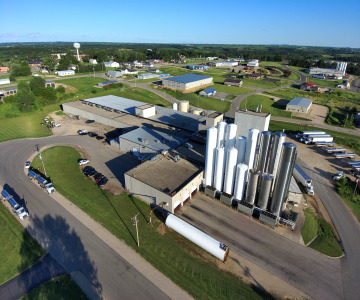
FrieslandCampina strengthens its global protein position with acquisition of Wisconsin Whey Protein
11 Dec 2025
Royal FrieslandCampina N.V. intends to acquire Wisconsin Whey Protein, a respected producer of whey protein isolates in the United States. Wisconsin Whey Protein will become part of FrieslandCampina Ingredients, a global leader in proteins and prebioti...
Read more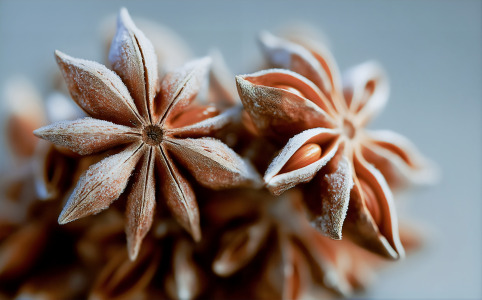
dsm-firmenich names ‘Frosted Star Anise’ as Flavor of the Year 2026, capturing a global desire for warmth and freshness
11 Dec 2025
Kaiseraugst (Switzerland), Maastricht (Netherlands), December 5, 2025 dsm-firmenich, innovators in nutrition, health, and beauty, announces ‘Frosted Star Anise’ as its Flavor of the Year for 2026. This...
Read more
Balchem Makes Strategic Investment in U.S. Food Ingredients Market with New Microencapsulation Manufacturing Facility
11 Dec 2025
Montvale, New Jersey, (10 December, 2025) – Balchem, a leading global manufacturer of specialty ingredients for human nutrition and health, is pleased to announce the development of a new, high-capacity man...
Read more