
Ingredients Categories
Finished Products
Finished Food Categories
- Bakery
- Beverages / Juices
- Cereal and grain products
- Confectionery
- Cooking Fats & Oils
- Dairy
- Egg products
- Fruits & Vegetables
- Infant & Baby food
- Meat, Poultry & Fish
- Nuts & Seeds products
- Other Finished Food Categories
- Pet Food
- Plant-based foods
- Prepared foods
- Sauces & Seasonings
- Sweet & Savoury Spreads
Specialised Finished Products
- Bee products
- Biotic products
- Dietary supplements
- Energy drinks
- Functional beverages
- Functional confectionery
- Functional food
- Functional powders
- Meal replacement products
- Nutricosmetics
- Other Specialised Finished Products
- Pet Dietary Supplements
- Pharma and OTC products
- Protein products
- Sugar replacers / Sweeteners
Health & Wellness Areas
Delivery Formats
Operations & Services
- 3D printing
- Analysis/ Testing
- Auditing & certifications
- Blending & mixing
- Bottling
- Certification
- Clinical trials
- Co-packing
- Coating
- Consulting
- Contract manufacturing
- Drying
- Electrospinning
- Encapsulating
- Enzymatic processing
- Extracting
- Extrusion
- Fat structuring
- Fermentation
- Filling
- Flavour development
- Freeze drying
- Granulating/ grinding/ milling / mixing
- High-pressure processing
- Labelling
- Other Operations & Services
- Packaging
- Packet filling
- Pasturising
- Quality assurance
- Saccharification
- Shear cell processing
- Spray drying
- Sterilisation
- Storage & Logistics
- Tabletting
- Toasting / roasting
- Ultra-high temperature processing
Sponsored Content
Examples of natural and synthetic antioxidants available on the market
25 Jun 2026
Antioxidants are additives capable of delaying or preventing the rancidity of food due to oxidation, and therefore of lengthening the shelf-life of the products. Other methods that prevent the deterioration of foods can also be considered antioxidants, such as vacuum-sealed or inert gas atmosphere packaging, or freezing, however in this article we will focus mainly on antioxidants that correspond to food additives.
Antioxidants are very important in the food industry, both for consumers, because they make food preserve its nutritional properties and quality levels, and for companies, since they have an impact on production cycles, on production levels or in strategic decisions such as exports or the development of new markets.

Types of antioxidants: natural and synthetic
There are several types of antioxidants that have been used historically in the food industry, as well as in other industries, such as cosmetics, pharmaceutical or animal nutrition. On the one hand are the natural antioxidants, which are obtained entirely from natural sources, and on the other the synthetic antioxidants, created from chemical processes.
Due to current trends in society to strive for healthier habits and greater expectations for food safety legislation (especially in Europe, North America and some Asian countries), natural antioxidants are experiencing a sustained growth over the last few years. This has been to the detriment of synthetic antioxidants, which, until recently were the most widely used, but lately have been losing ground due to the questions regarding their impact on health.
Below we will list some examples of natural and synthetic antioxidants most used today in the food industry.
Examples of natural antioxidants:
Tocopherols (E-306)
Tocopherols were one of the first liposoluble antioxidants isolated from plants. Due to their high concentration and habitual presence in vegetable oils, such as soybean or sunflower oil, Tocopherols are presented as the most common antioxidant in nature.
Tocopherols exist naturally as a mixture of four isomers (Alpha, Beta, Gamma and Delta). The antioxidant activity of each isomer is different, as is their vitamin power. Numerous studies show that the antioxidant capacity lies mainly in the gamma and delta isomers, being practically null in the alpha and beta isomers. These antioxidants prevent oxidation of lipids by stopping chain reactions of free radicals.
Tocopherols are a natural antioxidant with a great number of benefits, such as its resistance to high temperatures, its high solubility, its lack of impact on the colour or odour of the final product, or the possibility to be used in organic products. In addition, they are allowed as an antioxidant in any country in the world.
Ascorbic Acid (E-300)
Ascorbic Acid is a white crystalline powder used to stabilise beverages, fruits and vegetables. However, its application in fats and oils is limited due to its lipid insolubility.
This additive acts as an antioxidant through the extinction of oxygen, the reduction of free radicals and the regeneration of primary antioxidants. It is considered to be safe as a food additive and has no use limits.
In addition to its antioxidant activity, it acts as vitamin C, a flavouring, acidulant, colour fixative and reducing agent.
Ascorbic acid is very susceptible to elements such as heat, light or oxygen, so it is often necessary to add it exogenously to food.
Rosemary Extract (E-392)
This antioxidant is an extract obtained from the Rosemary plant using solvents suitable for human consumption. Its most important compounds from the antioxidant point of view are Rosmarinic Acid, Carnosol and Carnosic Acid.
Rosemary Extract is an antioxidant with good performance in animal fats, but it has some problems related to smell and taste in the doses that guarantee good stability, which is why sometimes it is necessary to undergo a deodorisation and discolouration process, making the product more expensive.
Rosemary Extract is usually combined with other antioxidants such as Tocopherols; together they have a synergistic effect.
Examples of synthetic antioxidants:
BHA (E-320) and BHT (E-321)
These compounds are two phenolic antioxidants, capable of stabilising free radicals by isolating them and preventing chain reactions. Both antioxidants are effective in animal fats, however, they are less effective in vegetable fats and oils.
Due to their chemical structures they are extremely volatile, so they are not recommended for methods that involve thermal processes, such as baking or frying. These antioxidants have a slight phenolic odour, so they may be undesirable additives in foods that undergo high temperature processes for an extended time.
BHA is a white, waxy solid sold in the form of flakes or tablets. BHT is white crystalline solid.
In Japan their use is prohibited, in Australia their consumption is prohibited for minors, and in Europe their use is limited. This is because there are indications that they can be harmful to our health.
TBHQ (E-319)
TBHQ is an antioxidant commonly used in vegetable oils and animal fats. As an antioxidant, it is more effective in vegetable oils than BHA and BHT. It is heat-stable and is considered an effective antioxidant in the prevention of oxidation of frying oils.
Like other synthetic antioxidants, there are indications that in high doses it can be harmful to health, so in Europe its use in food and has been banned, and in the United States limits have been set for its use.
Propyl Galate (E-310)
It is an antioxidant that is widely used in foods where the use of other liposoluble synthetic antioxidants such as BHA, BHT or TBHQ is not appropriate. This antioxidant also works synergistically with other natural and synthetic antioxidants.
Propyl Galate is sensitive to high temperatures, so it does not survive during cooking or frying. However, it is used in different vegetable oils, in the creation of artificial aromas and in some animal feeds.
These are some examples of the most commonly used natural and synthetic antioxidantswithin the food industry.
As a general rule, antioxidants for food use should be economical, safe, effective in low concentrations, capable of surviving processing, stable in finished products and not create any undesirable effects on colour, taste and odour. At present, there is no antioxidant that meets all of these requirements, so the selection of antioxidants will depend on factors such as application, compatibility, regulatory guidelines or market trends. Discover the advantages of using natural antioxidants in the manufacturing of food for human consumption.
In this sense, natural antioxidants are those that have been opening new paths in recent years and are being increasingly used by leading companies, such as food and other industries like cosmetics or animal nutrition.
Download our ebook and discover the keys to choosing the ideal antioxidant for your product!
Companies mentioned


Get more of our news on Google
Set Ingredients Network as a 'Preferred Source' to get quicker access to the news you value.
Related news
A new standard for omega-3 experience
13 Apr 2026
Omega-3 quality is no longer just about purity or concentration. Senses™ by Naturmega delivers ultra-pure, sensory-optimised omega-3 with no taste, no odour, and improved stability.
Read more
PharmaLinea’s iron supplement delivers improvements in hemoglobin comparable to ferrous sulfate with fewer side effects
23 Feb 2026
PharmaLinea, a Slovenian developer and manufacturer of private label food supplements, has announced the completion of a clinical study evaluating its finished formulation for iron deficiency.
Read more
LomaChelateX® – power in magnesium bisglycinate
12 Feb 2026
Gentle and effective: magnesium bisglycinate is setting a new standard. Through its LomaChelateX® brand, Dr. Paul Lohmann® delivers magnesium bisglycinate and a broad range of fully reacted mineral bisglycinates made in Germany.
Read more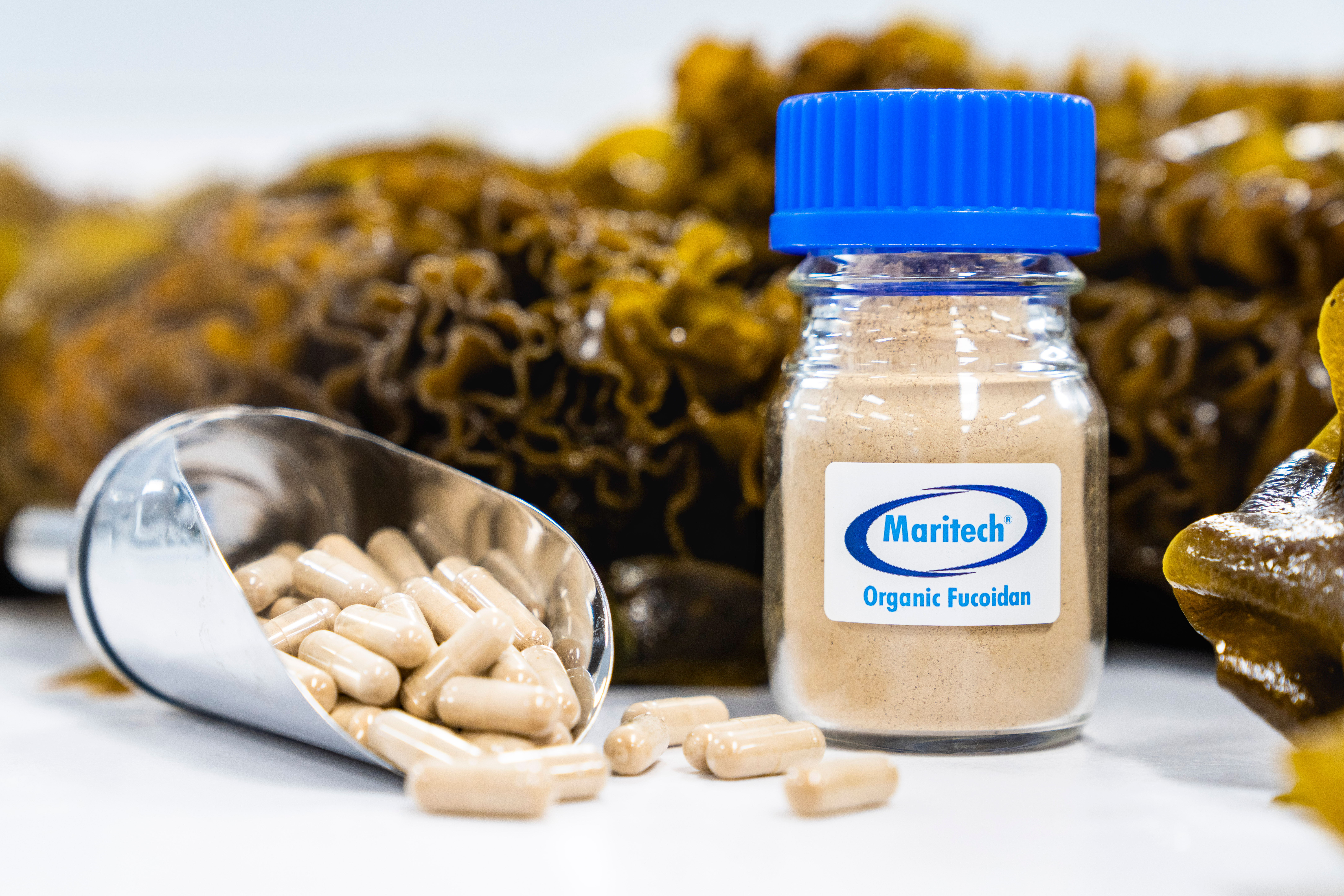
Fucoidan leader reports record production
22 Jan 2026
The global leader in fucoidan science, Marinova Pty Ltd, reported record annual fucoidan production for 2025. The company's total production volume has more than doubled over the past three years.
Read more
India Honours Ashwagandha with Commemorative Postal Stamp at WHO Global Summit
6 Jan 2026
HYDERABAD, December 20, 2025 – India’s Prime Minister Mr. Narendra Modi, alongside WHO Director-General Dr. Tedros Adhanom Ghebreyesus, released a commemorative postal stamp honoring ashwagandha at the recently concluded Second WHO Global Traditional...
Read more
PharmaLinea delivers actionable 2026 insights at the first ever NutraLoop™ Summit
22 Dec 2025
PharmaLinea held its first-ever NutraLoop™ Summit this December. The virtual event featured 12 speakers from companies such as IQVIA, NHCO, Radicle Science, and BeyondBrands, who provided comprehensive insights across the scientific and commercia...
Read more
FrieslandCampina strengthens its global protein position with acquisition of Wisconsin Whey Protein
11 Dec 2025
Royal FrieslandCampina N.V. intends to acquire Wisconsin Whey Protein, a respected producer of whey protein isolates in the United States. Wisconsin Whey Protein will become part of FrieslandCampina Ingredients, a global leader in proteins and prebioti...
Read more
dsm-firmenich names ‘Frosted Star Anise’ as Flavor of the Year 2026, capturing a global desire for warmth and freshness
11 Dec 2025
Kaiseraugst (Switzerland), Maastricht (Netherlands), December 5, 2025 dsm-firmenich, innovators in nutrition, health, and beauty, announces ‘Frosted Star Anise’ as its Flavor of the Year for 2026. This...
Read more
Balchem Makes Strategic Investment in U.S. Food Ingredients Market with New Microencapsulation Manufacturing Facility
11 Dec 2025
Montvale, New Jersey, (10 December, 2025) – Balchem, a leading global manufacturer of specialty ingredients for human nutrition and health, is pleased to announce the development of a new, high-capacity man...
Read more
Fucoidan specialist takes out top international health award
4 Dec 2025
Marinova has been named Australia's most outstanding contributor to international health in the nation's prestigious Australian Export Awards.
Read more