
Ingredients Categories
Finished Products
Finished Food Categories
- Bakery
- Beverages / Juices
- Cereal and grain products
- Confectionery
- Cooking Fats & Oils
- Dairy
- Egg products
- Fruits & Vegetables
- Infant & Baby food
- Meat, Poultry & Fish
- Nuts & Seeds products
- Other Finished Food Categories
- Pet Food
- Plant-based foods
- Prepared foods
- Sauces & Seasonings
- Sweet & Savoury Spreads
Specialised Finished Products
- Bee products
- Biotic products
- Dietary supplements
- Energy drinks
- Functional beverages
- Functional confectionery
- Functional food
- Functional powders
- Meal replacement products
- Nutricosmetics
- Other Specialised Finished Products
- Pet Dietary Supplements
- Pharma and OTC products
- Protein products
- Sugar replacers / Sweeteners
Health & Wellness Areas
Delivery Formats
Operations & Services
- 3D printing
- Analysis/ Testing
- Auditing & certifications
- Blending & mixing
- Bottling
- Certification
- Clinical trials
- Co-packing
- Coating
- Consulting
- Contract manufacturing
- Drying
- Electrospinning
- Encapsulating
- Enzymatic processing
- Extracting
- Extrusion
- Fat structuring
- Fermentation
- Filling
- Flavour development
- Freeze drying
- Granulating/ grinding/ milling / mixing
- High-pressure processing
- Labelling
- Other Operations & Services
- Packaging
- Packet filling
- Pasturising
- Quality assurance
- Saccharification
- Shear cell processing
- Spray drying
- Sterilisation
- Storage & Logistics
- Tabletting
- Toasting / roasting
- Ultra-high temperature processing
News
Affordability and taste more important to consumers than environmental responsibility
Tessa Wiles, Content Editor - Food 8 Nov 2024For foods produced using regenerative agriculture, affordability and taste are more important than environmental and social responsibility, according to an August report from Purdue.
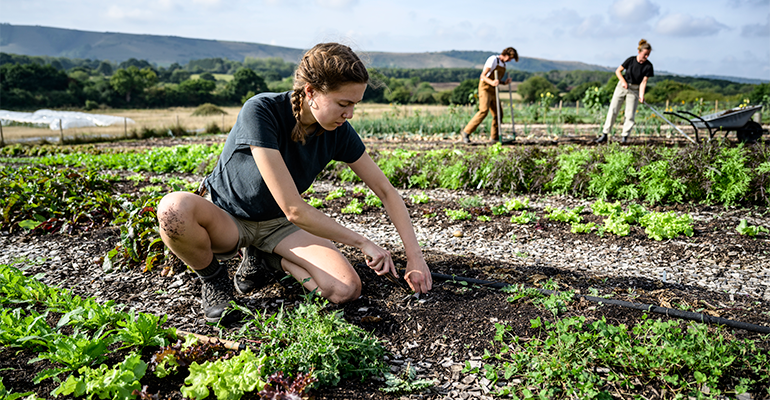
Purdue University’s Center for Food Demand Analysis and Sustainability (CFDAS) conducts monthly surveys of 1,200 American consumers. In its August 2024 issue of Consumer Food Insights, researchers looked at consumers' familiarity with and perceptions of regenerative agriculture.
Majority of consumers are unfamiliar with the term “regenerative agriculture”
The current food system is not sustainable for people or the environment. The method of regenerative agriculture, focused on building a circular food system that benefits both the environment and farmers, aims to establish a sustainable future for all.
The sustainable farming approach prioritises restoring soil health, increasing biodiversity, and improving ecosystems. Unlike traditional farming, regenerative agriculture does not follow a one-size-fits-all approach. Instead, it adapts to local conditions using various practices to reduce soil disturbance and enhance water and nutrient retention.
While the varying regenerative agricultural approaches are crucial in sequestering carbon from the soil, reducing greenhouse gas emissions, and producing more nutritious food, these differing methods mean that, on a consumer level, things get a little murky when it comes to understanding exactly what regenerative agriculture is.
The purdue data shows that when it comes to familiarity with regenerative agriculture, 71% of US consumers are unfamiliar or only slightly familiar with the term.
Those who reported some familiarity—extremely familiar (6%), very familiar (9%), and moderately familiar (14%)—were asked to describe the term in a few words. The most common words included: soil, health, land, and agriculture.
Despite the growing conversations around sustainability and sustainable farming practices, this suggests that consumer awareness of regenerative agriculture is low.
Consumers claim willingness to pay more for foods produced using regenerative agriculture
Consumers’ intentions to purchase and purchasing behaviour itself are not always aligned.
Purdue researchers found the results were mixed when consumers were asked about their willingness to pay more for foods produced using regenerative agriculture. Fifty-six percent of respondents said they were willing to pay a premium; yet when asked to choose between a traditionally produced snack priced at $5, or one produced using regenerative agriculture at $5.50, 53% opted for the traditional and cheaper option.
Theoretically, consumers may support sustainable practices, but cost, value, and taste may be just as, if not more important factors in purchasing decision-making.
Sustainability claims on their own may not be enough to drive consumer purchasing behaviour, and although sustainability is becoming an increasingly important consideration, it appears to not be the driving factor. Research on consumer purchasing choices by Innova Markets shows that taste often surpasses sustainability concerns. Alongside this, a 2024 study published in Future Foods exploring consumer willingness to pay a premium for sustainable snack options, found that even when sustainability was a factor, health was the primary driver in purchasing decisions.
Balancing sustainability with value
Price sensitivity may be a key barrier to the adoption of products produced using regenerative agriculture, and brands may need to ensure their products remain competitively priced while highlighting how they balance sustainability with value.
The 44% of consumers who were unwilling to pay more for regenerative agriculture or sustainable food products and the 53% who chose the traditional ($5) lower-cost item, were asked an additional multichoice question about their decision. A large majority (88%) cited price as the main reason for their unwillingness to purchase. Nearly half (47%) agreed with the statement “I support regenerative agriculture, but I do not want to pay higher food prices”, and 42% agreed with the statement “I do not want to pay higher prices for food”.
Among consumers who were willing to pay more and those who chose the regenerative agriculture product at $5.50, 45% agreed with the statement “I support regenerative agriculture, and I am willing to pay higher food prices for it”, and 33% agreed with “I support regenerative agriculture”, however, 20% said that while they support regenerative agriculture in principle, they do not want to pay higher prices for food.
Education and transparency may be needed to increase consumer trust in sustainable claims
Consumers appear to not be opposed to the idea of regenerative agriculture, but are more likely to opt out if it means paying more for a product.
Brands looking to leverage regenerative agriculture in their marketing may need to rethink their messaging or look for ways to increase consumer education on the topic. Focusing on the tangible benefits of regenerative agriculture in their marketing and messaging, such as the environmental impact and future food security, may give brands a competitive edge.
2023 data from YouGov shows that over half of global consumers are sceptical of the sustainability claims of most brands. Worryingly, only one in 10 consumers (9%) said they believe a brand’s sustainability claims. In addition, the Purdue survey found that over two-thirds of the consumers surveyed were unfamiliar with regenerative agriculture as a term, pointing to the pressing need for education as well as transparency.

Get more of our news on Google
Set Ingredients Network as a 'Preferred Source' to get quicker access to the news you value.
Related news

M&S launches own-brand pet food range
11 Sep 2026
UK retailer Marks & Spencer has launched its own-brand pet food line Paws & Pals – a well-timed and strategic move that will appeal to loyal shoppers, says a marketing expert.
Read more
Do the US dietary guidelines put UPFs under pressure?
10 Sep 2026
Will the US dietary guidelines change the way Americans eat, swapping ultra-processed foods for whole foods? We asked Dr Barry Popkin, renowned nutrition and obesity researcher.
Read more
Food fraud costs UK economy £2bn each year
9 Sep 2026
Food fraud is costing the UK economy up to £2 billion (€2.3 billion) every year although the food sector is more “resilient” than others, according to a recent study.
Read more
Health and wellness engagement matures across Middle East and Africa
4 Sep 2026
Many consumers in the Middle East and Africa are now proactively engaged in health and wellness, looking to integrate better habits and products into their daily lives, say experts.
Read more
Kellogg accelerates work to remove artificial colours from all US cereals
3 Sep 2026
WK Kellogg has announced an accelerated timeline to eliminate all artificial colours and the chemical preservative, BHT, across its full US portfolio of cereals and cereal packaging.
Read more
Skimpflation: An ‘unfair’ and risky approach to keeping prices low
2 Sep 2026
Consumers see skimpflation – reducing the quality of ingredients due to rising costs – as more unfair than shrinkflation, making it a risky strategy according to recent research.
Read more
Royal Canin launches ‘freshly-cooked’ therapeutic dog food
1 Sep 2026
Mars-owned Royal Canin has moved into the therapeutic diet sector with the launch of its Fresh Veterinary Diets range for dogs with health conditions. We asked a veterinary nutritionist for her opinion.
Read more
NielsenIQ’s EU barometer shows Britain leading in grocery inflation
31 Aug 2026
Britain was the only country to record grocery inflation above 2%, according to NielsenIQ data that compared Europe’s five biggest grocery markets from February to May 2026.
Read more
‘Urgent gaps’ in achieving 2030 food system goals
27 Aug 2026
Global food systems are failing to meet 2030 targets across indicators including health, environment, and resilience, according to a report co-authored by the Food and Agriculture Organisation (FAO).
Read more
Seven-Eleven uses microbial testing tech to extend katsudon shelf life
26 Aug 2026
Japanese retail company Seven-Eleven has improved its factory’s microbial environment to keep comfort-food staple, katsudon, fresher for longer.
Read more