
Ingredients Categories
Finished Products
Finished Food Categories
- Bakery
- Beverages / Juices
- Cereal and grain products
- Confectionery
- Cooking Fats & Oils
- Dairy
- Egg products
- Fruits & Vegetables
- Infant & Baby food
- Meat, Poultry & Fish
- Nuts & Seeds products
- Other Finished Food Categories
- Pet Food
- Plant-based foods
- Prepared foods
- Sauces & Seasonings
- Sweet & Savoury Spreads
Specialised Finished Products
- Bee products
- Biotic products
- Dietary supplements
- Energy drinks
- Functional beverages
- Functional confectionery
- Functional food
- Functional powders
- Meal replacement products
- Nutricosmetics
- Other Specialised Finished Products
- Pet Dietary Supplements
- Pharma and OTC products
- Protein products
- Sugar replacers / Sweeteners
Health & Wellness Areas
Delivery Formats
Operations & Services
- 3D printing
- Analysis/ Testing
- Auditing & certifications
- Blending & mixing
- Bottling
- Certification
- Clinical trials
- Co-packing
- Coating
- Consulting
- Contract manufacturing
- Drying
- Electrospinning
- Encapsulating
- Enzymatic processing
- Extracting
- Extrusion
- Fat structuring
- Fermentation
- Filling
- Flavour development
- Freeze drying
- Granulating/ grinding/ milling / mixing
- High-pressure processing
- Labelling
- Other Operations & Services
- Packaging
- Packet filling
- Pasturising
- Quality assurance
- Saccharification
- Shear cell processing
- Spray drying
- Sterilisation
- Storage & Logistics
- Tabletting
- Toasting / roasting
- Ultra-high temperature processing
News
‘Only … Ingredients’ but more food waste?
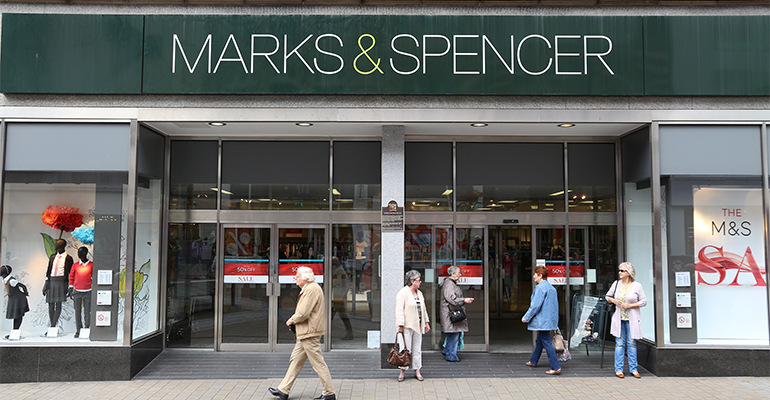
David Burrows, Freelance Journalist 5 Mar 2026British retailer Marks and Spencer has introduced 12 new products to its 'Only … Ingredients' range, as brands are advised to focus on “transparent communication”.
The upmarket grocer’s new clean-label ketchup has ‘only 8 ingredients’ - tomato puree, water, vinegar, salt, ground spices and sweetened with agave - and there are ‘only 6 ingredients’ in the olive oil mayonnaise - olive oil, egg yolk, white wine vinegar, water, salt and mustard.
Two new yoghurts have ‘only 5 ingredients’ while the bran flakes have two fewer at ‘only 3 ingredients’ - whole grain wheat, barley malt extract and sea salt.
There are also sausages and chipolatas with ‘only 6 ingredients’ - Heritage Gold pork, water, sage, black pepper, salt, and filled into natural casings. Marks and Spencer’s British beef burgers have ‘only 3 ingredients’ - beef, salt and black pepper.
Kathryn Turner, M&S director of product development, said: “Imagine making your favourite everyday food at home, with ingredients you recognise and trust. That’s exactly what we’ve done with our ‘Only Ingredients’ range. Our customers have loved it so much that we’ve extended the range and will keep building it,” she added.
The move - which follows the March launch of various clean-label cereals - has been welcomed by some as supermarkets and manufacturers look to attract consumers who are concerned by ultra-processing, including long ingredients lists.
However, the lack of preservatives in the processed meats has raised questions about the shelf-life which could increase waste in a category with considerable environmental impacts.
The greenhouse gas emissions associated with wasted food and drink in the UK amounted to around 16 million tonnes of CO2 equivalent (16MtCO2e) in 2022, the most recent year for which there is data. Meat and fish contributed the largest proportion of these (26%), despite accounting for just 6% edible food waste by weight.
Further research published recently by WRAP, an NGO which advises the UK government on resources and leads the food waste reduction roadmap for businesses, shows household meat and fish waste amounted to 410,000 tonnes a year in the UK in 2022, of which approximately two thirds (260,000 tonnes) was edible food, costing £3bn.
When it comes to edible waste alone, pork, ham and bacon waste was second only to poultry waste at around 91,000 tonnes. “All of the processed pork waste was avoidable, the largest amount being sausages at 25,000 tonnes costing £160m,” Wrap explained in its Household food and drink waste in the United Kingdom 2022 report, published in July 2025.
By weight the most common reason for disposal of meat was that it ‘smelled/looked
off’, with 67,000 tonnes wasted for this reason, closely followed by ‘being past the
date on the label’ (59,000 tonnes). Almost 25,000 tonnes of processed pork products were wasted due to being past the date on the label.
“[...] best practice is to extend product life for as long as possible and to always look for ways to further extend – for example, through the use of skin packs,” a Wrap spokeswoman told Ingredients Network. “This is particularly beneficial for fillets and joints and bacon slices and could be extended to other products too,” she added.
The biggest opportunity to "save" meat waste remains freezing it, said Wrap, and encouraged companies to include additional information on packs, such as freezing duration and what to do with it once frozen (how to defrost, for example).
Strong argument for fortification
The new Marks and Spencer range also raised further questions about the role of fortification.
Clean-label foods will be a “huge trend” in 2025 and onwards, explained one clinical nutritionist on social media when Marks and Spencer launched its cereals. “While the idea of simpler, less processed foods is appealing, is removing essential vitamins and minerals the right move?” they wrote.
In the UK, many families – particularly those on lower incomes – rely on fortified cereals for key nutrients that can be difficult to obtain from diet alone. Fortified breakfast cereals are a significant source of iron in British diets, for example.
Cornflakes and other cereals are often fortified with vitamins, but this can tip them into the ultra-processed foods (UPFs) category.
Plant-based milks also rely on added ingredients, like micronutrients and oils, for fortification as well as to enhance the sensory elements and improve shelf life.
Oatly recently stepped into the debate with new cartons labelled ‘Trust the processed’ on the side.
Rebecca McGuinness, a beverage and formulation development consultant and founder of Atelier Infusion, described the move as “a really clever way of addressing the UPF conversation. Processing alone doesn’t make something ultra-processed [...] What matters more is ingredient choice and purpose, and [Oatly] does a good job of encouraging nuance rather than fear around the word ‘processed’,” she added.
Ina Dawer, global insights manager (ingredients) at Euromonitor, recently said that instead of oversimplifying formulations, brands should focus on transparent communication, pointing to Oatly, the plant-based oat drink brand, and its positioning, “it’s like milk, but made for humans”.
As reformulation technologies gain ground and become more engineered, consumer perceptions around ultra-processed and what constitutes “clean label” are also shifting, Dawer explained.
She outlined “six key pillars” or lenses through which consumers assess clean label products: authenticity, transparency, safety, simplicity, efficacy, and balance.
However, what consumers perceive as “good” changes depending on the category.
“For ready meals, it’s about the usage of whole foods, [...] but for beverages we are starting to see clean caffeine as a trend, where ingredients like magnesium are starting to deliver less jittery energy,” she said.
“This puts a lot of pressure again on manufacturers to think about how [they are] going to deliver these clean labels, and what a lot of companies end up doing is they fall into this trap of oversimplification.”

Get more of our news on Google
Set Ingredients Network as a 'Preferred Source' to get quicker access to the news you value.
Related news

Do the US dietary guidelines put UPFs under pressure?
10 Sep 2026
Will the US dietary guidelines change the way Americans eat, swapping ultra-processed foods for whole foods? We asked Dr Barry Popkin, renowned nutrition and obesity researcher.
Read more
Health and wellness engagement matures across Middle East and Africa
4 Sep 2026
Many consumers in the Middle East and Africa are now proactively engaged in health and wellness, looking to integrate better habits and products into their daily lives, say experts.
Read more
Skimpflation: An ‘unfair’ and risky approach to keeping prices low
2 Sep 2026
Consumers see skimpflation – reducing the quality of ingredients due to rising costs – as more unfair than shrinkflation, making it a risky strategy according to recent research.
Read more
‘Urgent gaps’ in achieving 2030 food system goals
27 Aug 2026
Global food systems are failing to meet 2030 targets across indicators including health, environment, and resilience, according to a report co-authored by the Food and Agriculture Organisation (FAO).
Read more
Seven-Eleven uses microbial testing tech to extend katsudon shelf life
26 Aug 2026
Japanese retail company Seven-Eleven has improved its factory’s microbial environment to keep comfort-food staple, katsudon, fresher for longer.
Read more
Chimac’s fusion sauces bring Korean flavours to Europe
25 Aug 2026
Irish sauce brand Chimac is tapping into Korea’s culinary traditions, bringing its flavours and products to European consumers who want a taste of K-food.
Read more
Global demand for instant noodles continues to rise
24 Aug 2026
Global demand for instant noodles reached 124.21 billion servings last year, representing a 0.7% year-on-year increase – or 900 million extra servings.
Read more
Popular barbecue staples experience sharp price increases
19 Aug 2026
The typical cost of US shoppers’ barbecue baskets has risen by 12% over the past year – the fastest annual rise in a decade, figures from The Economist show.
Read more
Hot NPD: Nissin launches first cold-water Cup Noodles
18 Aug 2026
Nissin is taking one of Japan’s most iconic instant meals in a completely new direction with the launch of the first cold water-only Cup Noodles in the brand’s 55-year history.
Read more
Manam Chocolate aims to bring premium Indian cacao to 'the world stage'
11 Aug 2026
Craft chocolate brand Manam Chocolate is investing in local expansion and supply chain innovation throughout India as it works to build out the premium reputation of its locally produced cacao products.
Read more