
Ingredients Categories
Finished Products
Finished Food Categories
- Bakery
- Beverages / Juices
- Cereal and grain products
- Confectionery
- Cooking Fats & Oils
- Dairy
- Egg products
- Fruits & Vegetables
- Infant & Baby food
- Meat, Poultry & Fish
- Nuts & Seeds products
- Other Finished Food Categories
- Pet Food
- Plant-based foods
- Prepared foods
- Sauces & Seasonings
- Sweet & Savoury Spreads
Specialised Finished Products
- Bee products
- Biotic products
- Dietary supplements
- Energy drinks
- Functional beverages
- Functional confectionery
- Functional food
- Functional powders
- Meal replacement products
- Nutricosmetics
- Other Specialised Finished Products
- Pet Dietary Supplements
- Pharma and OTC products
- Protein products
- Sugar replacers / Sweeteners
Health & Wellness Areas
Delivery Formats
Operations & Services
- 3D printing
- Analysis/ Testing
- Auditing & certifications
- Blending & mixing
- Bottling
- Certification
- Clinical trials
- Co-packing
- Coating
- Consulting
- Contract manufacturing
- Drying
- Electrospinning
- Encapsulating
- Enzymatic processing
- Extracting
- Extrusion
- Fat structuring
- Fermentation
- Filling
- Flavour development
- Freeze drying
- Granulating/ grinding/ milling / mixing
- High-pressure processing
- Labelling
- Other Operations & Services
- Packaging
- Packet filling
- Pasturising
- Quality assurance
- Saccharification
- Shear cell processing
- Spray drying
- Sterilisation
- Storage & Logistics
- Tabletting
- Toasting / roasting
- Ultra-high temperature processing
News
What’s the best positioning for healthy indulgent products?
Natasha Spencer-Jolliffe, Freelance Journalist 27 Feb 2026For healthy indulgent products, messaging around enjoyment resonates more strongly than “guilt-free”, according to a study by EIT Food.
The qualitative consumer observatory study, compiled by EIT Food and Puratos, offers recommendations on how producers can best develop, position, and create messages for better-for-you, healthier indulgent products for the mainstream market.
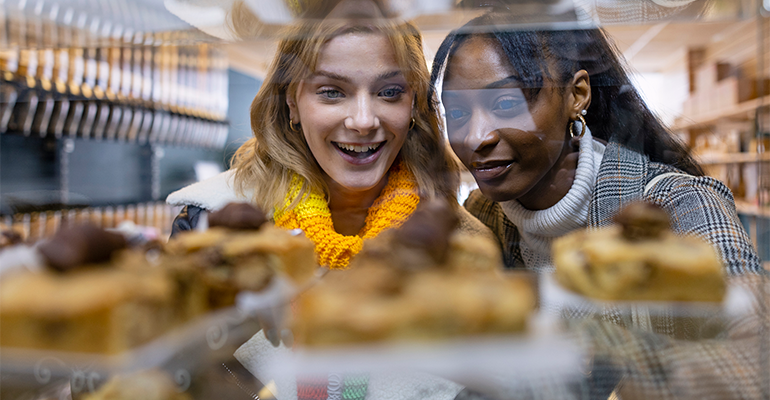
The study results show that shoppers still want to satisfy cravings but prefer balance over compromise, and seek out indulgent experiences that feel natural and wholesome.
“Consumers want to make better choices, but they also want pleasure and connection,” said Klaus Grunert, professor of marketing at Aarhus University and lead of the EIT Food Consumer Observatory.
Natural, recognisable and transparent
The authors of the study, ‘Finding harmony: Where health meets indulgence in food’, found that trust among food consumers grows when products highlight natural, recognisable ingredients and make transparent claims. Simultaneously, shoppers favour products that avoid overly scientific or abstract health claims, which often provoke scepticism.
“Healthier indulgence is no longer a niche but a rapidly evolving expectation,” said Sara De Pelsmaeker, group health and wellbeing director at Puratos. “Consumers are clear that they want treats they can feel good about, but trust and taste must come first.”
Interviewing 110 consumer participants across 17 European countries, EIT Food and Puratos’ insights suggest that as consumer demand for healthier options grows, there is an opportunity to position indulgent products that are both delicious and genuinely good for you.
Enjoyment resonates far more strongly than ‘guilt-free’
For indulgent marketers planning their marketing messages, the emphasis is on using positive, inclusive language and narratives that focus on care. Enjoyment resonates far more strongly than “guilt-free” or restrictive messaging.
“It represents a new space where pleasure is increasingly integrated with health aspirations, economic constraints, and environmental and ethical responsibility,” Sonia Riesco Granja, researcher and innovation activator at AZTI, told Ingredients Network.
“Indulgence becomes more strategic: small, high-quality pleasures replace larger, less frequent, and costlier indulgences,” said Riesco Granja.
Re-envisioning product positioning
The existing permissible indulgence trend has seen food brands position their products around “guilt-free” or overly functional health claims. Yet these appear outdated and unappealing.
“Consumers want healthier indulgence but distrust bold, abstract or overly functional health claims,” Durk Bosma, head of thought leadership at Future of Food Institute, told Ingredients Network. “These claims feel artificial and polarising, especially when linked to ultra-processed cues or low-price products,” Bosma added. “Guilt‑free” frames are explicitly described as alienating.
“Positioning around balance, naturalness and trust works because it aligns with what consumers see as credible, familiar and emotionally supportive – rather than moralising or overclaiming,” said Bosma.
Marketing is already incorporating this positioning. Indulgent brands are led by naturalness, building immediate trust and signalling authenticity. They are using whole-food cues, minimal processing, simple ingredient lists and natural sweeteners.
Marketers and manufacturers are also using premium cues, such as visual language, which helps position healthier indulgence as elevated rather than compromised. It also adds credibility, as consumers understand that making something healthier may cost more.
Wellbeing shifts to a fully holistic outlook
Manufacturers will centre their R&D pipelines and product portfolios around purpose, according to the authors, with growing emphasis on holistic health is reshaping expectations of indulgence. “Healthier indulgence” is emerging through novel ingredient approaches, functional fortification, new formats such as gummies delivering bioactive compounds, and new sensory experiences that align with health goals.
Permissible indulgence will continue to shift toward better-for-you product categories, with manufacturers reducing sugar, fat and salt in their formulations. Confectionery and cookies, for instance, are a key area where producers can add a healthier twist while preserving their treat identity.
“A new space is also emerging for emotional indulgence linked to resilience and self-care,” said Riesco Granja. The cultural rise of alcohol-free lifestyles illustrates how brands can simultaneously pitch indulgent experiences that enhance emotional resilience.
Rather than seeking indulgence as a deviation from healthy living, consumers are pursuing indulgence that complements their health goals. “A paradigm shift from ‘guilty pleasures’ to ‘functional pleasures,” said Riesco Granja. Emerging mental wellbeing priorities are also influencing Indulgence, adding another dimension to its evolving definition.
Eating experiences become created, customised, curated
In 2026, expect to see indulgence start to become “a designed moment, not just a product choice”, Riesco Granja said. Digital-driven lifestyles will elevate indulgence into a curated experience where sensory pleasure, convenience and personal identity converge. Artificial intelligence (AI) driven personalisation, convenient meal planning and immersive food experiences indicate how indulgence is becoming increasingly tailored, experiential and reflective of individual identities.
Technology enhances not only functional outcomes such as saving time and enhancing convenience, but also novelty, sensory stimulation and emotional gratification. “Indulgence increasingly extends beyond product attributes to include social and emotional value,” Riesco Granja added.
Pleasure prioritises planetary health
Consumers will also continue to integrate environmental and ethical responsibility into their pursuit of pleasure.
“This ethical reframing expands indulgence to encompass a sense of moral satisfaction,” said Riesco Granja. Shoppers exploring relatively nascent products in niche spaces, such as upcycled goods and alternative proteins, create new territories for indulgence, blending novelty with environmental consciousness.
A rise in sustainability and ethical consciousness reframes indulgence as not just a pleasure but also an act with ethical implications that aligns with personal values.
“Indulgence is also about feeling good about one’s choices and is therefore increasingly associated with ‘low-impact pleasure’,” said Riesco Granja.

Get more of our news on Google
Set Ingredients Network as a 'Preferred Source' to get quicker access to the news you value.
Related news

Do the US dietary guidelines put UPFs under pressure?
10 Sep 2026
Will the US dietary guidelines change the way Americans eat, swapping ultra-processed foods for whole foods? We asked Dr Barry Popkin, renowned nutrition and obesity researcher.
Read more
Health and wellness engagement matures across Middle East and Africa
4 Sep 2026
Many consumers in the Middle East and Africa are now proactively engaged in health and wellness, looking to integrate better habits and products into their daily lives, say experts.
Read more
Skimpflation: An ‘unfair’ and risky approach to keeping prices low
2 Sep 2026
Consumers see skimpflation – reducing the quality of ingredients due to rising costs – as more unfair than shrinkflation, making it a risky strategy according to recent research.
Read more
‘Urgent gaps’ in achieving 2030 food system goals
27 Aug 2026
Global food systems are failing to meet 2030 targets across indicators including health, environment, and resilience, according to a report co-authored by the Food and Agriculture Organisation (FAO).
Read more
Seven-Eleven uses microbial testing tech to extend katsudon shelf life
26 Aug 2026
Japanese retail company Seven-Eleven has improved its factory’s microbial environment to keep comfort-food staple, katsudon, fresher for longer.
Read more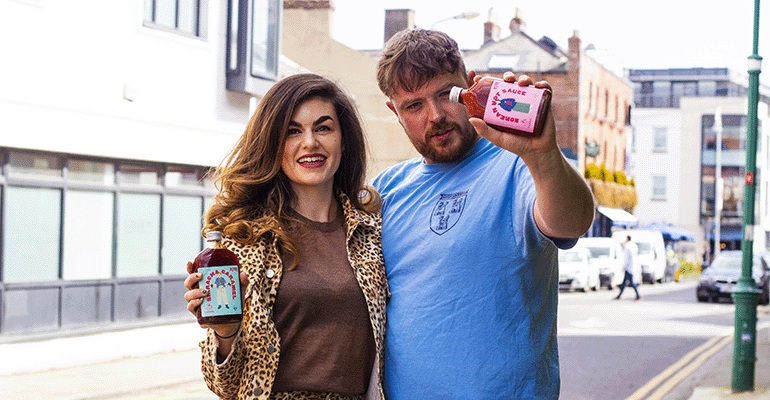
Chimac’s fusion sauces bring Korean flavours to Europe
25 Aug 2026
Irish sauce brand Chimac is tapping into Korea’s culinary traditions, bringing its flavours and products to European consumers who want a taste of K-food.
Read more
Global demand for instant noodles continues to rise
24 Aug 2026
Global demand for instant noodles reached 124.21 billion servings last year, representing a 0.7% year-on-year increase – or 900 million extra servings.
Read more
Popular barbecue staples experience sharp price increases
19 Aug 2026
The typical cost of US shoppers’ barbecue baskets has risen by 12% over the past year – the fastest annual rise in a decade, figures from The Economist show.
Read more
Hot NPD: Nissin launches first cold-water Cup Noodles
18 Aug 2026
Nissin is taking one of Japan’s most iconic instant meals in a completely new direction with the launch of the first cold water-only Cup Noodles in the brand’s 55-year history.
Read more
Manam Chocolate aims to bring premium Indian cacao to 'the world stage'
11 Aug 2026
Craft chocolate brand Manam Chocolate is investing in local expansion and supply chain innovation throughout India as it works to build out the premium reputation of its locally produced cacao products.
Read more