
Ingredients Categories
Finished Products
Finished Food Categories
- Bakery
- Beverages / Juices
- Cereal and grain products
- Confectionery
- Cooking Fats & Oils
- Dairy
- Egg products
- Fruits & Vegetables
- Infant & Baby food
- Meat, Poultry & Fish
- Nuts & Seeds products
- Other Finished Food Categories
- Pet Food
- Plant-based foods
- Prepared foods
- Sauces & Seasonings
- Sweet & Savoury Spreads
Specialised Finished Products
- Bee products
- Biotic products
- Dietary supplements
- Energy drinks
- Functional beverages
- Functional confectionery
- Functional food
- Functional powders
- Meal replacement products
- Nutricosmetics
- Other Specialised Finished Products
- Pet Dietary Supplements
- Pharma and OTC products
- Protein products
- Sugar replacers / Sweeteners
Health & Wellness Areas
Delivery Formats
Operations & Services
- 3D printing
- Analysis/ Testing
- Auditing & certifications
- Blending & mixing
- Bottling
- Certification
- Clinical trials
- Co-packing
- Coating
- Consulting
- Contract manufacturing
- Drying
- Electrospinning
- Encapsulating
- Enzymatic processing
- Extracting
- Extrusion
- Fat structuring
- Fermentation
- Filling
- Flavour development
- Freeze drying
- Granulating/ grinding/ milling / mixing
- High-pressure processing
- Labelling
- Other Operations & Services
- Packaging
- Packet filling
- Pasturising
- Quality assurance
- Saccharification
- Shear cell processing
- Spray drying
- Sterilisation
- Storage & Logistics
- Tabletting
- Toasting / roasting
- Ultra-high temperature processing
News
What are the winning strategies in GLP-1-friendly foods?
Lynda Searby, Freelance Journalist 23 Feb 2026Successful GLP-1 friendly products will be the ones that feel inclusive – not those that turn the product into a medical badge, says a Rabobank analyst.
January saw several UK multiples launch ranges designed for GLP-1 users.
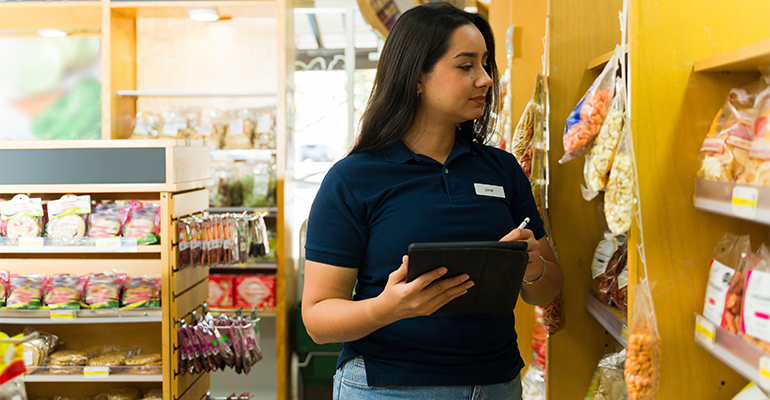
Convenience retailer Co-op unveiled a GLP-1 friendly range of “mini meals” under its own label, as part of a new Good Fuel sub-brand. The 250g meals are said to have been specially developed for shoppers with smaller appetites.
Supermarket giant Morrison’s teamed up with sports nutrition group Applied Nutrition to develop its GLP-friendly offer, which is extensive, taking in 53 products spanning sandwiches, pizzas, salads, and ready meals. The meals are marketed under the strapline “small & balanced”, and emblazoned with a “GLP-friendly” badge on the front of pack.
Frozen food retailer Iceland has added 38 new lines aimed at shoppers using appetite-suppressing weight loss medication. The rollout includes the addition of more than 20 new high-protein meals and snacks to its Myprotein range, Alongside this, Iceland has broadened its Slimming World frozen range, adding new formats including breakfast pancakes, lunch bowls, filled pastas, main meals, sides, and meals.
M&S, meanwhile, has taken a less overtly GLP-1 approach with its Nutrient Density range. Its messaging is around packing more flavour, fibre, vitamins, and minerals per calorie, and emphasises the use of whole food, store cupboard ingredients. There has been a lot of noise on social media about the H50 Shot, which blends coconut water, botanicals, ginger, and sea moss. Other Nutrient Dense SKUs include a Berry Bliss bowl, super seeded crackers, Romesco chicken, super seeded oaty bread, and a roasted butternut & almond grains salad.
Protein “power pot” ready meals are Asda’s proposition in this space, although there are no direct references to GLP-1. Instead, they are pitched as an “affordable, protein, and calorie-conscious meal solution…for those with reduced appetites”.
Sainsbury’s was later to the party, announcing the launch of its “small but mighty” range of high protein, nutrient-rich ready meals at the start of February, with no mention of GLP-1.
NPD for GLP-1 users: Make every bite count
Julia Buech, senior consumer foods analyst at RaboResearch Food & Agribusiness, says the principle that unites this new tranche of retailer-led new product development (NPD) as being about “making every bite count”.
“Nutrient density is at the core of this. But what also really matters for GLP‑1 users is food that makes smaller portions feel properly satisfying – not just in terms of nutrition, but in a way that still feels enjoyable to eat. That’s speeding up trends that were already building: protein, fibre, functional benefits, delivered in formats that are tasty and convenient,” she told this publication.
Although M&S is the retailer that is banging the nutrient density drum the loudest, all of the ranges are packing more nutrition into small portions, with the focus on providing high protein, high fibre, and “one of your five a day”.
Buech sees this as a positive, but doesn’t think it should be limited to a GLP-1 context.
“What’s nice to see is the stronger focus on nutritional quality – fresher, more wholesome recipes and products that actually deliver something meaningful per calorie. And honestly, this shift shouldn’t be tied to GLP‑1 at all; it’s a direction the food industry has needed for years,” she said.
“If these launches help raise the baseline for everyday nutrition while still playing into convenience – quick meals and snacks that work on busy days – that’s a win for a much wider group of shoppers than GLP‑1 users alone,” she added.
Keep it subtle and inclusive
In fact, among the recent UK launches, only Morrisons has leaned into an explicit GLP‑1 claim. Most retailers are keeping things deliberately subtle - focusing on benefits and nutritional value, rather than plastering GLP‑1 across the front of pack.
And in Buech’s view, this is the right call.
“Realistically, most shoppers will not want GLP‑1 stamped on their dinner. And from a retailer or brand perspective, why narrow your audience more than necessary? Overall, the strategies that are more likely to win are the ones that feel inclusive, not the ones that turn the product into a medical badge,” she said.
At the other end of the scale from Morrisons are those retailers who have chosen not to join the GLP-1 friendly fray. But by staying on the sidelines, do they risk missing out?
Buech doesn’t think that it is necessarily a mistake to hold back.
“Some retailers are taking a wait‑and‑see approach, especially since many of their existing options already work well for GLP‑1 users without needing a special label,” she said.
Where it could become a risk is if others start framing this in a more joined‑up way, with clearer signposting or dedicated weight‑management aisles, she ventured.
“If that kind of framing resonates with shoppers, those who stayed on the sidelines may find themselves catching up fast. But let’s face it – if the early movers gain momentum, the rest won’t stay quiet for long,” she said.
A new category or an ‘emerging need state’?
Buech also thinks it is over-egging it to refer to GLP-friendly foods as a new category.
“I wouldn’t call it a fully formed category yet; it’s more of an emerging need state that retailers are starting to organise around. The recent burst of UK launches shows how quickly this space can move, but it’s still early days,” she said.
In terms of potential, she said a lot will depend on how widely GLP‑1 drugs are adopted. With uptake expected to grow, that alone will expand the opportunity.
“But even beyond that, GLP‑1 is accelerating shifts that were already happening anyway – high-protein, nutrient density, portion control – which gives this space a tailwind. So yes, there’s clear room for growth, even if the ‘category’ is still taking shape.”

Get more of our news on Google
Set Ingredients Network as a 'Preferred Source' to get quicker access to the news you value.
Related news

M&S launches own-brand pet food range
11 Sep 2026
UK retailer Marks & Spencer has launched its own-brand pet food line Paws & Pals – a well-timed and strategic move that will appeal to loyal shoppers, says a marketing expert.
Read more
Do the US dietary guidelines put UPFs under pressure?
10 Sep 2026
Will the US dietary guidelines change the way Americans eat, swapping ultra-processed foods for whole foods? We asked Dr Barry Popkin, renowned nutrition and obesity researcher.
Read more
Food fraud costs UK economy £2bn each year
9 Sep 2026
Food fraud is costing the UK economy up to £2 billion (€2.3 billion) every year although the food sector is more “resilient” than others, according to a recent study.
Read more
Health and wellness engagement matures across Middle East and Africa
4 Sep 2026
Many consumers in the Middle East and Africa are now proactively engaged in health and wellness, looking to integrate better habits and products into their daily lives, say experts.
Read more
Kellogg accelerates work to remove artificial colours from all US cereals
3 Sep 2026
WK Kellogg has announced an accelerated timeline to eliminate all artificial colours and the chemical preservative, BHT, across its full US portfolio of cereals and cereal packaging.
Read more
Skimpflation: An ‘unfair’ and risky approach to keeping prices low
2 Sep 2026
Consumers see skimpflation – reducing the quality of ingredients due to rising costs – as more unfair than shrinkflation, making it a risky strategy according to recent research.
Read more
Royal Canin launches ‘freshly-cooked’ therapeutic dog food
1 Sep 2026
Mars-owned Royal Canin has moved into the therapeutic diet sector with the launch of its Fresh Veterinary Diets range for dogs with health conditions. We asked a veterinary nutritionist for her opinion.
Read more
NielsenIQ’s EU barometer shows Britain leading in grocery inflation
31 Aug 2026
Britain was the only country to record grocery inflation above 2%, according to NielsenIQ data that compared Europe’s five biggest grocery markets from February to May 2026.
Read more
‘Urgent gaps’ in achieving 2030 food system goals
27 Aug 2026
Global food systems are failing to meet 2030 targets across indicators including health, environment, and resilience, according to a report co-authored by the Food and Agriculture Organisation (FAO).
Read more
Seven-Eleven uses microbial testing tech to extend katsudon shelf life
26 Aug 2026
Japanese retail company Seven-Eleven has improved its factory’s microbial environment to keep comfort-food staple, katsudon, fresher for longer.
Read more