
Ingredients Categories
Finished Products
Finished Food Categories
- Bakery
- Beverages / Juices
- Cereal and grain products
- Confectionery
- Cooking Fats & Oils
- Dairy
- Egg products
- Fruits & Vegetables
- Infant & Baby food
- Meat, Poultry & Fish
- Nuts & Seeds products
- Other Finished Food Categories
- Pet Food
- Plant-based foods
- Prepared foods
- Sauces & Seasonings
- Sweet & Savoury Spreads
Specialised Finished Products
- Bee products
- Biotic products
- Dietary supplements
- Energy drinks
- Functional beverages
- Functional confectionery
- Functional food
- Functional powders
- Meal replacement products
- Nutricosmetics
- Other Specialised Finished Products
- Pet Dietary Supplements
- Pharma and OTC products
- Protein products
- Sugar replacers / Sweeteners
Health & Wellness Areas
Delivery Formats
Operations & Services
- 3D printing
- Analysis/ Testing
- Auditing & certifications
- Blending & mixing
- Bottling
- Certification
- Clinical trials
- Co-packing
- Coating
- Consulting
- Contract manufacturing
- Drying
- Electrospinning
- Encapsulating
- Enzymatic processing
- Extracting
- Extrusion
- Fat structuring
- Fermentation
- Filling
- Flavour development
- Freeze drying
- Granulating/ grinding/ milling / mixing
- High-pressure processing
- Labelling
- Other Operations & Services
- Packaging
- Packet filling
- Pasturising
- Quality assurance
- Saccharification
- Shear cell processing
- Spray drying
- Sterilisation
- Storage & Logistics
- Tabletting
- Toasting / roasting
- Ultra-high temperature processing
News
Premium dog food has bigger carbon footprint than owners’ meals
David Burrows, Freelance Journalist 25 Feb 2026Dogs fed on premium, meat-rich pet food can have bigger dietary carbon footprints than their owners – but using by-products is a “highly relevant” solution for brands.
In particular, wet, raw, and meat-rich products are associated with “substantially higher greenhouse gas emissions than dry dog food”, wrote the researchers from Edinburgh and Exeter Universities in their study, published in the Journal of Cleaner Production.
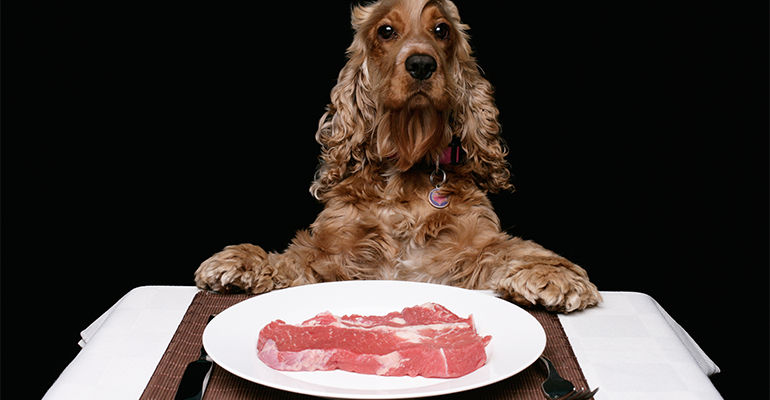
They also calculated that the production of ingredients used in UK dog food is estimated to contribute around 1% of the country’s total greenhouse gas emissions.
Producing enough food of the types fed in the UK for all dogs worldwide could generate greenhouse gas emissions equivalent to over half of those from burning jet fuel in commercial flights each year, the experts estimated.
Striking differences in carbon footprints
The scientists used ingredient and nutrient labelling information to calculate the carbon footprint of almost 1,000 commercially available dog foods, based on emissions generated during the production of ingredients.
Their sample included a selection of dry, wet, and raw foods, including plant-based and grain-free options.
The analysis revealed “striking differences” in the environmental impact of commercial dog foods, with the highest impact foods responsible for up to 65 times more emissions than the lowest rating options.
Using large amounts of prime meat – which could otherwise be eaten by humans – pushes up emissions, whilst the use of nutritious carcass parts that are in low demand helps limit environmental impact.
“The results show emissions intensity varied over 65-fold across products, with prime meat driving higher impacts,” the experts wrote. “Ingredient production for UK commercial dog foods contributes 2.3-3.7% of UK food system GHG [greenhouse gas] emissions, or 0.9-1.3% of total UK emissions.”
Dry food, not marketed as grain-free, tended to have a lower environmental impact than wet, raw, or grain-free options. An increase in the use of plant-based dog foods is also likely to reduce emissions.
However, the research team noted that only a small number of plant-based foods were available to test for this study.
They cautioned against making general recommendations such as, “dry food has lower environmental impact than wet”, given the nuance in some of the results. For example, the lowest emission wet, grain-free foods are less emission-intensive than the median main-market, dry food.
“Dog owners often have strongly held views on food format choice and we show much lower impact foods may be available without changing type,” the team wrote.
They acknowledged the challenges in encouraging change in patterns of dog feeding are “substantial”, however the potential benefits of change are “considerable”.
Dog owners who want to reduce environmental impacts but not change food type should check the label description of meat cuts used in the food, aiming for a lower content of prime meat, for example.
The use of low-value by-products is a ‘highly relevant’ solution
The findings “highlight the need for greater transparency and better labelling of dog food ingredients to help consumers make informed choices, as pet ownership continues to rise”, the team said.
They called on the pet food industry to “make sure meat cuts used are of the types not typically eaten by humans, and that labelling is clear”.
This chimes with observations made in 2023 by academics at the University of Edinburgh, who wrote: “The use of by-products is highly relevant for pet foods, where using the by-products that lack other alternative uses, and therefore have the lowest values, would be preferred.”
They added: “Novel ingredients, such as insects, could also play a role. However, the question then becomes how and on what were the insects themselves fed. A circular economy view that considers the system and alternatives is therefore needed to understand the impacts of such approaches. Here again, if very low-value waste or by-product streams could be used to grow insects, then low-impact food could be produced.”
Pet ownership continues to grow, especially in countries like China, where the number of pets has “exploded”, according to a report by NBC in February.

Get more of our news on Google
Set Ingredients Network as a 'Preferred Source' to get quicker access to the news you value.
Related news

Do the US dietary guidelines put UPFs under pressure?
10 Sep 2026
Will the US dietary guidelines change the way Americans eat, swapping ultra-processed foods for whole foods? We asked Dr Barry Popkin, renowned nutrition and obesity researcher.
Read more
Health and wellness engagement matures across Middle East and Africa
4 Sep 2026
Many consumers in the Middle East and Africa are now proactively engaged in health and wellness, looking to integrate better habits and products into their daily lives, say experts.
Read more
Skimpflation: An ‘unfair’ and risky approach to keeping prices low
2 Sep 2026
Consumers see skimpflation – reducing the quality of ingredients due to rising costs – as more unfair than shrinkflation, making it a risky strategy according to recent research.
Read more
‘Urgent gaps’ in achieving 2030 food system goals
27 Aug 2026
Global food systems are failing to meet 2030 targets across indicators including health, environment, and resilience, according to a report co-authored by the Food and Agriculture Organisation (FAO).
Read more
Seven-Eleven uses microbial testing tech to extend katsudon shelf life
26 Aug 2026
Japanese retail company Seven-Eleven has improved its factory’s microbial environment to keep comfort-food staple, katsudon, fresher for longer.
Read more
Chimac’s fusion sauces bring Korean flavours to Europe
25 Aug 2026
Irish sauce brand Chimac is tapping into Korea’s culinary traditions, bringing its flavours and products to European consumers who want a taste of K-food.
Read more
Global demand for instant noodles continues to rise
24 Aug 2026
Global demand for instant noodles reached 124.21 billion servings last year, representing a 0.7% year-on-year increase – or 900 million extra servings.
Read more
Popular barbecue staples experience sharp price increases
19 Aug 2026
The typical cost of US shoppers’ barbecue baskets has risen by 12% over the past year – the fastest annual rise in a decade, figures from The Economist show.
Read more
Hot NPD: Nissin launches first cold-water Cup Noodles
18 Aug 2026
Nissin is taking one of Japan’s most iconic instant meals in a completely new direction with the launch of the first cold water-only Cup Noodles in the brand’s 55-year history.
Read more
Manam Chocolate aims to bring premium Indian cacao to 'the world stage'
11 Aug 2026
Craft chocolate brand Manam Chocolate is investing in local expansion and supply chain innovation throughout India as it works to build out the premium reputation of its locally produced cacao products.
Read more