
Ingredients Categories
Finished Products
Finished Food Categories
- Bakery
- Beverages / Juices
- Cereal and grain products
- Confectionery
- Cooking Fats & Oils
- Dairy
- Egg products
- Fruits & Vegetables
- Infant & Baby food
- Meat, Poultry & Fish
- Nuts & Seeds products
- Other Finished Food Categories
- Pet Food
- Plant-based foods
- Prepared foods
- Sauces & Seasonings
- Sweet & Savoury Spreads
Specialised Finished Products
- Bee products
- Biotic products
- Dietary supplements
- Energy drinks
- Functional beverages
- Functional confectionery
- Functional food
- Functional powders
- Meal replacement products
- Nutricosmetics
- Other Specialised Finished Products
- Pet Dietary Supplements
- Pharma and OTC products
- Protein products
- Sugar replacers / Sweeteners
Health & Wellness Areas
Delivery Formats
Operations & Services
- 3D printing
- Analysis/ Testing
- Auditing & certifications
- Blending & mixing
- Bottling
- Certification
- Clinical trials
- Co-packing
- Coating
- Consulting
- Contract manufacturing
- Drying
- Electrospinning
- Encapsulating
- Enzymatic processing
- Extracting
- Extrusion
- Fat structuring
- Fermentation
- Filling
- Flavour development
- Freeze drying
- Granulating/ grinding/ milling / mixing
- High-pressure processing
- Labelling
- Other Operations & Services
- Packaging
- Packet filling
- Pasturising
- Quality assurance
- Saccharification
- Shear cell processing
- Spray drying
- Sterilisation
- Storage & Logistics
- Tabletting
- Toasting / roasting
- Ultra-high temperature processing
News
Arla adds capacity in Germany
28 Jan 2015Arla Foods has officially inaugurated a brand-new production area at its site in Pronsfeld, near Bitburg-Prüm in the Eifel district. A total of about €110 million was invested in the construction of a new milk drying tower, a new creamery and additional milk preparation and processing capacity. This represents a further step in the company’s […]

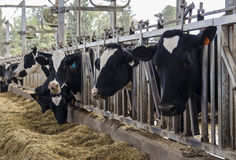 Arla Foods has officially inaugurated a brand-new production area at its site in Pronsfeld, near Bitburg-Prüm in the Eifel district.
A total of about €110 million was invested in the construction of a new milk drying tower, a new creamery and additional milk preparation and processing capacity. This represents a further step in the company’s continuous, successful development of its Pronsfeld location in Rhineland-Palatinate.
The Pronsfeld location has evolved into one of the largest dairy production locations in Europe over the past 50 years. As early as 1967, dairy products with a remarkably long shelf life were being produced in the Eifel region with great success – this production continued under the auspices of Milch-Union Hocheifel (MUH) until 2012.
Until now, around 1.4 billion kilogrammes of milk have been processed annually in Pronsfeld. Thanks to the new production facilities, it will be possible to process an additional 450 million kilogrammes of milk annually, starting immediately. This corresponds to a volume of 40,000 tonnes of butter and 42,000 tonnes of milk powder annually.
“We will be using our various powdered milk products to supply our growth markets in Asia and Africa as well,” said Tim Ørting Jørgensen, head of Arla’s Consumer Central Europe division (CCE).
German dairy butter and the already highly successful blended spread Arla Kærgården will be produced here for the German market and for the Arla countries in Central Europe.
This makes the Pronsfeld location the largest production site in Arla’s entire network, as well as Arla’s centre of excellence for long-life dairy products.
“To my mind, this ultramodern dairy production facility is first and foremost a testament to forward-thinking farmers who have ventured to take a bold step forward. Instead of ducking their responsibility, they have taken their future into their own hands. As the chairman of a cooperative, that is something that makes me very proud,” said CEO of Arla Foods, Peder Tuborgh.
The company said that it has placed particular emphasis on the sustainable – that is, energy-efficient – design of the new facilities. The result of the initiative is a series of production facilities that are not only state-of-the-art, but also live up to Arla’s principles of sustainability and corporate responsibility.
“The expansion of the location and the commissioning of the new facilities has had another very positive effect. We have succeeded in creating around 75 new jobs in this area,” said Pronsfeld Site Manager Jürgen Wolf.
Already one of the largest employers in the region, since 2012 Arla has increased the number of employees at the Pronsfeld location to over 1000 people.

Get more of our news on Google
Set Ingredients Network as a 'Preferred Source' to get quicker access to the news you value.
Related news

Is creatine going mainstream in food and drink formulation?
24 Sep 2026
The functional ingredient creatine is gaining traction in the food and drink industry, as brands ramp up production investment and explore new applications.
Read more
New GRAS rules offer consumers confidence but companies are concerned
22 Sep 2026
Public health campaigners are celebrating the US government’s move to close the Generally Recognised as Safe (GRAS) loophole, but companies worry it will stifle innovation.
Read more
Kremlin takes control of Nestlé Russia’s assets
18 Sep 2026
Nestlé says it is committed to “taking all necessary steps to protect its rights” after Russian authorities take temporary control of its operations in the country.
Read more
Immunity, wellness, and nutrition: Nutraceutical promise in the Middle East and Africa
17 Sep 2026
Nutraceuticals continue to gain ground across the Middle East and Africa with vitamins, probiotics, and functional drinks doing particularly well, says Euromonitor.
Read more
Lidl says Britain 'significantly off track' with healthy and sustainable eating
15 Sep 2026
Discounter retailer Lidl has raised concerns about healthy and sustainable eating habits across Britain, spotlighting how affordability remains a barrier for consumers.
Read more
Do the US dietary guidelines put UPFs under pressure?
10 Sep 2026
Will the US dietary guidelines change the way Americans eat, swapping ultra-processed foods for whole foods? We asked Dr Barry Popkin, renowned nutrition and obesity researcher.
Read more
Food fraud costs UK economy £2bn each year
9 Sep 2026
Food fraud is costing the UK economy up to £2 billion (€2.3 billion) every year although the food sector is more “resilient” than others, according to a recent study.
Read more
Kellogg accelerates work to remove artificial colours from all US cereals
3 Sep 2026
WK Kellogg has announced an accelerated timeline to eliminate all artificial colours and the chemical preservative, BHT, across its full US portfolio of cereals and cereal packaging.
Read more
Skimpflation: An ‘unfair’ and risky approach to keeping prices low
2 Sep 2026
Consumers see skimpflation – reducing the quality of ingredients due to rising costs – as more unfair than shrinkflation, making it a risky strategy according to recent research.
Read more
‘Urgent gaps’ in achieving 2030 food system goals
27 Aug 2026
Global food systems are failing to meet 2030 targets across indicators including health, environment, and resilience, according to a report co-authored by the Food and Agriculture Organisation (FAO).
Read more