
Ingredients Categories
Finished Products
Finished Food Categories
- Bakery
- Beverages / Juices
- Cereal and grain products
- Confectionery
- Cooking Fats & Oils
- Dairy
- Egg products
- Fruits & Vegetables
- Infant & Baby food
- Meat, Poultry & Fish
- Nuts & Seeds products
- Other Finished Food Categories
- Pet Food
- Plant-based foods
- Prepared foods
- Sauces & Seasonings
- Sweet & Savoury Spreads
Specialised Finished Products
- Bee products
- Biotic products
- Dietary supplements
- Energy drinks
- Functional beverages
- Functional confectionery
- Functional food
- Functional powders
- Meal replacement products
- Nutricosmetics
- Other Specialised Finished Products
- Pet Dietary Supplements
- Pharma and OTC products
- Protein products
- Sugar replacers / Sweeteners
Health & Wellness Areas
Delivery Formats
Operations & Services
- 3D printing
- Analysis/ Testing
- Auditing & certifications
- Blending & mixing
- Bottling
- Certification
- Clinical trials
- Co-packing
- Coating
- Consulting
- Contract manufacturing
- Drying
- Electrospinning
- Encapsulating
- Enzymatic processing
- Extracting
- Extrusion
- Fat structuring
- Fermentation
- Filling
- Flavour development
- Freeze drying
- Granulating/ grinding/ milling / mixing
- High-pressure processing
- Labelling
- Other Operations & Services
- Packaging
- Packet filling
- Pasturising
- Quality assurance
- Saccharification
- Shear cell processing
- Spray drying
- Sterilisation
- Storage & Logistics
- Tabletting
- Toasting / roasting
- Ultra-high temperature processing
News
Retail landscape lacks nutritious and affordable food, says ATNi
Natasha Spencer-Jolliffe, Freelance Journalist 30 Dec 2025A rapid increase in modern food retail has given retailers growing influence over consumer diets, according to global non-profit ATNi’s latest assessment.
In its Retail Assessment 2025 report, which seeks to understand how food policies, practices, and products affect access to nutritious and affordable food, the organisation analysed over 18,000 private-label products, evaluating the influence of 18 leading retailers across six countries on the availability of items in the healthy food and better-for-you categories.
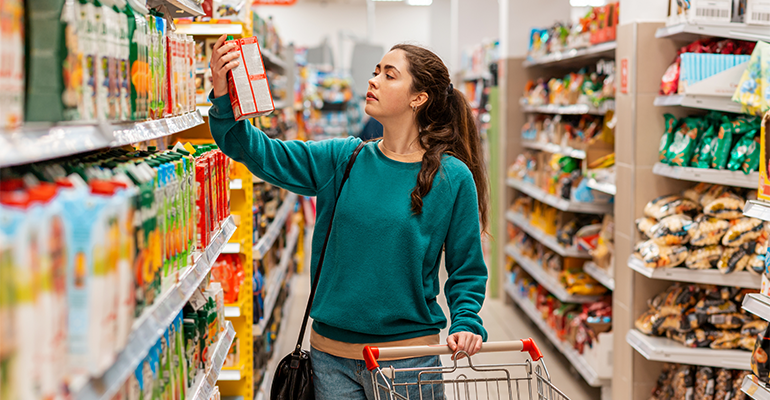
It explored how retail behaviour and choice, including product healthiness, marketing, and pricing, affect shoppers’ ability to find food that satisfies both their health and financial demands, looking at companies’ nutrition policies, promoted products, and pricing models, as well as the relative costs of healthy eating, along with government policies.
It found that retailers’ product selections, promotions, pricing strategies, and store design drive consumer demand and purchasing patterns, and concluded by arguing that industry collaboration is vital to overcoming unaffordability, inequity, and fragmented regulation.
Healthier diets are less affordable
The report examined how the food industry and wider macro-environment could improve the food retail landscape and best support a transition towards healthier, more affordable retail environments.
The researchers found that healthier diets remain less affordable for consumers than unhealthier diets. Across the six countries and 18 retailers analysed, baskets containing more nutritious food products were 10 to 60% more expensive than baskets containing less nutritious products.
In 2024, the daily cost of consumers’ baskets ranged from $10.76 to $27.58 for healthier baskets and from $8.74 to $20.84 for less healthy baskets. France had the lowest-cost baskets, while Kenya had the most expensive.
In high-income countries, both healthy and unhealthy baskets made up less than 10% of consumers’ daily income.
In low- and middle-income countries (LMICs), the cost of baskets containing less nutritious food items ranges from 36% to 117% of a shopper’s daily per capita gross national income. Baskets with more nutritious food took a larger share of consumers’ daily income and were less affordable, ranging from 53 to 154% of daily per capita income.
However, in wealthier countries, the researchers found a strong relationship between affordability and inequity. Consumers in low-income households and minority groups face barriers to accessing nutritious foods, despite the prevalence and proximity of convenient modern retailers.
Private labels prove problematic
ATNI’s research found that overall, private-label products are predominantly unhealthy.
Accounting for 20 to 40% of grocery spending in mature markets and expanding rapidly in emerging ones, the researchers found that fewer than half (41%) of retailers’ private-label portfolios met a healthy standard.
The researchers used a Health Star Rating that indicates a product must be 3.5 or higher out of 5 to show its nutritional value.
Furthermore, 86% of the private-label products the researchers assessed were identified as unhealthy ultra-processed foods (UPFs). These were products that were high in fat, sugar, salt, and/or containing additives such as colours, flavours, and sweeteners.
Private-label products play a key role in society’s shift to healthier retail environments. They help to determine the healthiness, affordability, and, therefore, appeal of food items.
Food retailers in higher-income countries (HICs) offer a far broader range of private-label products than in LMICs, where the number of items remains small. Although the scale of these products varies, a similar picture emerges: a limited number meet the ‘healthier thresholds’ set out for nutrient profile models.
However, compared to ATNi’s Retail Assessment 2024, private-label portfolios appear slightly healthier than producers’ product selection.
Collaboration across food is needed to spur change
In recent years, consumers have faced the ongoing cost-of-living crisis and rising food inflation. Healthier food options remain more expensive than their less healthy counterparts.
For that reason, most of the products stocked and sold by retailers are unhealthy. Promotions that typically favour less nutritious food items also contribute to their presence in shoppers’ baskets.
“Modern retailers have the power to shape consumer diets, yet current practices still favour unhealthy products,” the report read.
Regulations governing retail strategies for product choice, promotion and pricing remain fragmented and largely voluntary. In HICs in particular, ATNi found governments largely favour self-regulation and voluntary measures.
However, LMICs are showing greater progress, with regulations relating to front-of-package labelling, taxes on sugar-sweetened beverages, and restrictions on marketing unhealthy foods on policy leaders’ agendas.
According to ATNi’s recommendations, the sector needs to engage in collaborative action to increase access to healthier foods.
Governments could produce stronger policies, for instance, around mandatory front-of-pack labelling, product placement in stores, and restrictions around marketing unhealthy foods to children, it suggested.
Investors could also push for transparency around product healthiness and demand retailers disclose nutrition-related key performance indicators (KPIs).
ATNi encouraged retailers to embed nutrition into their business strategies. Reformulating products, balancing promotions, and adopting uniform standards for reporting product healthiness are key approaches.
Consumer advocacy groups can use industry tools, such as Open Food Facts, to promote transparency and empower informed consumer choice in their product purchases, it said.

Get more of our news on Google
Set Ingredients Network as a 'Preferred Source' to get quicker access to the news you value.
Related news

Do the US dietary guidelines put UPFs under pressure?
10 Sep 2026
Will the US dietary guidelines change the way Americans eat, swapping ultra-processed foods for whole foods? We asked Dr Barry Popkin, renowned nutrition and obesity researcher.
Read more
Food fraud costs UK economy £2bn each year
9 Sep 2026
Food fraud is costing the UK economy up to £2 billion (€2.3 billion) every year although the food sector is more “resilient” than others, according to a recent study.
Read more
Kellogg accelerates work to remove artificial colours from all US cereals
3 Sep 2026
WK Kellogg has announced an accelerated timeline to eliminate all artificial colours and the chemical preservative, BHT, across its full US portfolio of cereals and cereal packaging.
Read more
Skimpflation: An ‘unfair’ and risky approach to keeping prices low
2 Sep 2026
Consumers see skimpflation – reducing the quality of ingredients due to rising costs – as more unfair than shrinkflation, making it a risky strategy according to recent research.
Read more
NielsenIQ’s EU barometer shows Britain leading in grocery inflation
31 Aug 2026
Britain was the only country to record grocery inflation above 2%, according to NielsenIQ data that compared Europe’s five biggest grocery markets from February to May 2026.
Read more
‘Urgent gaps’ in achieving 2030 food system goals
27 Aug 2026
Global food systems are failing to meet 2030 targets across indicators including health, environment, and resilience, according to a report co-authored by the Food and Agriculture Organisation (FAO).
Read more
Chimac’s fusion sauces bring Korean flavours to Europe
25 Aug 2026
Irish sauce brand Chimac is tapping into Korea’s culinary traditions, bringing its flavours and products to European consumers who want a taste of K-food.
Read more
Global demand for instant noodles continues to rise
24 Aug 2026
Global demand for instant noodles reached 124.21 billion servings last year, representing a 0.7% year-on-year increase – or 900 million extra servings.
Read more
Popular barbecue staples experience sharp price increases
19 Aug 2026
The typical cost of US shoppers’ barbecue baskets has risen by 12% over the past year – the fastest annual rise in a decade, figures from The Economist show.
Read more
Hot NPD: Nissin launches first cold-water Cup Noodles
18 Aug 2026
Nissin is taking one of Japan’s most iconic instant meals in a completely new direction with the launch of the first cold water-only Cup Noodles in the brand’s 55-year history.
Read more