
Ingredients Categories
Finished Products
Finished Food Categories
- Bakery
- Beverages / Juices
- Cereal and grain products
- Confectionery
- Cooking Fats & Oils
- Dairy
- Egg products
- Fruits & Vegetables
- Infant & Baby food
- Meat, Poultry & Fish
- Nuts & Seeds products
- Other Finished Food Categories
- Pet Food
- Plant-based foods
- Prepared foods
- Sauces & Seasonings
- Sweet & Savoury Spreads
Specialised Finished Products
- Bee products
- Biotic products
- Dietary supplements
- Energy drinks
- Functional beverages
- Functional confectionery
- Functional food
- Functional powders
- Meal replacement products
- Nutricosmetics
- Other Specialised Finished Products
- Pet Dietary Supplements
- Pharma and OTC products
- Protein products
- Sugar replacers / Sweeteners
Health & Wellness Areas
Delivery Formats
Operations & Services
- 3D printing
- Analysis/ Testing
- Auditing & certifications
- Blending & mixing
- Bottling
- Certification
- Clinical trials
- Co-packing
- Coating
- Consulting
- Contract manufacturing
- Drying
- Electrospinning
- Encapsulating
- Enzymatic processing
- Extracting
- Extrusion
- Fat structuring
- Fermentation
- Filling
- Flavour development
- Freeze drying
- Granulating/ grinding/ milling / mixing
- High-pressure processing
- Labelling
- Other Operations & Services
- Packaging
- Packet filling
- Pasturising
- Quality assurance
- Saccharification
- Shear cell processing
- Spray drying
- Sterilisation
- Storage & Logistics
- Tabletting
- Toasting / roasting
- Ultra-high temperature processing
News
Debate over ban on ‘meaty’ names for plant-based products reaches stalemate
David Burrows, Freelance Journalist 26 Dec 2025The debate over a ban on plant-based products using “meaty” terms has reached a stalemate, leaving manufacturers in limbo and still facing overhauls to their marketing and packaging.
In December, a decision on the new restrictions was postponed until the New Year after the European Commission, European Parliament, and European Council failed to reach a consensus on this particular (and peculiar) food fight.
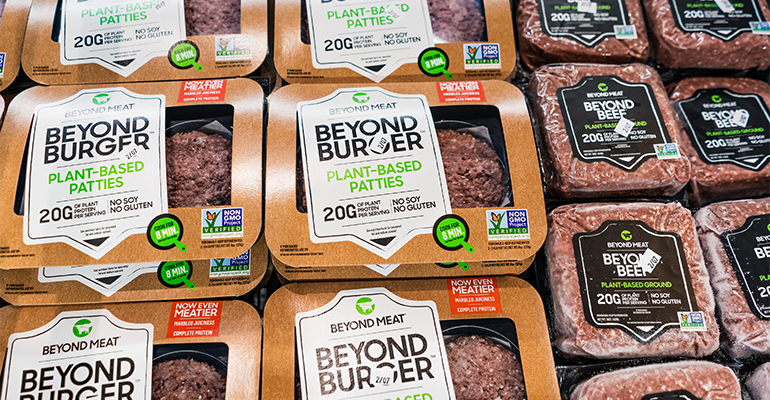
Indeed, campaigners and policymakers, as well as many food companies and hundreds of thousands of consumers, feel this is all a bit of a waste of time, energy – and packaging.
“We sometimes have a year’s worth of packaging stock; having to throw all that away would be both financially and environmentally absurd,” said Nicolas Schweitzer, CEO of French plant-based pork producer La Vie.
Manufacturers have pointed to the financial implications, not only in terms of changing packaging but also in rebranding and potentially losing customers as a result.
“Our brand is built on bridging the gap between traditional meat culture and plant-based innovation,” explained Rutger Rozendaal, CEO of The Vegetarian Butcher.
“Consumers choose The Vegetarian Butcher precisely because our products resemble animal meat in taste, texture, shape, and preparation. This proposed legislation would limit our ability to communicate that value clearly.”
Plant-based market momentum
Europe currently leads the global plant-based meat market. Euromonitor valued Europe’s plant-based retail market at €9 billion in 2024, and “meat” had a 37% share of that.
The sector supports farmers, especially pulse growers, and drives rural diversification, as well as contributing to soil health and sustainability, noted the NGO Proveg International.
The so-called “veggie burger” ban would prohibit plant-based producers from using words like “steak”, “bacon”, or “eggs” on their alternatives. In all, 29 words are on the proposed list of terms restricted to products that come from or contain livestock.
Reports suggested that more were offered at the last minute during the crunch talks in mid-December. It was all “very messy”, one official told Politico.
The potential of Europe-wide restrictions was sparked by a review of the Common Market Organisation (CMO) regulation in July. The conservative European People's Party (EPP) tabled the ban proposal in the EU Parliament, led by French MEP Céline Imart.
According to the proposal, terms such as “sausage”, “schnitzel”, or “burger” should only be allowed for meat products – because consumers are allegedly confused.
The European Parliament voted in favour of the ban at the beginning of October. However, the trilogue negotiations between Parliament, the Commission, and member states ended in the recent stalemate.
Those opposed to the ban have long considered consumer confusion a false pretext.
They point to consumer surveys carried out in various countries, including Germany and most recently the Netherlands, where a poll of more than 20,000 people carried out by the independent research organisation Radar found that 96% of Dutch people are not confused by terms such as “veggie sausage”.
"An EU-wide ban on ‘tofu sausages’ or ‘veggie burgers’ is not only absurd, but also illegal,” said Suzy Sumner from Foodwatch.
A legal opinion commissioned by the consumer organisation in December concluded that banning terms like “sausage” or “burger” for plant-based products is not compatible with EU food law.
The legal opinion is based on the EU Food Information Regulation and a ruling by the European Court of Justice (ECJ) from October 2024. In that ruling, the ECJ clarified that while states can specify designations for certain foods, they cannot simply ban product names without first defining which designations apply instead.
As Ingredients Network reported at the time, on the basis that European legislation already provides consumers with sufficient protection, the judgement erred on the side of avoiding restrictions on plant-based producers and brands.
The European Parliament's proposal on meat names fails to provide a clear and consistent definition of terms such as “sausage” or “schnitzel”, said Foodwatch.
The case of milk is different: the EU has clearly defined that only cow's milk may be labelled as such. Plant-based products must be called “oat drink”, for example.
Farmers are the losers here
The CMO regulation review was an answer to the farmer protests of 2023/24 across Europe and, as such, “the real goal of this file is strengthening the farmers to negotiate better contracts”, Dutch MEP Anna Strolenberg told the Green Queen website.
Strolenberg has been outspoken in her criticism of the ban and how it is holding up the review. More than 600 companies and organisations have signed a letter in opposition to the proposals, while multiple petitions have collected nearly 340,000 signatures from citizens who do not want it either.
This is hurting innovators active in the food scene, said Strolenberg.
“They don’t know if the name of their successful product will still be possible tomorrow. And consumers feel ridiculed,” she said.

Get more of our news on Google
Set Ingredients Network as a 'Preferred Source' to get quicker access to the news you value.
Related news

Do the US dietary guidelines put UPFs under pressure?
10 Sep 2026
Will the US dietary guidelines change the way Americans eat, swapping ultra-processed foods for whole foods? We asked Dr Barry Popkin, renowned nutrition and obesity researcher.
Read more
Food fraud costs UK economy £2bn each year
9 Sep 2026
Food fraud is costing the UK economy up to £2 billion (€2.3 billion) every year although the food sector is more “resilient” than others, according to a recent study.
Read more
Skimpflation: An ‘unfair’ and risky approach to keeping prices low
2 Sep 2026
Consumers see skimpflation – reducing the quality of ingredients due to rising costs – as more unfair than shrinkflation, making it a risky strategy according to recent research.
Read more
NielsenIQ’s EU barometer shows Britain leading in grocery inflation
31 Aug 2026
Britain was the only country to record grocery inflation above 2%, according to NielsenIQ data that compared Europe’s five biggest grocery markets from February to May 2026.
Read more
‘Urgent gaps’ in achieving 2030 food system goals
27 Aug 2026
Global food systems are failing to meet 2030 targets across indicators including health, environment, and resilience, according to a report co-authored by the Food and Agriculture Organisation (FAO).
Read more
China beverages: Is herbal innovation the future?
20 Aug 2026
Herbal and botanical innovation in China's drinks market continues to grow, with ingredients like astragalus root, ginger, and ginseng in the spotlight – and focus shifting far beyond refreshment.
Read more
Popular barbecue staples experience sharp price increases
19 Aug 2026
The typical cost of US shoppers’ barbecue baskets has risen by 12% over the past year – the fastest annual rise in a decade, figures from The Economist show.
Read more
Beyond 'nice to have': A spotlight on US functional beverages
12 Aug 2026
Functional beverage interest in the US is gaining important ground as consumers now expect function rather than see it as "nice to have", and there are clear market gaps for growth, according to Spate.
Read more
Manam Chocolate aims to bring premium Indian cacao to 'the world stage'
11 Aug 2026
Craft chocolate brand Manam Chocolate is investing in local expansion and supply chain innovation throughout India as it works to build out the premium reputation of its locally produced cacao products.
Read more
Digital twin technology gains ground in food manufacturing
6 Aug 2026
Food and beverage companies are increasingly turning to digital twins to optimise and automate manufacturing processes, but opportunities stretch far beyond this, say experts.
Read more