
Ingredients Categories
Finished Products
Finished Food Categories
- Bakery
- Beverages / Juices
- Cereal and grain products
- Confectionery
- Cooking Fats & Oils
- Dairy
- Egg products
- Fruits & Vegetables
- Infant & Baby food
- Meat, Poultry & Fish
- Nuts & Seeds products
- Other Finished Food Categories
- Pet Food
- Plant-based foods
- Prepared foods
- Sauces & Seasonings
- Sweet & Savoury Spreads
Specialised Finished Products
- Bee products
- Biotic products
- Dietary supplements
- Energy drinks
- Functional beverages
- Functional confectionery
- Functional food
- Functional powders
- Meal replacement products
- Nutricosmetics
- Other Specialised Finished Products
- Pet Dietary Supplements
- Pharma and OTC products
- Protein products
- Sugar replacers / Sweeteners
Health & Wellness Areas
Delivery Formats
Operations & Services
- 3D printing
- Analysis/ Testing
- Auditing & certifications
- Blending & mixing
- Bottling
- Certification
- Clinical trials
- Co-packing
- Coating
- Consulting
- Contract manufacturing
- Drying
- Electrospinning
- Encapsulating
- Enzymatic processing
- Extracting
- Extrusion
- Fat structuring
- Fermentation
- Filling
- Flavour development
- Freeze drying
- Granulating/ grinding/ milling / mixing
- High-pressure processing
- Labelling
- Other Operations & Services
- Packaging
- Packet filling
- Pasturising
- Quality assurance
- Saccharification
- Shear cell processing
- Spray drying
- Sterilisation
- Storage & Logistics
- Tabletting
- Toasting / roasting
- Ultra-high temperature processing
Sponsored Content
Developers’ Guide to Plant-Based Product Steam Injection Processing
19 Sep 2024Many plant-based products parallel dairy-based products in certain ways, yet critical differences exist, making process know-how a must, advises MicroThermics, Inc. – the global leader in lab-scale UHT/HTST/Aseptic processors and pasteurizers for R&D.
From milks, to creamers, ice cream, shakes, puddings, and more, the list of plant-based alternatives to dairy continues to expand. Typically, both dairy products and their plant-based counterparts have a pH≥4.6 and are considered ‘low-acid’, and there are other similarities besides. However, critical differences between them require plant-based products to be processed differently.
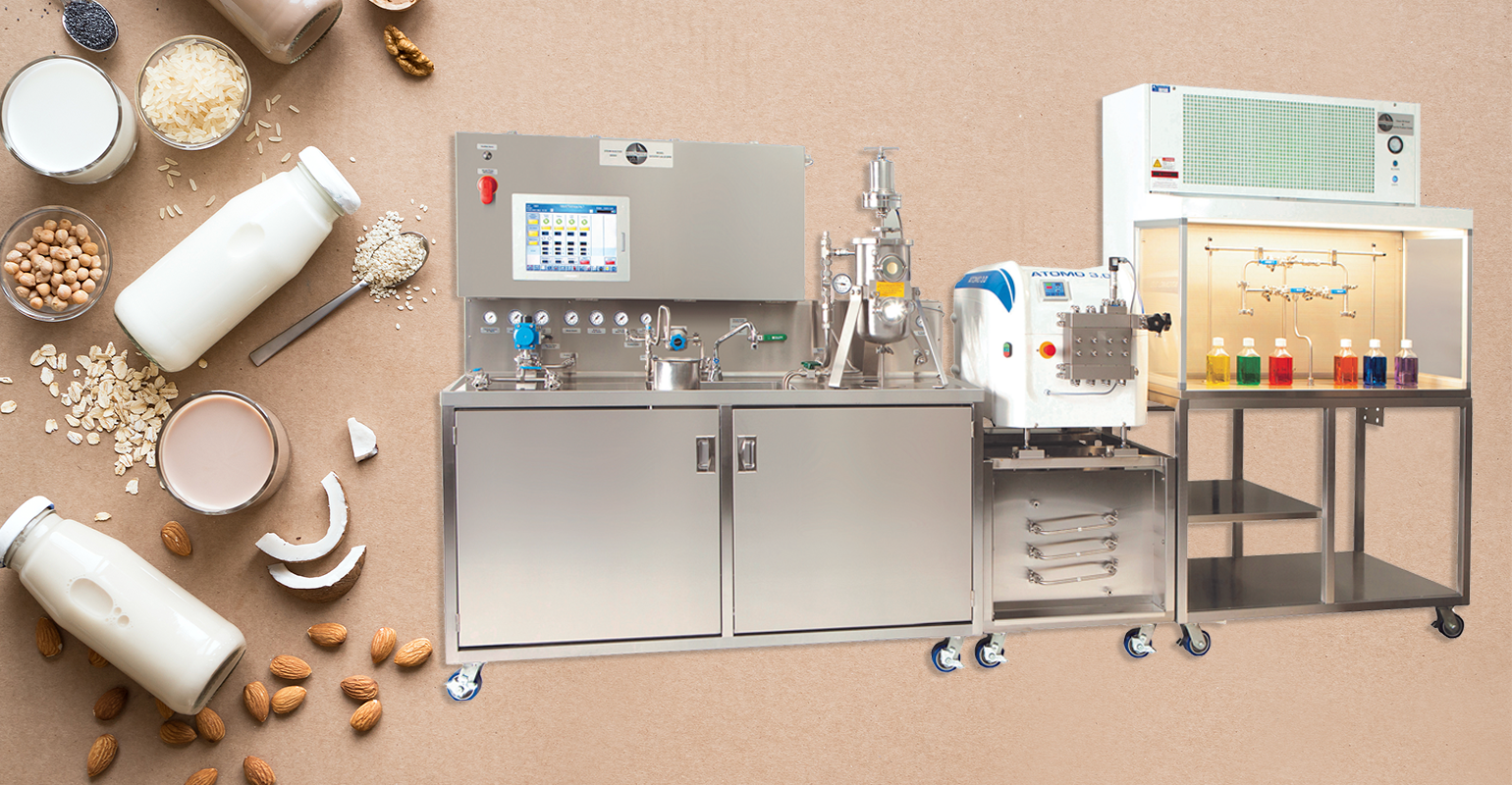
In the interest of brevity, below is a summary of some of those critical differences.
- Standards of Identity
- Dairy product (milks, yogurts, ice cream, others) standards of identity specify ingredients and their concentrations.
- e.g., protein, fats, water, minerals, vitamins, etc.
- Plant-based products have no standards of identity
- Their ingredients come from a variety of sources and concentration.
- They contain a wider range of ingredients for equivalent products.
- Dairy product (milks, yogurts, ice cream, others) standards of identity specify ingredients and their concentrations.
- Incoming Bacterial Loads
- Plant-based products often have higher and less uniform bacterial loads than dairy.
- They often require more extreme thermal and physical conditions than dairy products to achieve the same level of assurance for sterility or shelf life.
- Physical Stability
- Plant-based ingredients (i.e., proteins) denature and burn more easily and less predictably than most dairy proteins.
- This is affected by their type (almond, soy, pea, etc.), concentration, and other ingredients.
- Plant-based ingredients (i.e., proteins) denature and burn more easily and less predictably than most dairy proteins.
Overall, plant-based products lack uniformity, require more extreme processing conditions, and contain unstable ingredients (e.g., proteins). They are actually very different from their dairy counterparts and even from each other. Thus, they must be treated as individual products (even within a category like oat milk) because each has its own unique formula and processing challenges.
Trends: Low-acid aseptic and ESL processing of plant-based beverages
Plant-based milks/drinks, shakes, ice cream, etc., are typically low-acid products. Generally, low-acid aseptic products require processing conditions of 137°-149°C (278°-300°F) and hold times ranging from 18 to 1 second. In our experience, dairy products are commonly processed at 139°-144°C (282°-292°F), but most are between 140°-144°C (284°-292°F). However, due to their higher and less uniform incoming bacterial loads, plant-based products must frequently be processed at more extreme temperatures of 144°-146°C (291°-295°F) or higher to achieve the required sterility assurance. Extended Shelf-Life (ESL) products also often require similar conditions to achieve their desired bacterial reduction and shelf-life.
Quality, such as flavor, texture, viscosity, color, smell, and even nutritional content, can all be affected at these elevated temperatures. The more extreme the thermal exposure, the more these are affected. One of the most troublesome reactions is protein denaturing and fouling on the hot walls of heat exchangers. This affects the product's ability to be manufactured and many other qualities. To address this, steam injection heating, with vacuum cooling, is used at higher temperature ranges instead of indirect heat exchangers.
In this process, steam is injected directly into the product to raise its temperature quickly. Vacuum cooling is then used directly after the hold tube. The vacuum cooler instantly cools the product and removes the steam that condenses into the product. This process style eliminates the high-temperature heated surfaces upon which proteins foul and dramatically reduces the time a product is at damaging temperatures compared to indirectly heated processes. Because of this processing method, we have a wide range of plant-based products in the market today.
Trends in Homogenization
Homogenization also plays a key role in product quality. To create a stable emulsion of fats and oils, homogenizers are located ‘Upstream’, between 2 heating steps (i.e., between a regen and final heater). However, many stability issues in plant-based products are caused by proteins that denature in the heaters. This creates a gritty texture and layer of material on the bottom of containers. To address this, homogenizers are located ‘downstream’ between the vacuum cooler and indirect coolers. Plant-based beverages almost always have both issues. Therefore, homogenizers are most commonly located downstream.
Common Homogenization Locations: Plant-Based Low-Acid Aseptic and ESL Products
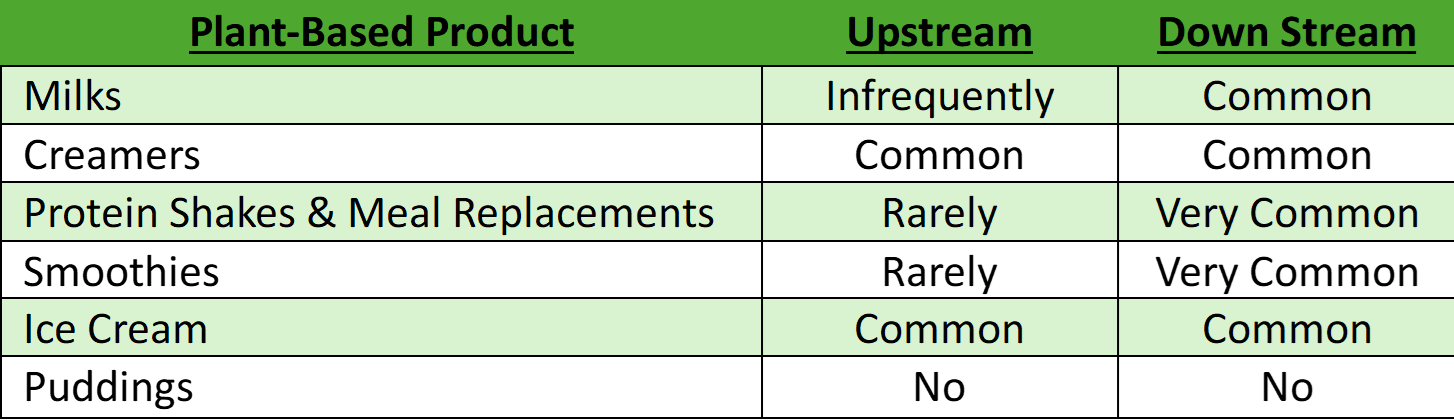
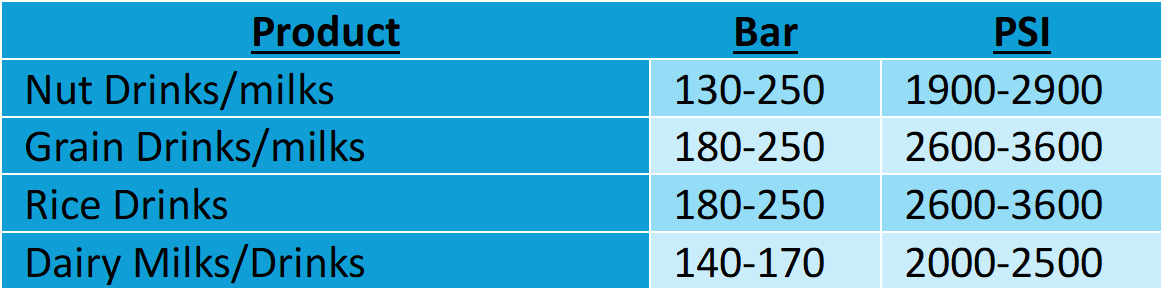
Plant-based beverages often contain unstable minerals and ‘solids’ such as pulp or fibers. Thus, to create stable emulsions, they frequently require higher homogenization pressures than similar dairy products. Below is a table of pressure ranges that we have often seen.
Common Homogenization Pressures for Plant and Dairy-Based Milks/Products
Plant-based beverages are exceptionally challenging to develop. The ability to process new formulations at accurate commercial conditions on a small scale is vital for R&D. Inaccurate processing in the lab guarantees that products will fail in production and will not have the identity needed to be successful in the market. MicroThermics, Inc. is the world leader in lab-scale UHT/HTST/Aseptic processors and pasteurizers for R&D. Contact us to learn more about our laboratory processors. We enable you to develop your products and make production-quality samples quickly and easily while reducing your long-term R&D costs.
This piece of content is provided by an advertiser or created on behalf of an advertiser. The views or opinions expressed in this piece of content do not reflect those of Informa.
Companies mentioned

Related categories

Get more of our news on Google
Set Ingredients Network as a 'Preferred Source' to get quicker access to the news you value.
Related news

Fucoidan research surpasses 5000 studies
11 Oct 2026
Global
research interest in the marine extract fucoidan continues to surge, with the
number of published, peer-reviewed papers recently surpassing 5000.
Fi Europe 2026: See you in Frankfurt!
9 Oct 2026
Faravelli continues its centenary celebrations at Fi Europe 2026, looking ahead to what’s next. Meet the team at stand 41K45 and discover the right ingredients to make your products stand out.

Launch of Breakthrough Clean-Tasting Pea Protein Isolate
6 Oct 2026
NUTRALYS® Pea 850F is Roquette’s latest pea protein isolate, representing a breakthrough in delivering a clean, neutral taste for plant-based product formulations.
Read more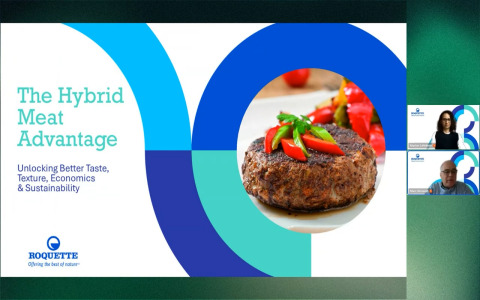
The Hybrid Meat Advantage
6 Oct 2026
Hybrid meat is quickly gaining recognition across Europe as a powerful way to meet modern food trends and consumer needs. At Roquette, we help food producers create hybrid meat products that deliver on taste, texture, affordability, and sustainability.
Read more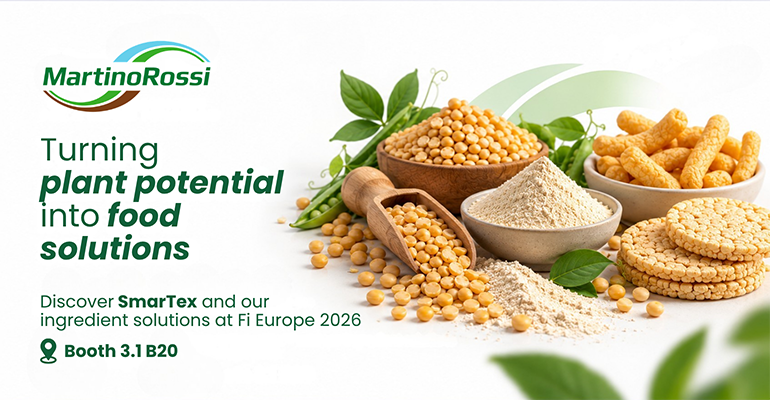
Turning plant potential into food solutions
1 Oct 2026
Today, plant-based and free-from ingredients must do more than replace. MartinoRossi combines nutrition, functionality, and processing performance to address new formulation challenges.
Read more
Hügli Food Industry: Innovations at Fi Europe 2026
1 Oct 2026
Taste 90 years of culinary mastery at Fi Europe (Booth 41G44), where Hügli will feature chilled Bresc Umami compounds alongside Sauce Culture, its newest snack seasoning concept.
Read more.jpg)
Nactarome: New possibilities in natural innovation
24 Sep 2026
As food innovation becomes increasingly multi-dimensional, Nactarome's expanding expertise reflects a growing industry focus on integrated natural ingredient solutions.
Read more
A new standard for omega-3 experience
13 Apr 2026
Omega-3 quality is no longer just about purity or concentration. Senses™ by Naturmega delivers ultra-pure, sensory-optimised omega-3 with no taste, no odour, and improved stability.
Read more
PharmaLinea’s iron supplement delivers improvements in hemoglobin comparable to ferrous sulfate with fewer side effects
23 Feb 2026
PharmaLinea, a Slovenian developer and manufacturer of private label food supplements, has announced the completion of a clinical study evaluating its finished formulation for iron deficiency.
Read more
LomaChelateX® – power in magnesium bisglycinate
12 Feb 2026
Gentle and effective: magnesium bisglycinate is setting a new standard. Through its LomaChelateX® brand, Dr. Paul Lohmann® delivers magnesium bisglycinate and a broad range of fully reacted mineral bisglycinates made in Germany.
Read more