
Ingredients Categories
Finished Products
Finished Food Categories
- Bakery
- Beverages / Juices
- Cereal and grain products
- Confectionery
- Cooking Fats & Oils
- Dairy
- Egg products
- Fruits & Vegetables
- Infant & Baby food
- Meat, Poultry & Fish
- Nuts & Seeds products
- Other Finished Food Categories
- Pet Food
- Plant-based foods
- Prepared foods
- Sauces & Seasonings
- Sweet & Savoury Spreads
Specialised Finished Products
- Bee products
- Biotic products
- Dietary supplements
- Energy drinks
- Functional beverages
- Functional confectionery
- Functional food
- Functional powders
- Meal replacement products
- Nutricosmetics
- Other Specialised Finished Products
- Pet Dietary Supplements
- Pharma and OTC products
- Protein products
- Sugar replacers / Sweeteners
Health & Wellness Areas
Delivery Formats
Operations & Services
- 3D printing
- Analysis/ Testing
- Auditing & certifications
- Blending & mixing
- Bottling
- Certification
- Clinical trials
- Co-packing
- Coating
- Consulting
- Contract manufacturing
- Drying
- Electrospinning
- Encapsulating
- Enzymatic processing
- Extracting
- Extrusion
- Fat structuring
- Fermentation
- Filling
- Flavour development
- Freeze drying
- Granulating/ grinding/ milling / mixing
- High-pressure processing
- Labelling
- Other Operations & Services
- Packaging
- Packet filling
- Pasturising
- Quality assurance
- Saccharification
- Shear cell processing
- Spray drying
- Sterilisation
- Storage & Logistics
- Tabletting
- Toasting / roasting
- Ultra-high temperature processing
Sponsored Content
AI entrepreneurs turn industry waste into tomorrow’s breakthrough ingredients
4 Nov 2026
A health-tech startup is uniting the industry to uncover functional ingredients from waste streams, with two bioactives revealed as potential disruptors in the booming GLP-1 arena.
Drawing on technology used in the pharma industry, where co-founders Dr. Hilla Ben-Hamo (CEO) and Dr Coralie Ebert (CTO) first met, MeNow is using AI to scan the molecular makeup of botanicals and their by-products to create a library of molecules and predict their potential health benefits.
The algorithm is able to make predictions about the bioavailability, safety and health benefits of compounds, supporting the sped-up development of safe and effective botanical supplements.
“We met when we were involved in using AI to develop pharma-grade drugs,” said Ben-Hamo, who holds a Ph.D. in biotechnology engineering. “We realized there was a huge white space to use this technology in nutraceuticals and cosmetics, and decided to do it ourselves.”
“We met when we were involved in using AI to develop pharma-grade drugs,” said Ben-Hamo, who holds a Ph.D. in biotechnology engineering. “We realized there was a huge white space to use this technology in nutraceuticals and cosmetics, and decided to do it ourselves.”
After founding the company five years ago, Ebert, who has a background in bioinformatics and biostatistics, said their first year was spent developing the algorithm through the collation of databases to create a library of 60,000 organisms and more than 2 million natural molecules.
The firm’s commercial model includes co-development, licensing and joint go-to-market partnerships for novel, IP-protected ingredients. To validate the platform commercially, the team began with a focus on the cosmetics industry, as this posed fewer sensory challenges around taste, texture, and viscosity.
One such collaboration was with Colgate, through which they identified an optimal plant combination for treating gingivitis, cutting the firm’s development time by 75%, according to the entrepreneurs.
They moved into nutraceuticals last year and have quickly made waves in this arena after the platform discovered a compound sourced from discarded sorghum crop residue which is predicted to be an SIRT1 protein activator.
Ben-Hamo described this as a potentially game-changing discovery in the booming longevity category.
“SIRT1 activators are one of the most sought-after compounds in longevity science,” she explained, “they are linked to anti-aging, hair growth and cellular protection.”

By-products take weight management beyond GLP-1
The firm has developed an AI Sustainability Hub through which it partners companies in the food, supplements and cosmetics sectors to find sustainable solutions to health targets.
Amid heightened industry interest in non-pharmaceutical approaches to weight management, particularly ingredients that can provide alternatives to GLP-1 drugs, the platform has discovered a potential GLP-1 agonist molecule already approved for use in food.
Coming from a sidestream of fermentation of bacteria, this ‘ready-to-market’ compound is different to others discovered through the platform as the compound would not need to undergo any additional regulatory approvals.
“There has been a lot of interest because it’s a fast way to take a product to market,” explained Ben-Hamo. “It’s a big thing that we don’t have to take it through the long process of approval.”
However, potentially holding greater potential in the weight management space, Ben-Hamo highlighted the first ingredient to come out of the Sustainability Hub was a byproduct of brown seaweed (Ascophyllum nodosum).
Company data indicates the byproduct activates the CCK1 receptor (cholecystokinin receptor 1), a key regulator of satiety and digestion.
In the body, CCK1 and GLP-1 are triggered simultaneously to create both immediate and longer-lasting satiety.
“The pharma industry was interested in creating a CCK1 agonist but there were stability issues so a CCK1 agonist was never realized,” Ben-Hamo told NI. “But this is a key regulator of satiety and digestion and it has a faster and stronger effect than the GLP-1 pathway.”
She explained this pathway additionally promotes enzyme secretion to improve nutrient absorption.
“It increases the enzymes which promote absorption of nutrients, therefore increases nutrient uptake from food eaten,” she added. “This makes it a promising solution in comparison with GLP-1 drugs with which there’s concern over users getting enough nutrients.”
The ingredients are patent-pending and open for licensing to interested partners.
Looking ahead, the co-founders said women’s health is among the areas they see as particularly ripe for AI-driven ingredient discovery, citing growing demand for targeted solutions across life stages including menopause and healthy aging.
Companies mentioned


Get more of our news on Google
Set Ingredients Network as a 'Preferred Source' to get quicker access to the news you value.
Related news

FrieslandCampina Ingredients showcases new possibilities for protein
2 Nov 2026
26 October – Amersfoort, the
Netherlands: FrieslandCampina Ingredients, a global leader in protein and prebiotics, will return to
Fi Eu...
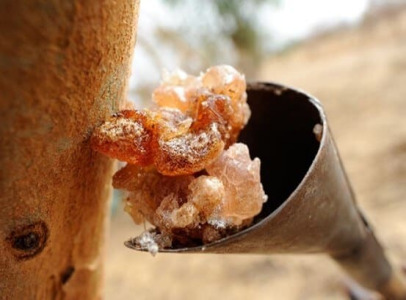
COP17: How Is Nexira Contributing to Land Restoration?
28 Oct 2026
The acacia value chain: a concrete example of land restoration.Today, 40% of the world’s land is degraded1, with consequences that go far beyond environmental concerns: food security, biodiversity, livelihoods and economic stability are all direct...
Read more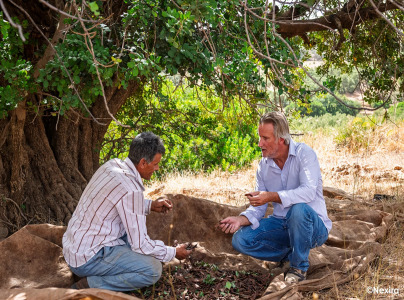
Carob expertise: From local sourcing to Locust Bean Gum manufacturing
28 Oct 2026
Great locust bean gum starts long before manufacturing. It begins at origin with the carob tree, local sourcing expertise and a deep understanding of the entire value chain.

High load protein gummies by using H&F Citrus Pectin
21 Oct 2026
Dietary supplements are a rapidly growing market of which protein products, in particular, arecurrently very popular. Gummies are an attractive format for consuming dietary supplements.Consequently, protein gummies have become a common product developm...
Read more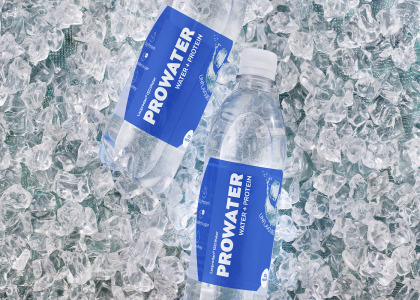
Clear water with a protein secret
19 Oct 2026
Crystal-clear protein water concept with 10g high-quality whey protein isolate in every 500ml serving. Powered by Lacprodan® ISO.Water, it combines the neutral taste of water with lasting clarity. A refreshing way to support hydration and muscle recove...
Read more
Unlock New Formulation Possibilities with One of the Industry's Broadest Lecithin and Protein Portfolios
16 Oct 2026
Food manufacturers today face a difficult balancing act: improving functionality, simplifying formulations, increasing protein content, all while maintaining the taste, texture, and quality consumers expect. At Fi Europe, discover how Bunge can ...
Read more
Fucoidan research surpasses 5000 studies
11 Oct 2026
Global
research interest in the marine extract fucoidan continues to surge, with the
number of published, peer-reviewed papers recently surpassing 5000.

Fi Europe 2026: See you in Frankfurt!
9 Oct 2026
Faravelli continues its centenary celebrations at Fi Europe 2026, looking ahead to what’s next. Meet the team at stand 41K45 and discover the right ingredients to make your products stand out.

HORIZONS, the New Foresight Platform for the Food Industry
6 Oct 2026
Roquette Launches HORIZONS, a new platform created to help food and nutrition businesses anticipate change, explore possible futures, and transform uncertainty into actionable strategies.
Read more
Launch of Breakthrough Clean-Tasting Pea Protein Isolate
6 Oct 2026
NUTRALYS® Pea 850F is Roquette’s latest pea protein isolate, representing a breakthrough in delivering a clean, neutral taste for plant-based product formulations.
Read more