
Ingredients Categories
Finished Products
Finished Food Categories
- Bakery
- Beverages / Juices
- Cereal and grain products
- Confectionery
- Cooking Fats & Oils
- Dairy
- Egg products
- Fruits & Vegetables
- Infant & Baby food
- Meat, Poultry & Fish
- Nuts & Seeds products
- Other Finished Food Categories
- Pet Food
- Plant-based foods
- Prepared foods
- Sauces & Seasonings
- Sweet & Savoury Spreads
Specialised Finished Products
- Bee products
- Biotic products
- Dietary supplements
- Energy drinks
- Functional beverages
- Functional confectionery
- Functional food
- Functional powders
- Meal replacement products
- Nutricosmetics
- Other Specialised Finished Products
- Pet Dietary Supplements
- Pharma and OTC products
- Protein products
- Sugar replacers / Sweeteners
Health & Wellness Areas
Delivery Formats
Operations & Services
- 3D printing
- Analysis/ Testing
- Auditing & certifications
- Blending & mixing
- Bottling
- Certification
- Clinical trials
- Co-packing
- Coating
- Consulting
- Contract manufacturing
- Drying
- Electrospinning
- Encapsulating
- Enzymatic processing
- Extracting
- Extrusion
- Fat structuring
- Fermentation
- Filling
- Flavour development
- Freeze drying
- Granulating/ grinding/ milling / mixing
- High-pressure processing
- Labelling
- Other Operations & Services
- Packaging
- Packet filling
- Pasturising
- Quality assurance
- Saccharification
- Shear cell processing
- Spray drying
- Sterilisation
- Storage & Logistics
- Tabletting
- Toasting / roasting
- Ultra-high temperature processing
News
England to ban energy drinks for under 16, Sweden might be next
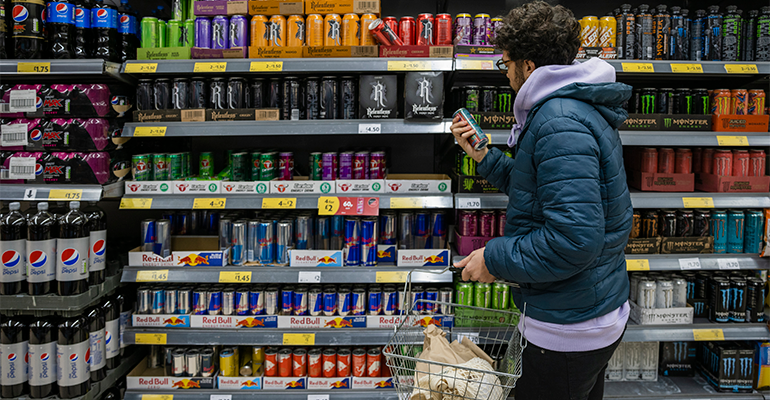
Matilde Pozzato, Content Editor - Food 15 Oct 2026England will ban the sale of energy drinks to minors in 2027 due to health concerns and overconsumption among children, with Sweden considering a similar ban.
England is banning the sale of high-caffeine energy drinks to people under 16 starting April 2027 due to research indicating that many children are drinking unsafe amounts of these beverages. Sweden is considering a similar ban following concerns that excessive caffeine intake in young people might lead to physical and mental health problems.
At a glance:
- Many European countries are banning energy drinks for minors because these can negatively impact sleep, blood pressure, and overall health.
- Consumer organisations call for consistent regulations across Europe and ask manufacturers to stop marketing energy drinks to children.
- Enforcing these bans remains a challenge.
Why are governments worried about energy drink consumption?
Last December, the European Parliament’s Committee on the Environment, Public Health and Food Safety (ENVI) held a hearing on the food safety risks linked to energy drink consumption in minors.
The hearing followed a report from foodwatch Germany, a nonprofit watchdog in the food sector. The report said that even moderate consumption of these drinks is linked to sleep problems and higher blood pressure due to high concentrations of caffeine, sugar, and other stimulants, such as taurine and guarana[NM1] [MP2] .
Health experts at the ENVI hearing presented research also linking energy drink consumption in children to problems including sleep disturbances, anxiety, and heart and blood pressure irregularities. Children might also be more likely to exceed safe caffeine intakes because they have lower body weights on average.
Consumer groups call for consistent regulation across Europe
Several European countries, including Lithuania, Latvia, Poland, Romania, Hungary, and Bulgaria, already have bans on selling energy drinks to minors.
This summer, Spain proposed to ban the sale of all energy drinks to people under 16. Sweden and England are set to be the next countries to introduce bans on these beverages.
Meanwhile, other countries have been relying on voluntary retail measures.
foodwatch said that Europe needs to make regulations on energy drinks more consistent across the continent.
“Children’s health should not depend on where they live or which supermarket their parents shop at,” foodwatch wrote. “The EU and national governments share a responsibility to set high, uniform standards.”
England to ban energy drinks for under 16 next April
England’s ban follows the review of data on the consumption and consequences of energy drinks among young people and comes after a consultation held by the Department of Health and Social Care (DHSC). The consultation received 1,095 responses from individuals, organisations, and businesses sharing their personal and professional views on the topic.
The government said that research indicates that about 100,000 children aged 11 to 15 in England consume one or more high-caffeine energy drinks each day.
The organisational sectors with the highest level of agreement with the proposal to ban energy drinks were academia, education, healthcare, local governments, and NGOs.
Those with the highest level of disagreement were retail, manufacturers of high-caffeine energy drinks, and trade organisations representing businesses affected by the policy. These groups said they disagreed due to a lack of causal evidence and mentioned research indicating that children were not big consumers of energy drinks. However, research suggests that up to one-third of people aged 13 to 16 in the UK consume energy drinks weekly.
According to the proposal, businesses that don’t respect the ban could be fined up to £2,500 (€2.913,75).
Sweden proposes ban but the terms remain unclear
The Swedish party Christian Democrats (KD) has proposed [NM3] to set a statutory age limit for energy drink consumption, but it is not clear yet how the ban will be enforced, nor what the exact age threshold will be.
The Swedish retail sector currently follows a voluntary industry agreement recommending not to sell energy drinks to people under 15. However, the Swedish Consumers’ Association, a group that advocates for consumers’ interests, told Ingredients Network that because this restriction does not apply to all retailers, it does not fully prevent children from buying and consuming energy drinks.
“We see energy drink consumption among children as a major health concern, and we would like to see regulations that protect children from high caffeine consumption. An age limit would be an important tool for reducing access to energy drinks,” Maria Hammarling, policy officer of the association, said[NM4] .
Swedish teens are among the biggest consumers of energy drinks
A survey from the Swedish National Food Agency – which considered 4,916 teens aged 15 to 19 from Sweden, Denmark, Norway, Finland, and Iceland – found that Swedes drink energy drinks more often than their peers in the rest of the Nordic countries, with 20% consuming energy drinks daily, and 8% consuming them twice a day or more.
Fifteen percent of respondents who drink energy drinks also said they experience discomfort, such as tiredness and headaches, when they don’t consume them. The percentage sits higher in Sweden at 19%.
The agency advised children and young people under 16 to limit their caffeine intake to 70mg per day, while children under 6 to avoid it altogether.
Karen Ellemann, secretary general of the Nordic Council of Ministers, the body that funded the survey, said that the results send a strong signal.
“Far too many young people are dependent on energy drinks to cope with their everyday lives. This can have serious consequences for young people's mental health and schooling,” said Ellemann.
Enforcement of the ban
How to enforce bans on energy drinks often remains unclear.
According to foodwatch, even where regulations exist, they are often not enforced effectively due to a lack of ID checks and the continued availability of energy drinks in vending machines. Marketing restrictions are also weak or non-existent, especially in online and gaming spaces populated by young people, said the organisation.
The Swedish Consumers’ Association expressed similar concerns.
“Children’s best interests and public health need to come first, in line with the UN Convention on the Rights of the Child,” said Hammarling. “This should be reflected in policies and regulations that effectively protect children’s health, including restrictions on the marketing and sale of energy drinks.”

Get more of our news on Google
Set Ingredients Network as a 'Preferred Source' to get quicker access to the news you value.
Related news
Meet the finalists of the Fi Europe Innovation Awards 2026
14 Oct 2026
Which companies made the shortlist of the Fi Europe Innovation Awards 2026? Read on to find out who will be competing to win first prize in each category in November.
Read more
Brazil pushes forward on restricting ultra-processed foods
14 Oct 2026
The Brazilian government is pushing ahead with its proposal calling on the World Health Organization (WHO) to restrict the marketing of ultra-processed foods – a move causing a mixed response.
Read more
EU considers extending mandatory country-of-origin labelling
13 Oct 2026
The EU is considering expanding mandatory country-of-origin labelling to more food categories, but the scope of the potential rules remains undefined.
Read more
‘Irresponsible’ Huel advert banned in the UK
12 Oct 2026
The UK’s Advertising Standards Authority has banned a video advert by Danone-owned meal replacement brand Huel for “irresponsible” marketing related to diets.
Read more
Tesco restricts or bans over 100 additives in UPF reformulation response
7 Oct 2026
Consumer concerns over ultra-processed foods have led Tesco, one of the world’s largest supermarkets, to ban or restrict 114 additives from its own-brand products.
Read more
Goodbye greenwashing? EU ban on vague claims comes into force
5 Oct 2026
Food and drink brands must comply with EU anti-greenwashing rules that ban vague claims – but they do not have to stay silent on sustainability.
Read more
Reinventing soda: Zero sugar, functional benefits, and new indulgence
30 Sep 2026
Zero-sugar, functional, and indulgent sodas are redefining what a carbonated soft drink can offer in today’s evolving market.
Read more
Is creatine going mainstream in food and drink formulation?
24 Sep 2026
The functional ingredient creatine is gaining traction in the food and drink industry, as brands ramp up production investment and explore new applications.
Read more
New GRAS rules offer consumers confidence but companies are concerned
22 Sep 2026
Public health campaigners are celebrating the US government’s move to close the Generally Recognised as Safe (GRAS) loophole, but companies worry it will stifle innovation.
Read more
Kremlin takes control of Nestlé Russia’s assets
18 Sep 2026
Nestlé says it is committed to “taking all necessary steps to protect its rights” after Russian authorities take temporary control of its operations in the country.
Read more