
Ingredients Categories
Finished Products
Finished Food Categories
- Bakery
- Beverages / Juices
- Cereal and grain products
- Confectionery
- Cooking Fats & Oils
- Dairy
- Egg products
- Fruits & Vegetables
- Infant & Baby food
- Meat, Poultry & Fish
- Nuts & Seeds products
- Other Finished Food Categories
- Pet Food
- Plant-based foods
- Prepared foods
- Sauces & Seasonings
- Sweet & Savoury Spreads
Specialised Finished Products
- Bee products
- Biotic products
- Dietary supplements
- Energy drinks
- Functional beverages
- Functional confectionery
- Functional food
- Functional powders
- Meal replacement products
- Nutricosmetics
- Other Specialised Finished Products
- Pet Dietary Supplements
- Pharma and OTC products
- Protein products
- Sugar replacers / Sweeteners
Health & Wellness Areas
Delivery Formats
Operations & Services
- 3D printing
- Analysis/ Testing
- Auditing & certifications
- Blending & mixing
- Bottling
- Certification
- Clinical trials
- Co-packing
- Coating
- Consulting
- Contract manufacturing
- Drying
- Electrospinning
- Encapsulating
- Enzymatic processing
- Extracting
- Extrusion
- Fat structuring
- Fermentation
- Filling
- Flavour development
- Freeze drying
- Granulating/ grinding/ milling / mixing
- High-pressure processing
- Labelling
- Other Operations & Services
- Packaging
- Packet filling
- Pasturising
- Quality assurance
- Saccharification
- Shear cell processing
- Spray drying
- Sterilisation
- Storage & Logistics
- Tabletting
- Toasting / roasting
- Ultra-high temperature processing
News
Spain consults on energy drink ban for under-16s
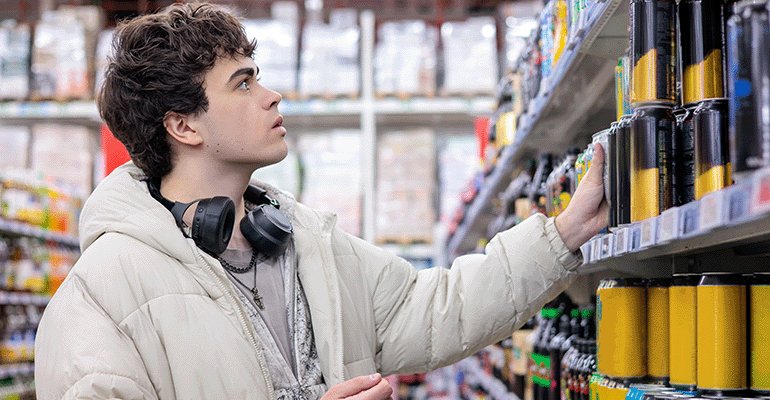
Kacey Culliney, Freelance Journalist 15 Jul 2026The Spanish government has launched a public consultation on a proposed law to ban the sale of energy drinks to under-16s and restrict high caffeine drinks to under-18s.
The move marks the start of the legislative process in the country, allowing citizens and affected groups to contribute to the development of the future legislation.
At a glance:
- Spain launches public consultation on its Draft Bill to ban energy drinks for under-16s.
- The push is backed by scientific recommendations and largely welcomed in Spain.
- EU regulation remains fragmented on the issue and unlikely to change anytime soon.
Spain's Ministry of Consumer Affairs wants to prohibit the sale of all energy or caffeine-containing drinks to minors under 16 years of age. This would be extended to 18 years of age if the drinks contain more than 32 milligrams of caffeine per 100 millilitres. The draft bill also aims to regulate the access of beverages with high caffeine, including advertising, promotional free samples, and public event giveaways.
Data provided from the government's Ministry of Health annual survey on drug use in secondary education, ESTUDES, shows that 38.4% of young people aged 14 to 18 in Spain consume energy drinks, with a higher incidence among boys (45.7%) than girls (31%). Furthermore, 15% of these teenagers mix energy drinks with alcohol, “a practice that significantly increases health risks”, the Ministry of Consumer Affairs said.
What are the health risks of excessive energy drink consumption?
Spain's proposal is based on recommendations from scientific bodies, including the Spanish Agency for Food Safety and Nutrition (ASEAN) and the World Health Organization (WHO), that state excessive caffeine consumption can cause unwanted physiological and psychological effects, such as sleep disturbances, behavioural changes, and cardiovascular disorders. Regular consumption of energy drinks has also been associated with caffeine overdose, hypertension, bone loss and osteoporosis, among other health problems, according to research.
The country's Ministry of Consumer Affairs said its draft bill seeks to “limit the risks that consumption of these beverages can pose to children and adolescents”. It also widens existing restrictions, adding to Spain's Royal Decree on Healthy and Sustainable School Dining Halls which prohibits the sale of energy drinks in schools.
A barometer conducted by ASEAN already shows that nine out of 10 people in Spain agree on limiting consumption of energy drinks in childhood and adolescence. This current public consultation will now gather opinions on the necessity of such an initiative, as well as thoughts on timelines, objectives and potential alternative solutions.
EU’s mix of energy drink laws create a fragmented market
According to Spain's Ministry of Consumer Affairs, the initiative to ban the consumption of energy drinks among under-16s “aligns with measures being adopted by various European countries”, including Germany, Norway, Latvia, Poland, Hungary, and Lithuania. It also aligns with regulations already approved or being processed in Spain by some regional governments, such as those in Galicia and Asturias – important to ensure harmonisation at national level, it said.
EU regulatory expert Luca Bucchini, owner and managing director of Hylobates Consulting, said that harmonisation is always important to aim for when introducing new laws, but added that this has not been achieved on the issue of energy drink consumption in the EU.
The European Food Safety Authority (EFSA) assessed caffeine in 2015 but results “did not raise enough alarm to prompt an EU-level prohibition”, Bucchini told Ingredients Network. “Lack of action by the Commission is leading to proliferation of national measures. This is leading to fragmentation of the single market; this is unfortunate.”
Countries like Poland, Lithuania, Latvia, and Hungary, for example, have opted for flat-rate bans of energy drinks to anyone under the age of 18 whereas Germany has an outright ban on energy drinks containing more than 32mg of caffeine per 100ml.
“In the past, the momentum would have been sufficient for the Commission to act. However, in the current political situation, the Commission is unlikely to put forward any legislation. The result is market fragmentation,” Bucchini said.
Industry impact: Spain and EU
For the beverage industry, the Bucchini said Spain's draft bill, if pushed into law, will create issues of compatibility with EU law, causing labelling and marketing issues for energy drink brands working across the region.
It will also heavily change brand visibility in the country because Spain's proposal includes an outright media ban that stops television presenters, collaborators and guests from visibly consuming these drinks or displaying their logos on screen, he explained.
“Combined with a total prohibition on promotional free samples and public event giveaways, Spain is treating high-caffeine beverages with a level of public health strictness that we haven't seen anywhere else in Europe.”

Get more of our news on Google
Set Ingredients Network as a 'Preferred Source' to get quicker access to the news you value.
Related news

Do the US dietary guidelines put UPFs under pressure?
10 Sep 2026
Will the US dietary guidelines change the way Americans eat, swapping ultra-processed foods for whole foods? We asked Dr Barry Popkin, renowned nutrition and obesity researcher.
Read more
Food fraud costs UK economy £2bn each year
9 Sep 2026
Food fraud is costing the UK economy up to £2 billion (€2.3 billion) every year although the food sector is more “resilient” than others, according to a recent study.
Read more
Skimpflation: An ‘unfair’ and risky approach to keeping prices low
2 Sep 2026
Consumers see skimpflation – reducing the quality of ingredients due to rising costs – as more unfair than shrinkflation, making it a risky strategy according to recent research.
Read more
NielsenIQ’s EU barometer shows Britain leading in grocery inflation
31 Aug 2026
Britain was the only country to record grocery inflation above 2%, according to NielsenIQ data that compared Europe’s five biggest grocery markets from February to May 2026.
Read more
‘Urgent gaps’ in achieving 2030 food system goals
27 Aug 2026
Global food systems are failing to meet 2030 targets across indicators including health, environment, and resilience, according to a report co-authored by the Food and Agriculture Organisation (FAO).
Read more
China beverages: Is herbal innovation the future?
20 Aug 2026
Herbal and botanical innovation in China's drinks market continues to grow, with ingredients like astragalus root, ginger, and ginseng in the spotlight – and focus shifting far beyond refreshment.
Read more
Popular barbecue staples experience sharp price increases
19 Aug 2026
The typical cost of US shoppers’ barbecue baskets has risen by 12% over the past year – the fastest annual rise in a decade, figures from The Economist show.
Read more
Beyond 'nice to have': A spotlight on US functional beverages
12 Aug 2026
Functional beverage interest in the US is gaining important ground as consumers now expect function rather than see it as "nice to have", and there are clear market gaps for growth, according to Spate.
Read more
Manam Chocolate aims to bring premium Indian cacao to 'the world stage'
11 Aug 2026
Craft chocolate brand Manam Chocolate is investing in local expansion and supply chain innovation throughout India as it works to build out the premium reputation of its locally produced cacao products.
Read more
Digital twin technology gains ground in food manufacturing
6 Aug 2026
Food and beverage companies are increasingly turning to digital twins to optimise and automate manufacturing processes, but opportunities stretch far beyond this, say experts.
Read more