
Ingredients Categories
Finished Products
Finished Food Categories
- Bakery
- Beverages / Juices
- Cereal and grain products
- Confectionery
- Cooking Fats & Oils
- Dairy
- Egg products
- Fruits & Vegetables
- Infant & Baby food
- Meat, Poultry & Fish
- Nuts & Seeds products
- Other Finished Food Categories
- Pet Food
- Plant-based foods
- Prepared foods
- Sauces & Seasonings
- Sweet & Savoury Spreads
Specialised Finished Products
- Bee products
- Biotic products
- Dietary supplements
- Energy drinks
- Functional beverages
- Functional confectionery
- Functional food
- Functional powders
- Meal replacement products
- Nutricosmetics
- Other Specialised Finished Products
- Pet Dietary Supplements
- Pharma and OTC products
- Protein products
- Sugar replacers / Sweeteners
Health & Wellness Areas
Delivery Formats
Operations & Services
- 3D printing
- Analysis/ Testing
- Auditing & certifications
- Blending & mixing
- Bottling
- Certification
- Clinical trials
- Co-packing
- Coating
- Consulting
- Contract manufacturing
- Drying
- Electrospinning
- Encapsulating
- Enzymatic processing
- Extracting
- Extrusion
- Fat structuring
- Fermentation
- Filling
- Flavour development
- Freeze drying
- Granulating/ grinding/ milling / mixing
- High-pressure processing
- Labelling
- Other Operations & Services
- Packaging
- Packet filling
- Pasturising
- Quality assurance
- Saccharification
- Shear cell processing
- Spray drying
- Sterilisation
- Storage & Logistics
- Tabletting
- Toasting / roasting
- Ultra-high temperature processing
News
Reinventing soda: Zero sugar, functional benefits, and new indulgence
Natasha Spencer-Jolliffe, Freelance Journalist 30 Sep 2026Zero-sugar, functional, and indulgent sodas are redefining what a carbonated soft drink can offer in today’s evolving market.
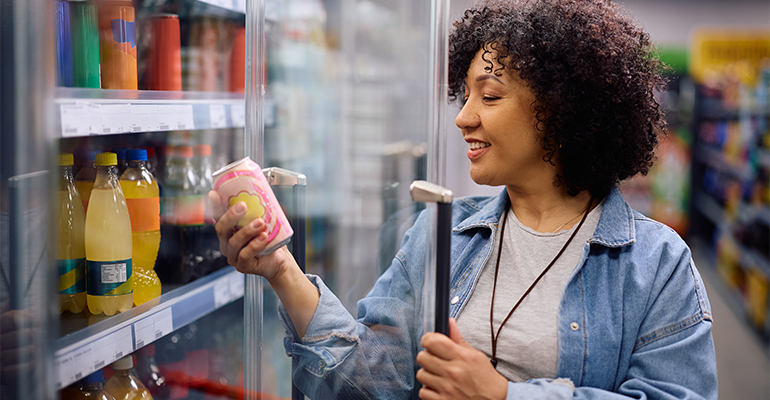
The biggest changes in the current carbonated soft drinks (CSD) category revolve around sugar-free beverages, functional and better-for-you (BFY) brands, and evolving purchasing drivers.
At a glance:
- Zero-sugar and functional sodas are driving major change in the global carbonated soft drink category.
- Prebiotics, protein and relaxation claims are fuelling new product development as brands move beyond refreshment.
- Indulgent full-sugar sodas are finding new fans, suggesting enjoyment and wellness can coexist in the market.
“On one hand, this is the story of zero sugar taking over the category, particularly in Western Europe and North America,” Howard Telford, global insights manager of soft drinks at Euromonitor International, told Ingredients Network.
Per capita consumption of regular, sugar-sweetened CSDs in the UK has fallen by around 15% between 2015 and 2025, while reduced-sugar and zero-sugar CSDs have risen by about 35%. In the US, diet carbonates grew roughly 12% in 2025, while full-calorie cola fell by 8%.
“On the other hand, North America has essentially invented a new segment in five years, ‘modern soda’ being Walmart's own term for the functional and BFY [better-for-your] brands,” said Telford.
Poppi, Olipop, and Culture Pop are among the brands that have carved out a premium niche. Olipop has been a top performer in the US market over the last three years, while PepsiCo paid $1.95 billion (€1.7 bn) for Poppi.
Price has changed substantially, with category-level pricing climbing sharply over the past five years. “Big manufacturers have leaned much harder on impulse and immediate consumption rather than future consumption, downsizing multipacks, and popularising smaller formats such as the 250ml sleek can,” said Telford.
In France, for example, carbonate volumes fell for a third consecutive year in 2025, while unit prices continued to rise and shoppers deliberately shifted to smaller cans.
Moving beyond traditional refreshment
Today’s CSD manufacturers are formulating for consumer demands that go beyond hydration, extending to functional and BFY benefits.
Prebiotic claims in sparkling drinks rose 115% in 2025 and have moved outside of the US, with launches now in France, Germany, the UK and Brazil. Globally, digestive health claims are forecast to grow at a 34% compound annual growth rate (CAGR) to 2029, making them the fastest-growing functional claim in soft drinks.
Protein is the other axis: global retail sales of high-protein products surpassed $3 trillion (€2.6 tn) in 2025, with more than 137,000 high-protein SKUs. Demand is forecast to grow another 11% through 2029. In beverages, that is showing up as “clear" protein in the US.
Highly caffeinated performance energy and high-electrolyte powders have vastly outperformed traditional CSD. “US powder concentrates have been the standout hydration performer,” Telford added.
That has forced the big brands to adapt: PepsiCo's prebiotic Pepsi brand cola, launched in autumn 2025, sold out in 30 hours and is now permanent nationally at 5g sugar and 3g fibre per serving, alongside Coca-Cola's prebiotic Sprite work in China and its long-established Coke+ and Chill Out platforms in Japan.
“But I would frame it as taste with benefits,” said Telford. “If a formulation tastes great, refreshes and carries lower sugar, the functional benefit is usually the tipping point that gives a consumer a reason to buy, not the primary driver.”
Pushing prebiotics, relaxation, and protein
Euromonitor International’s Innovation portal shows that of US carbonate launches since January 2021, 19% carry a prebiotic, probiotic or digestive health claim.
Trip, for instance, has defined that category in the UK, with around $100 million (€87.8 m) in profitable revenue announced in late 2025, a raise at a valuation above $300 million (€263.5 m) and more than 10,000 US doors. This is in a space where stress-relief drinks are growing about 19% a year, and 43% of consumers name stress as a key wellbeing issue.
Protein is another big trend entering the mainstream CSD space. “It has already crossed over from dairy and sports nutrition into clear, sparkling, sessionable formats,” Telford said.
A new way to engage with CSDs
As the CSD landscape evolves, it raises the question of whether consumers are genuinely changing their relationship with CSDs or whether brands are simply finding new ways to position familiar products.
“It is a combination of reformulation, flavour, and function aimed at bringing back consumers who had left the category,” said Telford. That could mean fibre or protein, no sugar or cane sugar rather than corn syrup.
Suntory launched NOPE in Japan in March 2026, a deliberately full-sugar carbonate sold explicitly on indulgence and guilty consumption, in a market its own trade press calls the era of the unsweetened. With 100 million bottles shipped in 150 days, it is Suntory's fastest-selling sparkling brand launch in decades. “You see the same permission-to-enjoy instinct in the US dirty soda craze,” Telford said.
Advice for CSD brands developing new products
“Flavour comes first,” Telford said. Odd flavour combinations or unpalatable sweeteners can hinder functional formulations. Flavour, visual identity and social-media readiness drive discovery and choice, with function serving as permission to indulge rather than as the headline.
From Trip to Poppi to Olipop, and right across energy drinks too, the winners are strong flavour innovators. Olipop and Poppi differentiated themselves in a highly consolidated sparkling category by embracing the playful imagery and flavour profiles of soda.
No brand goes anywhere in this category without a strong flavour profile. “Benefits get stacked on top of that, not the other way round,” Telford added.

Get more of our news on Google
Set Ingredients Network as a 'Preferred Source' to get quicker access to the news you value.
Related news

Is creatine going mainstream in food and drink formulation?
24 Sep 2026
The functional ingredient creatine is gaining traction in the food and drink industry, as brands ramp up production investment and explore new applications.
Read more
Is the FAO’s industrial aquaculture push harming ecosystems?
21 Sep 2026
The Food and Agriculture Organization (FAO) is promoting industrial aquaculture but campaigners say it creates toxic pollution and threatens food sovereignty.
Read more
Immunity, wellness, and nutrition: Nutraceutical promise in the Middle East and Africa
17 Sep 2026
Nutraceuticals continue to gain ground across the Middle East and Africa with vitamins, probiotics, and functional drinks doing particularly well, says Euromonitor.
Read more
Do the US dietary guidelines put UPFs under pressure?
10 Sep 2026
Will the US dietary guidelines change the way Americans eat, swapping ultra-processed foods for whole foods? We asked Dr Barry Popkin, renowned nutrition and obesity researcher.
Read more
Health and wellness engagement matures across Middle East and Africa
4 Sep 2026
Many consumers in the Middle East and Africa are now proactively engaged in health and wellness, looking to integrate better habits and products into their daily lives, say experts.
Read more
Skimpflation: An ‘unfair’ and risky approach to keeping prices low
2 Sep 2026
Consumers see skimpflation – reducing the quality of ingredients due to rising costs – as more unfair than shrinkflation, making it a risky strategy according to recent research.
Read more
‘Urgent gaps’ in achieving 2030 food system goals
27 Aug 2026
Global food systems are failing to meet 2030 targets across indicators including health, environment, and resilience, according to a report co-authored by the Food and Agriculture Organisation (FAO).
Read more
Seven-Eleven uses microbial testing tech to extend katsudon shelf life
26 Aug 2026
Japanese retail company Seven-Eleven has improved its factory’s microbial environment to keep comfort-food staple, katsudon, fresher for longer.
Read more
Chimac’s fusion sauces bring Korean flavours to Europe
25 Aug 2026
Irish sauce brand Chimac is tapping into Korea’s culinary traditions, bringing its flavours and products to European consumers who want a taste of K-food.
Read more
Global demand for instant noodles continues to rise
24 Aug 2026
Global demand for instant noodles reached 124.21 billion servings last year, representing a 0.7% year-on-year increase – or 900 million extra servings.
Read more