
Ingredients Categories
Finished Products
Finished Food Categories
- Bakery
- Beverages / Juices
- Cereal and grain products
- Confectionery
- Cooking Fats & Oils
- Dairy
- Egg products
- Fruits & Vegetables
- Infant & Baby food
- Meat, Poultry & Fish
- Nuts & Seeds products
- Other Finished Food Categories
- Pet Food
- Plant-based foods
- Prepared foods
- Sauces & Seasonings
- Sweet & Savoury Spreads
Specialised Finished Products
- Bee products
- Biotic products
- Dietary supplements
- Energy drinks
- Functional beverages
- Functional confectionery
- Functional food
- Functional powders
- Meal replacement products
- Nutricosmetics
- Other Specialised Finished Products
- Pet Dietary Supplements
- Pharma and OTC products
- Protein products
- Sugar replacers / Sweeteners
Health & Wellness Areas
Delivery Formats
Operations & Services
- 3D printing
- Analysis/ Testing
- Auditing & certifications
- Blending & mixing
- Bottling
- Certification
- Clinical trials
- Co-packing
- Coating
- Consulting
- Contract manufacturing
- Drying
- Electrospinning
- Encapsulating
- Enzymatic processing
- Extracting
- Extrusion
- Fat structuring
- Fermentation
- Filling
- Flavour development
- Freeze drying
- Granulating/ grinding/ milling / mixing
- High-pressure processing
- Labelling
- Other Operations & Services
- Packaging
- Packet filling
- Pasturising
- Quality assurance
- Saccharification
- Shear cell processing
- Spray drying
- Sterilisation
- Storage & Logistics
- Tabletting
- Toasting / roasting
- Ultra-high temperature processing
News
EU proposes stricter limits for chemicals used in packaging
Natasha Spencer-Jolliffe, Freelance Journalist 30 May 2024Food and drink businesses may be required to lower their use of hazardous chemicals used in packaging, under proposed changes to the EU legislation on food contact materials.
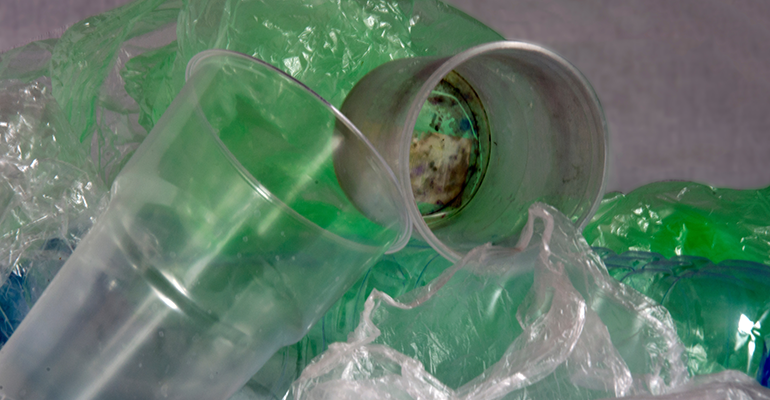
The legislation, Regulation (EC) No 1935/2004, relates to food safety and governs the safety principles of all materials that come into contact with food, such as packaging containers, kitchen equipment, cutlery, and dishes. It stipulates that food contact materials do not release their constituents into food at harmful levels or unacceptably change food composition.
Handling food contact materials differently
The proposed changes to European Union (EU) law on food contact materials relate to quality control rules that ensure food safety. In 2020, the EU revised the food safety-related legislation designed to improve food safety and public health.
The revision set out new requirements for food and drink businesses to lower their use of hazardous chemicals through sustainable packaging solutions. The change reflected the EU’s calls for sustainable packaging by promoting environmentally friendly, reusable, and recyclable materials.
The EU held a public consultation between 5 October 2022 and 11 January 2023 to collect and analyse stakeholder feedback. The consultation aimed to ensure food safety and high public health protection, decrease the presence and use of hazardous chemicals, consider the latest science and technology developments, and advocate safe reusable and recyclable solutions to support innovation and help lower the sector’s environmental impact.
After gathering information, the EU made further improvements to the proposed revision to ensure the legislation aligned with its intended aims. These revisions include new standards for the purity of plastic materials recovered from waste and natural sources. They also require EU businesses to update testing methods for multi-layer materials and repeat testing to ensure reliable safety over time.
Exploring the safety of natural-origin mixtures
In November 2023, the European Food Safety Authority (EFSA) explored the principles and procedures relevant to the safety assessment of natural-origin mixtures in manufacturing. Recognising an increasing interest in using substances from renewable biological resources to manufacture materials and articles designed for food contact, EFSA sought to learn more about these natural-origin mixtures.
EFSA assessed natural compounds and complex mixtures in various sectors that deal with regulated chemicals, including food contact materials. The organisation stated that any migrating substances that present a potential risk to public health due to their chemical, physical, or toxicological properties that are already present in people's diets should not be re-evaluated. Instead, EFSA says that exposure to FCMs needs to be compared with their diet.
Sufficient revisions to protect public health
While welcoming the newly proposed changes to quality control rules in EU legislation, R3PACK consortium believes it needs to go further to protect the health of all European consumers, which presents several risks to them and the wider food sector.
“These new standards are a step in the right direction, yet more can and should be done to ensure the safety of European citizens,” said the R3PACK consortium, a collective of organisations from the food value chain.
Further focus on final articles
The R3PACK consortium states that the new revisions lack attention to final articles. By mainly looking at starting substances and recycling processes, they fail to recognise the complexity of non-intentionally added substances (NIAS) in final articles.
“These substances pose challenges to safety assessments due to their uncharacterised nature and unpredictability,” Francisco de Araújo Vasquez, project and policy officer at SAFE, told Ingredients Network. The organisation states that the situation worsens when multiple recycling centres accumulate chemicals.
SAFE recommends introducing sorting systems to distinguish FCMs from non-food-grade plastics and systematically monitoring NIAS in recycled food contact materials to overcome this issue. “Strengthening regulations to include comprehensive testing and monitoring of NIAS in final food contact materials, mainly recycled plastics, to ensure safety throughout the product lifecycle,” says de Araújo Vasquez.
Strengthening the risk assessment procedure
Minimal scrutiny in the risk assessment procedure poses further concerns. “The absence of provisions for independent scientific review hampers transparency and objectivity in the risk assessment process,” says de Araújo Vasquez.
The organisation calls for collaboration with independent research centres and data collection by non-industry entities to create unbiased assessments and bolster the rigour of risk evaluation. Implementing these is expected to improve transparency and objectivity in the risk assessment process.
Understanding the impact of endocrine disruptors
Inadequate assessment of endocrine disruptors is also present, SAFE adds. Although considered a potential health hazard, identifying endocrine disrupting effects from chemicals migrating into food does not occur under current regulations. Low-level exposures to potential endocrine disruptors also often go untested, SAFE says.
“Addressing these regulation gaps is crucial to establishing a new assessment process, ensuring food contact materials are free from endocrine disruptors,” says de Araújo Vasquez. SAFE recommends introducing new assessment procedures in food contact materials, including testing for low-level exposures and establishing thresholds based on toxicological data.
“By incorporating these recommendations, the revised food contact materials regulation can better fulfil its objectives of ensuring a high level of public health protection, reducing hazardous chemicals, and promoting innovation and sustainability in the food sector,” de Araújo Vasquez says.

Get more of our news on Google
Set Ingredients Network as a 'Preferred Source' to get quicker access to the news you value.
Related news

M&S launches own-brand pet food range
11 Sep 2026
UK retailer Marks & Spencer has launched its own-brand pet food line Paws & Pals – a well-timed and strategic move that will appeal to loyal shoppers, says a marketing expert.
Read more
Do the US dietary guidelines put UPFs under pressure?
10 Sep 2026
Will the US dietary guidelines change the way Americans eat, swapping ultra-processed foods for whole foods? We asked Dr Barry Popkin, renowned nutrition and obesity researcher.
Read more
Food fraud costs UK economy £2bn each year
9 Sep 2026
Food fraud is costing the UK economy up to £2 billion (€2.3 billion) every year although the food sector is more “resilient” than others, according to a recent study.
Read more
EU's ban on Brazilian meat expected to raise prices
7 Sep 2026
Around 25% of the EU’s imported chicken and beef comes from Brazil. From September, products that fail to meet the EU antimicrobial resistance rules will be banned.
Read more
Skimpflation: An ‘unfair’ and risky approach to keeping prices low
2 Sep 2026
Consumers see skimpflation – reducing the quality of ingredients due to rising costs – as more unfair than shrinkflation, making it a risky strategy according to recent research.
Read more
NielsenIQ’s EU barometer shows Britain leading in grocery inflation
31 Aug 2026
Britain was the only country to record grocery inflation above 2%, according to NielsenIQ data that compared Europe’s five biggest grocery markets from February to May 2026.
Read more
‘Urgent gaps’ in achieving 2030 food system goals
27 Aug 2026
Global food systems are failing to meet 2030 targets across indicators including health, environment, and resilience, according to a report co-authored by the Food and Agriculture Organisation (FAO).
Read more
Seven-Eleven uses microbial testing tech to extend katsudon shelf life
26 Aug 2026
Japanese retail company Seven-Eleven has improved its factory’s microbial environment to keep comfort-food staple, katsudon, fresher for longer.
Read more
Chimac’s fusion sauces bring Korean flavours to Europe
25 Aug 2026
Irish sauce brand Chimac is tapping into Korea’s culinary traditions, bringing its flavours and products to European consumers who want a taste of K-food.
Read more
Global demand for instant noodles continues to rise
24 Aug 2026
Global demand for instant noodles reached 124.21 billion servings last year, representing a 0.7% year-on-year increase – or 900 million extra servings.
Read more