
Ingredients Categories
Finished Products
Finished Food Categories
- Bakery
- Beverages / Juices
- Cereal and grain products
- Confectionery
- Cooking Fats & Oils
- Dairy
- Egg products
- Fruits & Vegetables
- Infant & Baby food
- Meat, Poultry & Fish
- Nuts & Seeds products
- Other Finished Food Categories
- Pet Food
- Plant-based foods
- Prepared foods
- Sauces & Seasonings
- Sweet & Savoury Spreads
Specialised Finished Products
- Bee products
- Biotic products
- Dietary supplements
- Energy drinks
- Functional beverages
- Functional confectionery
- Functional food
- Functional powders
- Meal replacement products
- Nutricosmetics
- Other Specialised Finished Products
- Pet Dietary Supplements
- Pharma and OTC products
- Protein products
- Sugar replacers / Sweeteners
Health & Wellness Areas
Delivery Formats
Operations & Services
- 3D printing
- Analysis/ Testing
- Auditing & certifications
- Blending & mixing
- Bottling
- Certification
- Clinical trials
- Co-packing
- Coating
- Consulting
- Contract manufacturing
- Drying
- Electrospinning
- Encapsulating
- Enzymatic processing
- Extracting
- Extrusion
- Fat structuring
- Fermentation
- Filling
- Flavour development
- Freeze drying
- Granulating/ grinding/ milling / mixing
- High-pressure processing
- Labelling
- Other Operations & Services
- Packaging
- Packet filling
- Pasturising
- Quality assurance
- Saccharification
- Shear cell processing
- Spray drying
- Sterilisation
- Storage & Logistics
- Tabletting
- Toasting / roasting
- Ultra-high temperature processing
News
Does promoting protein content push up plant-based sales?
Natasha Spencer-Jolliffe, Freelance Journalist 27 Oct 2025Promoting the protein content of meat-free products is a more effective sales strategy than adding carbon labels, a study of UK bakery chain Greggs suggests.
The British chain could more than double sales of its meat-free products by centring the marketing of its vegan sausage roll on protein content rather than sustainability credentials, the research study, examining interventions to lower meat consumption, found.
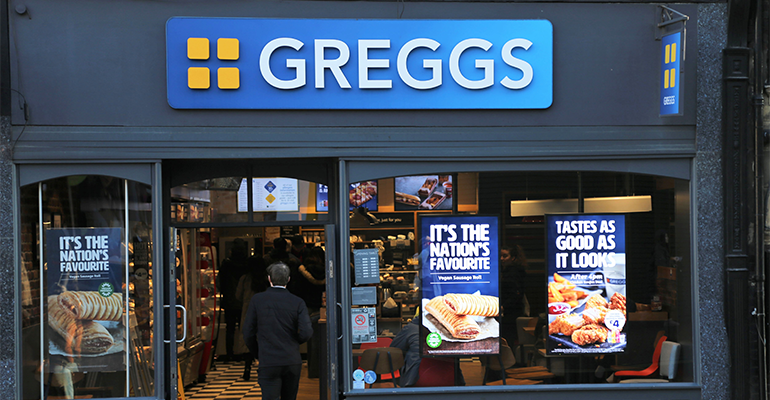
Protein labelling outperformed both the control group and the carbon labelling group, with an increase in uptake “of more than 100%”, the researchers wrote.
“[Greggs] have a unique opportunity to not only increase sales but also cement themselves as leaders in sustainability,” Dr Chris Macdonald, director of the Better Protein Institute research company and fellow at the University of Cambridge, told Ingredients Network. “The ball is in their court now.”
The Better Protein Institute, which is headed by Macdonald, has shared the study results with Greggs and offered to collaborate to hone its sales and marketing strategy.
The psychology behind plant-based purchases
Macdonald was inspired to carry out the research after seeing that emissions displays for food show modest, mixed results – “perhaps unsurprisingly, given they are difficult to interpret without additional context”, he said.
Meal choice settings can make consumers feel time pressured, thereby decreasing the efficacy of an intervention when it presents novel and complex information. Settings with a wide range of food options can also cause consumers to seek less information via cognitive shortcuts.
Furthermore, calculating product-specific emissions data and displaying it poses multiple technical challenges. Consumers want easy-to-access and digestible information, and companies want to convey this in the most effective way possible to connect with shoppers and maximise sales.
Moving away from the ‘environmental bias’
“Given its impracticality, limited efficacy, and that it goes against much of what decades-old consumer psychology literature tells us, why is carbon labelling such a popular intervention?” asked Macdonald.
The answer is, in part, due to an “environmentalist bias”, he argued.
The false consensus effect is the tendency for people to overestimate the prevalence of their own beliefs and values, believing them to be more common than they really are.
“Researchers who are also environmentalists might tend towards interventions that highlight negative environmental impacts because it is what influences them, and they may assume that it will be equally persuasive to the average consumer,” said Macdonald.
With this awareness, manufacturers have the opportunity to take alternative actions that focus on aspects other than sustainability to promote meat-free food.
Picking protein to push plant-based sales
The findings drew on prior engagement with consumers, which Macdonald stated often present an anomaly in behavioural economics, particularly in sustainable food choice research.
The study interviewed thousands of consumers and found that a common barrier emerged: the belief that it is not possible to consume sufficient protein without eating meat.
However, awareness and uptake surrounding the nutritional benefits of a meat-free diet are more prominent in today’s food sector. Today’s alternative protein market offers various low-cost, high-protein meat-free ingredients for manufacturers to choose from, and many elite athletes – including professional bodybuilders and Olympic gold medallists – follow a meat-free lifestyle.
“I call this perceived barrier the ‘insufficiency illusion’,” said Macdonald.
The research explored the idea that simple protein labelling has previously helped to dismantle this perceived barrier and had the potential to outperform carbon labelling.
Macdonald thought that an indirect (also known as a “nudge-by-proxy”) approach may be more effective at reducing emissions.
“The results were shocking: protein content labels doubled the chances of picking meat-free meals,” he said.
“A rising tide of global meat consumption fuels an increasingly dangerous narrative: that changing consumption habits is simply too difficult. My work provides a defiant counternarrative.”
Applying a data-driven approach, the Better Protein Institute aims to uncover new approaches that significantly outperform popular interventions.
“The secret is simple: returning to first principles, engaging with the consumer, and not acquiescing to external pessimism,” Macdonald added.

Get more of our news on Google
Set Ingredients Network as a 'Preferred Source' to get quicker access to the news you value.
Related news

Do the US dietary guidelines put UPFs under pressure?
10 Sep 2026
Will the US dietary guidelines change the way Americans eat, swapping ultra-processed foods for whole foods? We asked Dr Barry Popkin, renowned nutrition and obesity researcher.
Read more
Food fraud costs UK economy £2bn each year
9 Sep 2026
Food fraud is costing the UK economy up to £2 billion (€2.3 billion) every year although the food sector is more “resilient” than others, according to a recent study.
Read more
Kellogg accelerates work to remove artificial colours from all US cereals
3 Sep 2026
WK Kellogg has announced an accelerated timeline to eliminate all artificial colours and the chemical preservative, BHT, across its full US portfolio of cereals and cereal packaging.
Read more
Skimpflation: An ‘unfair’ and risky approach to keeping prices low
2 Sep 2026
Consumers see skimpflation – reducing the quality of ingredients due to rising costs – as more unfair than shrinkflation, making it a risky strategy according to recent research.
Read more
NielsenIQ’s EU barometer shows Britain leading in grocery inflation
31 Aug 2026
Britain was the only country to record grocery inflation above 2%, according to NielsenIQ data that compared Europe’s five biggest grocery markets from February to May 2026.
Read more
‘Urgent gaps’ in achieving 2030 food system goals
27 Aug 2026
Global food systems are failing to meet 2030 targets across indicators including health, environment, and resilience, according to a report co-authored by the Food and Agriculture Organisation (FAO).
Read more
Chimac’s fusion sauces bring Korean flavours to Europe
25 Aug 2026
Irish sauce brand Chimac is tapping into Korea’s culinary traditions, bringing its flavours and products to European consumers who want a taste of K-food.
Read more
Global demand for instant noodles continues to rise
24 Aug 2026
Global demand for instant noodles reached 124.21 billion servings last year, representing a 0.7% year-on-year increase – or 900 million extra servings.
Read more
Popular barbecue staples experience sharp price increases
19 Aug 2026
The typical cost of US shoppers’ barbecue baskets has risen by 12% over the past year – the fastest annual rise in a decade, figures from The Economist show.
Read more
Hot NPD: Nissin launches first cold-water Cup Noodles
18 Aug 2026
Nissin is taking one of Japan’s most iconic instant meals in a completely new direction with the launch of the first cold water-only Cup Noodles in the brand’s 55-year history.
Read more