
Ingredients Categories
Finished Products
Finished Food Categories
- Bakery
- Beverages / Juices
- Cereal and grain products
- Confectionery
- Cooking Fats & Oils
- Dairy
- Egg products
- Fruits & Vegetables
- Infant & Baby food
- Meat, Poultry & Fish
- Nuts & Seeds products
- Other Finished Food Categories
- Pet Food
- Plant-based foods
- Prepared foods
- Sauces & Seasonings
- Sweet & Savoury Spreads
Specialised Finished Products
- Bee products
- Biotic products
- Dietary supplements
- Energy drinks
- Functional beverages
- Functional confectionery
- Functional food
- Functional powders
- Meal replacement products
- Nutricosmetics
- Other Specialised Finished Products
- Pet Dietary Supplements
- Pharma and OTC products
- Protein products
- Sugar replacers / Sweeteners
Health & Wellness Areas
Delivery Formats
Operations & Services
- 3D printing
- Analysis/ Testing
- Auditing & certifications
- Blending & mixing
- Bottling
- Certification
- Clinical trials
- Co-packing
- Coating
- Consulting
- Contract manufacturing
- Drying
- Electrospinning
- Encapsulating
- Enzymatic processing
- Extracting
- Extrusion
- Fat structuring
- Fermentation
- Filling
- Flavour development
- Freeze drying
- Granulating/ grinding/ milling / mixing
- High-pressure processing
- Labelling
- Other Operations & Services
- Packaging
- Packet filling
- Pasturising
- Quality assurance
- Saccharification
- Shear cell processing
- Spray drying
- Sterilisation
- Storage & Logistics
- Tabletting
- Toasting / roasting
- Ultra-high temperature processing
News
Whistleblowers accuse UK meat industry of promoting cheap, unsustainable supply
Tessa Wiles, Content Editor - Food 7 Nov 2025An anonymous group of industry insiders has accused the UK’s biggest food companies of systematically driving down meat quality and welfare standards.
Senior professionals who work in, or were working in the food industry until recently, released the anonymous memo, which asserts that the industry is undermining its public commitments to the environment, health, and farmers.
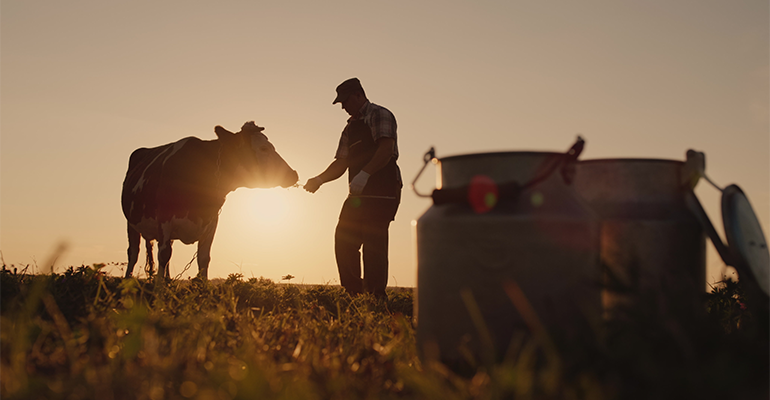
On 3 November, the nonprofit organisation Inside Track, which provides a platform for “people working inside key industries to organise for change”, published the document, entitled An Insiders’ Guide to Meat and Dairy.
Ned Younger, director of Inside Track, told Ingredients Network that following the release of the Eat-Lancet report in October, now is “a timely moment to be talking about meat and dairy”.
He stressed that the current trajectory is a “very dangerous one for food security, public health, farmers, and animal welfare”, warning that it “makes our emissions reduction strategies completely unviable”.
The British Meat Processors Association (BMPA), a trade body representing the UK meat industry, acknowledged the memo in an update published on 7 November.
It wrote: “We’ve had Inside Track (a group of concerned but anonymous food industry insiders) publish thier [sic] latest memo: An Insiders’ Guide to Meat and Dairy, which sets out their perspective on where the challenges and risks lie for the industry going forward.
“We’ll have more to say on this in the coming weeks as there’s a lot of complexity to account for in our food supply chain and the forces that act upon it.”
‘Urgent conversation’ needed on the state of meat and dairy
The memo's authors say they “are proud of the work we have done and continue to do”, but state they wish to support “better, more honest conversations” about the sector.
They acknowledge that meat and dairy play an important role in the economy and affirm that meat should remain affordable for households that choose to consume it.
However, they also argue that the current trajectory is leading toward cheaper and lower-welfare meat, more processed products, overseas sourcing, and intensive industrial production.
They call for “an important and increasingly urgent conversation about the type, quality, and quantity of meat and dairy we consume as a society”.
Looking to the future, Younger said he hopes the UK Government “can convene an honest conversation that starts at this point and from a space of realism”.
The drivers of the decline
The memo's authors identify a failure of governance, planning, and strategy within major food companies as the core reason behind decisions that ultimately lead to worse environmental and health outcomes.
They point to the fact that although concerns around animal welfare, biodiversity, and climate change are “front of mind” for the biggest producers, manufacturers, and retailers, they are “not driving fundamental decision-making”.
A key driver of this trajectory is the presence of conflicting plans, where there is a direct contradiction between commercial strategies and environmental commitments.
Long-term goals, such as those that reduce risks to business or those that support the UK’s food security objectives, are often downgraded because short-term commercial roles and plans are prioritised.
Another problem is companies' pursuit of a “dual track”: growing meat and dairy sales while simultaneously projecting reduced environmental impact.
The memo states that there is a stance among many companies, “anchored in collective optimism” around greenhouse gas reduction in cattle farming, often relying on data from small-scale pilots that are not proven at scale.
Its authors also point to a deep-seated organisational culture of “prioritising meat as a food group”, a term they call “meat primacy”.
Senior leaders frequently view meat as a “core, critical, and central part of diet”, which then influences product development and advertising, leading food manufacturers to disproportionately anchor spending around meat and dairy-heavy options.
What will be the impact on consumers if change is not implemented?
The memo warns that at the current rate and without urgent interventions and conversations supported by the government, the industry is headed toward a crisis on both an individual health level and a wider environmental and economic scale.
When this trickles down to the consumer level, it will result in higher consumption of “low-quality, highly processed meat and dairy”, the authors argue.
This will lead to “poorer health outcomes in many homes”, as well as higher public health risks because of intensive stocking practices, which could lead to “zoonotic disease outbreaks and antibiotic resistance”.
The future of British farming
The insiders highlight the industry’s prioritisation of growth in meat sales, much of which is produced to “lower welfare standards”, sourced from “processed meat”, and in some cases from outside of the UK.
It means that smaller-scale and family farms, as well as larger-scale high-welfare farms across the UK, are at risk of operating at a loss, or worse, closure, as the food industry prioritises “intensive industrial production facilities”, they say.
The memo asserts that due to climate change and broader environmental degradation, operating as a farmer in the UK is becoming increasingly untenable.
By October, many have begun using up the feed they have earmarked for winter – a problem the whistleblowers say must be addressed “before we reach a point of real crisis”.
They point to “misdirection” on behalf of major food companies, which “tell a story to the general public about farmers and farming that we know to be increasingly untrue”, as exacerbating the problem.
The memo points to companies actively spending money on branding and advertising that present farmers as “hard-working Brits managing small plots serving well-spaced, free roaming outdoor animals”, an untrue narrative, promoted to satisfy public demand, when the reality for many farmers is that they “are being failed or deserted by the industry”.
The role of industry in a sustainable future
While the claims made in the memo do raise serious questions about the future of the meat industry, the BMPA emphasises that sustainability is a central focus of its work.
For example, the association claims to work with and support its members by providing guidance and advice on emerging livestock welfare standards, associated sustainability considerations, research initiatives, and policy development.
It also conducts benchmarking of practices across the supply chain and engages with NGOs to “influence programmes, protocols, and policies”.
When it comes to policy, the BMPA says it works to advocate for government support across policy development that “balances the need for good environmental management with the key strategic requirement for a secure domestic food supply chain”.

Get more of our news on Google
Set Ingredients Network as a 'Preferred Source' to get quicker access to the news you value.
Related news

Do the US dietary guidelines put UPFs under pressure?
10 Sep 2026
Will the US dietary guidelines change the way Americans eat, swapping ultra-processed foods for whole foods? We asked Dr Barry Popkin, renowned nutrition and obesity researcher.
Read more
Food fraud costs UK economy £2bn each year
9 Sep 2026
Food fraud is costing the UK economy up to £2 billion (€2.3 billion) every year although the food sector is more “resilient” than others, according to a recent study.
Read more
Kellogg accelerates work to remove artificial colours from all US cereals
3 Sep 2026
WK Kellogg has announced an accelerated timeline to eliminate all artificial colours and the chemical preservative, BHT, across its full US portfolio of cereals and cereal packaging.
Read more
Skimpflation: An ‘unfair’ and risky approach to keeping prices low
2 Sep 2026
Consumers see skimpflation – reducing the quality of ingredients due to rising costs – as more unfair than shrinkflation, making it a risky strategy according to recent research.
Read more
‘Urgent gaps’ in achieving 2030 food system goals
27 Aug 2026
Global food systems are failing to meet 2030 targets across indicators including health, environment, and resilience, according to a report co-authored by the Food and Agriculture Organisation (FAO).
Read more
Popular barbecue staples experience sharp price increases
19 Aug 2026
The typical cost of US shoppers’ barbecue baskets has risen by 12% over the past year – the fastest annual rise in a decade, figures from The Economist show.
Read more
Savoury protein snacks shake up the on-the-go market
10 Aug 2026
Sweet flavours have dominated the high-protein snack category but savoury snacks, such as cheese bars and meat sticks, can appeal to health-conscious consumers.
Read more
Digital twin technology gains ground in food manufacturing
6 Aug 2026
Food and beverage companies are increasingly turning to digital twins to optimise and automate manufacturing processes, but opportunities stretch far beyond this, say experts.
Read more
Nestlé invests in regeneratively farmed wheat for KitKat
5 Aug 2026
Nestlé will pay a premium for Wildfarmed’s regeneratively farmed wheat but the CPG remains reticent to promote the move on packs of its KitKat bars.
Read more
Codex sets global thresholds for ‘may contain’ labels
3 Aug 2026
Codex Alimentarius has adopted its first global guidance on when to use “may contain” allergen warnings, setting thresholds intended to stop the label being used as blanket legal cover.
Read more