
Ingredients Categories
Finished Products
Finished Food Categories
- Bakery
- Beverages / Juices
- Cereal and grain products
- Confectionery
- Cooking Fats & Oils
- Dairy
- Egg products
- Fruits & Vegetables
- Infant & Baby food
- Meat, Poultry & Fish
- Nuts & Seeds products
- Other Finished Food Categories
- Pet Food
- Plant-based foods
- Prepared foods
- Sauces & Seasonings
- Sweet & Savoury Spreads
Specialised Finished Products
- Bee products
- Biotic products
- Dietary supplements
- Energy drinks
- Functional beverages
- Functional confectionery
- Functional food
- Functional powders
- Meal replacement products
- Nutricosmetics
- Other Specialised Finished Products
- Pet Dietary Supplements
- Pharma and OTC products
- Protein products
- Sugar replacers / Sweeteners
Health & Wellness Areas
Delivery Formats
Operations & Services
- 3D printing
- Analysis/ Testing
- Auditing & certifications
- Blending & mixing
- Bottling
- Certification
- Clinical trials
- Co-packing
- Coating
- Consulting
- Contract manufacturing
- Drying
- Electrospinning
- Encapsulating
- Enzymatic processing
- Extracting
- Extrusion
- Fat structuring
- Fermentation
- Filling
- Flavour development
- Freeze drying
- Granulating/ grinding/ milling / mixing
- High-pressure processing
- Labelling
- Other Operations & Services
- Packaging
- Packet filling
- Pasturising
- Quality assurance
- Saccharification
- Shear cell processing
- Spray drying
- Sterilisation
- Storage & Logistics
- Tabletting
- Toasting / roasting
- Ultra-high temperature processing
News
Nitrites: Pressure grows on UK to follow EU’s lead
David Burrows, Freelance Journalist 20 Nov 2025Pressure is growing on the UK to follow the EU’s lead after the bloc revised its regulations on the permitted levels of nitrites and nitrates in cured meats.
October marked the start of the new EU regulations, which lower the permitted levels of added and residual nitrites and nitrates in cured meats.
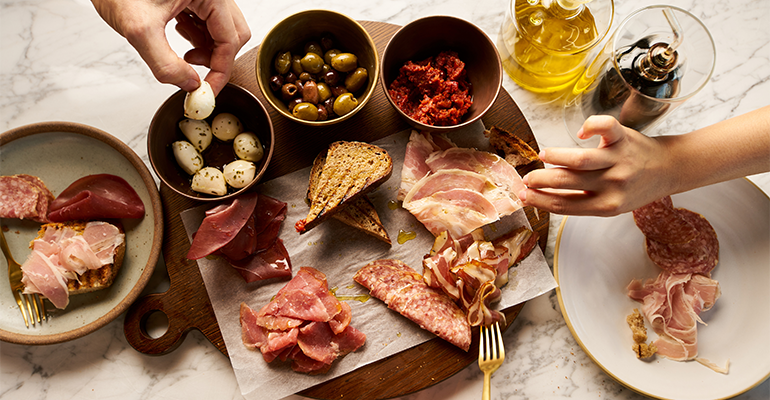
However, scientists and NGOs have already started pushing the EU to go further and phase the additives out altogether.
“The EU rules have intensified the debate, leaving UK producers at a crossroads,” Bobby Maan, regulatory consultant at the law firm DWF, told Ingredients Network.
Nitrites are often used as preservatives in processed meats like bacon, ham, and hot dogs because they contribute to the characteristic colour and flavour of the meat.
However, they can react with secondary amines in the meat, especially during cooking at high temperatures, to form nitrosamines – which are known carcinogens.
What are the new limits on levels of nitrites?
Commission Regulation (EU) 2023/2108, adopted on 6 October 2023, revises maximum limits for the additives to reduce consumer exposure to nitrosamines, while ensuring microbiological safety in foods such as meat, fish, and cheese.
The maximum permissible levels of nitrites (E 249 and E 250) added during the manufacturing of meat products has now been lowered: from 150mg/kg to 80mg/kg in general meat products, and 100mg/kg to 55mg/kg in sterilised meat products.
Specific limits for traditionally cured meats have also been set between 100 and 105mg/kg, depending on the product.
Maximum residual levels – the quantity of nitrites remaining in the final product – have also been introduced, ranging from 25 to 50mg/kg for various categories.
The EU’s move is “an important act of public health leadership”, said Brian Green, professor of human nutrition and Queen’s University Belfast.
In a piece for EUObserver, he explained that in tightening maximum permitted nitrite levels in processed meat, the European Commission and the European Food Safety Authority “have aligned regulation with contemporary science and consumer expectation”.
He added: “This is an example of the EU’s precautionary principle working as it should: responding to credible risk before it becomes a larger public health crisis.”
Green is part of the Coalition Against Nitrites, a group of food scientists who are urging the EU to go “further and faster” on these additives.
Fellow coalition member Chris Elliott, professor of food safety and microbiology at the Institute of Global Food Security based at Queen’s University Belfast, also welcomed the EU’s new limits.
The rules are “very positive” and an “important stepping stone to getting where we want to be on a total ban”, he told Ingredients Network.
He noted moves already made by food companies including Nestlé to remove nitrates and nitrates. Northern Irish company Finnebrogue arguably set the benchmark with its nitrite-free bacon range, introduced in 2017.
New rules prompt British processors to reformulate
The EU’s rules are also influencing the British meat industry.
UK processors exporting to the EU must, for example, comply with the stricter limits, explained Maan, prompting many to reformulate products or develop alternative curing methods to maintain market access.
Major UK retailers and producers have already taken steps to restrict the additives in their supply chains. Grocery retailers Tesco and Marks & Spencer have also introduced products without added nitrites. The Co-op supermarket chain has pledged to cut nitrite levels in its own-brand bacon by 60%.
The broader industry remains cautious, however. Trade bodies and processors stress that nitrites are essential for preventing harmful bacteria such as Clostridium botulinum and for achieving bacon’s characteristic colour, flavour, and shelf life.
“Many argue that large-scale removal or significant reduction is technically challenging and could compromise food safety,” Maan explained.
Regulators in some countries point to the additives’ ability to hinder the development of harmful bacteria. However, in 2019, a study conducted by the scientific consultancy Campden BRI for the British Meat Processors Association found that nitrites do not prevent the growth of C. botulinum, the bacteria that cause botulism.
In October, the Coalition Against Nitrites wrote to the UK’s Health Secretary, Wes Streeting, to register its “profound disappointment” that the UK is yet to act on nitrates and nitrites.
It called for mandatory front-of-pack labelling on nitrite-cured products, funding for research into safer curing methods, and a long-term plan for phasing out the additives, backed by regulatory measures to ensure compliance across the food industry.
The letter was signed by four of the original authors of the 2015 WHO/IARC report that classified processed meats as group one carcinogens, alongside substances like asbestos and cigarettes.
In the decade since, science has only grown stronger, the experts said, pointing to studies from Queen's University Belfast, Seoul National University, and others that have “confirmed what we already knew: nitrite-cured meats form carcinogenic nitrosamines that increase the risk of cancer”.
The French Agency for Food, Environmental and Occupational Health & Safety (ANSES) has also confirmed a link between consuming nitrites and nitrates found in processed meats and an increased risk of colorectal cancer.
Almost seven in 10 (69%) Europeans support a ban, according to polling carried out earlier this year for the Coalition Against Nitrites, including seven in 10 (69%) UK respondents and three-quarters (75%) of French consumers. In Germany, the figure was slightly lower, at three in five (59%).

Get more of our news on Google
Set Ingredients Network as a 'Preferred Source' to get quicker access to the news you value.
Related news

M&S launches own-brand pet food range
11 Sep 2026
UK retailer Marks & Spencer has launched its own-brand pet food line Paws & Pals – a well-timed and strategic move that will appeal to loyal shoppers, says a marketing expert.
Read more
Do the US dietary guidelines put UPFs under pressure?
10 Sep 2026
Will the US dietary guidelines change the way Americans eat, swapping ultra-processed foods for whole foods? We asked Dr Barry Popkin, renowned nutrition and obesity researcher.
Read more
Food fraud costs UK economy £2bn each year
9 Sep 2026
Food fraud is costing the UK economy up to £2 billion (€2.3 billion) every year although the food sector is more “resilient” than others, according to a recent study.
Read more
Health and wellness engagement matures across Middle East and Africa
4 Sep 2026
Many consumers in the Middle East and Africa are now proactively engaged in health and wellness, looking to integrate better habits and products into their daily lives, say experts.
Read more
Kellogg accelerates work to remove artificial colours from all US cereals
3 Sep 2026
WK Kellogg has announced an accelerated timeline to eliminate all artificial colours and the chemical preservative, BHT, across its full US portfolio of cereals and cereal packaging.
Read more
Skimpflation: An ‘unfair’ and risky approach to keeping prices low
2 Sep 2026
Consumers see skimpflation – reducing the quality of ingredients due to rising costs – as more unfair than shrinkflation, making it a risky strategy according to recent research.
Read more
Royal Canin launches ‘freshly-cooked’ therapeutic dog food
1 Sep 2026
Mars-owned Royal Canin has moved into the therapeutic diet sector with the launch of its Fresh Veterinary Diets range for dogs with health conditions. We asked a veterinary nutritionist for her opinion.
Read more
NielsenIQ’s EU barometer shows Britain leading in grocery inflation
31 Aug 2026
Britain was the only country to record grocery inflation above 2%, according to NielsenIQ data that compared Europe’s five biggest grocery markets from February to May 2026.
Read more
‘Urgent gaps’ in achieving 2030 food system goals
27 Aug 2026
Global food systems are failing to meet 2030 targets across indicators including health, environment, and resilience, according to a report co-authored by the Food and Agriculture Organisation (FAO).
Read more
Seven-Eleven uses microbial testing tech to extend katsudon shelf life
26 Aug 2026
Japanese retail company Seven-Eleven has improved its factory’s microbial environment to keep comfort-food staple, katsudon, fresher for longer.
Read more