
Ingredients Categories
Finished Products
Finished Food Categories
- Bakery
- Beverages / Juices
- Cereal and grain products
- Confectionery
- Cooking Fats & Oils
- Dairy
- Egg products
- Fruits & Vegetables
- Infant & Baby food
- Meat, Poultry & Fish
- Nuts & Seeds products
- Other Finished Food Categories
- Pet Food
- Plant-based foods
- Prepared foods
- Sauces & Seasonings
- Sweet & Savoury Spreads
Specialised Finished Products
- Bee products
- Biotic products
- Dietary supplements
- Energy drinks
- Functional beverages
- Functional confectionery
- Functional food
- Functional powders
- Meal replacement products
- Nutricosmetics
- Other Specialised Finished Products
- Pet Dietary Supplements
- Pharma and OTC products
- Protein products
- Sugar replacers / Sweeteners
Health & Wellness Areas
Delivery Formats
Operations & Services
- 3D printing
- Analysis/ Testing
- Auditing & certifications
- Blending & mixing
- Bottling
- Certification
- Clinical trials
- Co-packing
- Coating
- Consulting
- Contract manufacturing
- Drying
- Electrospinning
- Encapsulating
- Enzymatic processing
- Extracting
- Extrusion
- Fat structuring
- Fermentation
- Filling
- Flavour development
- Freeze drying
- Granulating/ grinding/ milling / mixing
- High-pressure processing
- Labelling
- Other Operations & Services
- Packaging
- Packet filling
- Pasturising
- Quality assurance
- Saccharification
- Shear cell processing
- Spray drying
- Sterilisation
- Storage & Logistics
- Tabletting
- Toasting / roasting
- Ultra-high temperature processing
Sponsored Content
From sorghum root to sirtuin support: AI drives ingredient innovation
4 Nov 2026MeNow’s AI Sustainability Hub at Vitafoods Europe will showcase how circular innovation can uncover valuable bioactives from co-streams, such as sorghum root.
Actionable innovation is what turns good ideas into meaningful change. A case in point is MeNow’s practical, data-driven approach to turning underutilised waste streams into viable ingredients.
Making the circular economy a reality means production efficiencies, less waste, and a product narrative that resonates with environmentally conscious consumers. At this year’s Vitafoods Europe, MeNow’s AI Sustainability Hub will demonstrate how specific ingredients can be identified from waste streams.
Unmet industry needsAs with many good business ideas, the genesis was the identification of an unmet industry need. Having completed her PhD in biotechnology engineering, MeNow CEO and co-founder Dr Hilla Ben-Hamo was working in various start-up companies, applying AI to turn science into viable business propositions.
“Working with Coralie [Dr Coralie Ebert, MeNow CTO and cofounder], we recognised that while many AI solutions were being applied in pharma, these were missing in sectors like nutraceuticals and cosmetics,” said Ben-Hamo. “A lot of people were contacting us about this. So, we decided to leave pharma behind, and start working with people in these sectors to find new solutions.”
A key issue was that while many AI tools were designed to target drug-like molecules, they often failed to identify promising natural components. This was seen by Ben-Hamo and Ebert as a missed opportunity, with consumers increasingly prioritising nutraceutical products with natural, bioactive compounds.
Healthy compounds in waste streamsMeNow set out to address this gap by developing proprietary AI based technology capable of identifying potential active compounds from natural sources, including waste streams. The start-up brings together a wide spectrum of scientific expertise. Ebert for example has a background in bioinformatics, biostatistics, and information theory.
“There are so many natural compounds out there that can address specific issues, but it takes time to find them and move forward with product development,” she said. “What we are doing here is accelerating this process with AI.”
Instead of years of high throughput screening, everything can be done in silico cutting the R&D time by up to 75%. Algorithms have been developed that can predict the potential health benefits of natural molecules based on their structure. “This means finding solutions today, instead of many years from now,” said Dr Ebert.
The other element of this is finding value in waste. A good example of this has been the identification of new bioactive compounds in sorghum roots, a waste product that would normally be disposed of. Through partnering with a large nutraceutical company, MeNow was able to identify compounds that support sirtuins, proteins that play a crucial role in cellular health.
“These have strong potential in nutraceuticals linked to longevity and the prevention of cellular senescence,” said Ebert.
Industry-wide rethink AI-driven innovations such as MeNow’s are powering an industry-wide rethink in how cutting-edge R&D can be combined with waste reduction. Ebert emphasised that this not just about extracting known healthy compounds such as fatty acids but identifying potential new ones. This can help manufacturers to really stand out from the crowd.
In addition, the technology developed by MeNow is encouraging new forms of industrial cooperation. Someone’s waste stream, for example, might contain valuable compounds that are useful for a completely different sector.
“This technology can be applied across a huge number of potential fields,” said Dr Ben-Hamo. “It is about helping businesses to upcycle waste streams into valuable ingredients and reducing time-to-market.”
AI sustainability hubAt this year’s Vitafoods Europe, MeNow will be collecting voluntary waste stream data from exhibitors and visitors. Companies can provide information securely via a dedicated link. From this data, MeNow will demonstrate how it identifies specific ingredients from waste streams and will deliver on-site presentations showcasing their findings.
This AI sustainability hub will also act as a sort of matchmaking service for companies that stand to benefit synergistically from such technology. MeNow will also have a startup pod in the Vitafoods Europe Startup Pavilion for direct engagement.
“This partnership with Vitafoods Europe moves us beyond discussion into actionable circularity solutions, making the sustainability theme tangible for event participants,” said Ben-Hamo.
MeNow also hopes to share its broader vision for transforming industry practices and explore how this approach can accelerate the adoption of circular economy principles in nutraceuticals.
MeNow is partnering with Vitafoods Europe to promote upcycling and circularity. Initiatives at this year’s event will include an Innovation Tour, a panel discussion, and a partnership with the Upcycled Food Association, amongst others. MeNow will also be organising a session entitled ‘AI Sustainability Hub: Turning Waste into Innovative Ingredients’.
The AI Sustainability Hub, launched with Vitafoods Europe, connects companies, their byproducts, and their innovation challenges to change that. Using AI, the Hub decodes waste streams, identifies novel compounds, and links them to the right partners to build viable supply chains. During the session, a newly identified ingredient will be revealed, along with details of how participants can join the Hub. MeNow will be at Booth 5B102C.
Companies mentioned

Get more of our news on Google
Set Ingredients Network as a 'Preferred Source' to get quicker access to the news you value.
Related news
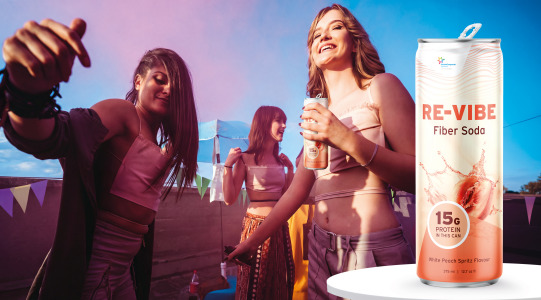
FrieslandCampina Ingredients showcases new possibilities for protein
2 Nov 2026
26 October – Amersfoort, the
Netherlands: FrieslandCampina Ingredients, a global leader in protein and prebiotics, will return to
Fi Eu...
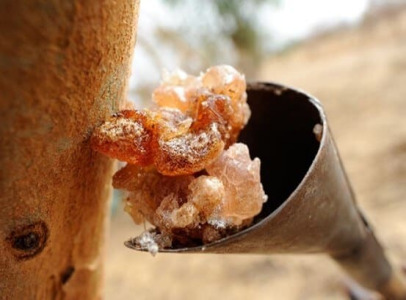
COP17: How Is Nexira Contributing to Land Restoration?
28 Oct 2026
The acacia value chain: a concrete example of land restoration.Today, 40% of the world’s land is degraded1, with consequences that go far beyond environmental concerns: food security, biodiversity, livelihoods and economic stability are all direct...
Read more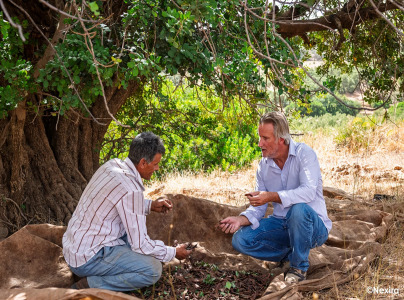
Carob expertise: From local sourcing to Locust Bean Gum manufacturing
28 Oct 2026
Great locust bean gum starts long before manufacturing. It begins at origin with the carob tree, local sourcing expertise and a deep understanding of the entire value chain.
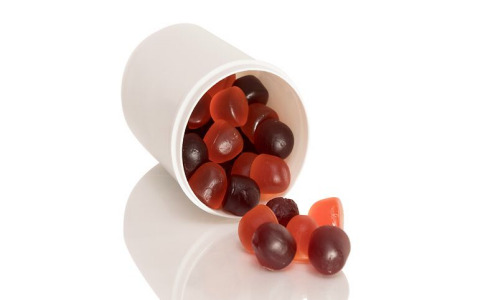
High load protein gummies by using H&F Citrus Pectin
21 Oct 2026
Dietary supplements are a rapidly growing market of which protein products, in particular, arecurrently very popular. Gummies are an attractive format for consuming dietary supplements.Consequently, protein gummies have become a common product developm...
Read more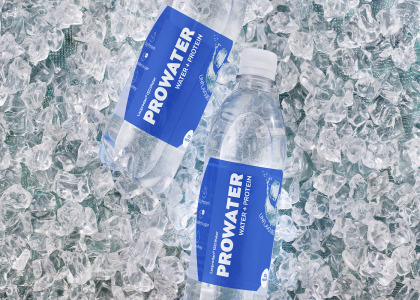
Clear water with a protein secret
19 Oct 2026
Crystal-clear protein water concept with 10g high-quality whey protein isolate in every 500ml serving. Powered by Lacprodan® ISO.Water, it combines the neutral taste of water with lasting clarity. A refreshing way to support hydration and muscle recove...
Read more
Unlock New Formulation Possibilities with One of the Industry's Broadest Lecithin and Protein Portfolios
16 Oct 2026
Food manufacturers today face a difficult balancing act: improving functionality, simplifying formulations, increasing protein content, all while maintaining the taste, texture, and quality consumers expect. At Fi Europe, discover how Bunge can ...
Read more
Fucoidan research surpasses 5000 studies
11 Oct 2026
Global
research interest in the marine extract fucoidan continues to surge, with the
number of published, peer-reviewed papers recently surpassing 5000.

Fi Europe 2026: See you in Frankfurt!
9 Oct 2026
Faravelli continues its centenary celebrations at Fi Europe 2026, looking ahead to what’s next. Meet the team at stand 41K45 and discover the right ingredients to make your products stand out.

HORIZONS, the New Foresight Platform for the Food Industry
6 Oct 2026
Roquette Launches HORIZONS, a new platform created to help food and nutrition businesses anticipate change, explore possible futures, and transform uncertainty into actionable strategies.
Read more
Launch of Breakthrough Clean-Tasting Pea Protein Isolate
6 Oct 2026
NUTRALYS® Pea 850F is Roquette’s latest pea protein isolate, representing a breakthrough in delivering a clean, neutral taste for plant-based product formulations.
Read more