
Ingredients Categories
Finished Products
Finished Food Categories
- Bakery
- Beverages / Juices
- Cereal and grain products
- Confectionery
- Cooking Fats & Oils
- Dairy
- Egg products
- Fruits & Vegetables
- Infant & Baby food
- Meat, Poultry & Fish
- Nuts & Seeds products
- Other Finished Food Categories
- Pet Food
- Plant-based foods
- Prepared foods
- Sauces & Seasonings
- Sweet & Savoury Spreads
Specialised Finished Products
- Bee products
- Biotic products
- Dietary supplements
- Energy drinks
- Functional beverages
- Functional confectionery
- Functional food
- Functional powders
- Meal replacement products
- Nutricosmetics
- Other Specialised Finished Products
- Pet Dietary Supplements
- Pharma and OTC products
- Protein products
- Sugar replacers / Sweeteners
Health & Wellness Areas
Delivery Formats
Operations & Services
- 3D printing
- Analysis/ Testing
- Auditing & certifications
- Blending & mixing
- Bottling
- Certification
- Clinical trials
- Co-packing
- Coating
- Consulting
- Contract manufacturing
- Drying
- Electrospinning
- Encapsulating
- Enzymatic processing
- Extracting
- Extrusion
- Fat structuring
- Fermentation
- Filling
- Flavour development
- Freeze drying
- Granulating/ grinding/ milling / mixing
- High-pressure processing
- Labelling
- Other Operations & Services
- Packaging
- Packet filling
- Pasturising
- Quality assurance
- Saccharification
- Shear cell processing
- Spray drying
- Sterilisation
- Storage & Logistics
- Tabletting
- Toasting / roasting
- Ultra-high temperature processing
News
Hochdorf "in crisis"
21 Aug 2019Swiss nutrition company Hochdorf says it is facing a serious crisis. The company performed significantly worse than expected in the most recent reporting period, which was mainly due to the negative performance of its 51% subsidiary Pharmalys, resulting in a massive fall in profits.
The reassessment of business risks at Pharmalys also meant that considerable debt provisions had to be made. Combined with additional value adjustments that had become necessary, this resulted in total a company loss of CHF -63.6 million.

The newly formed Board of Directors and the senior management team are said to be working intensively to restructure and realign the Group. Hochdorf's future can, it believes, be secured if the steps announced on 8 July 2019 are implemented quickly and consistently, alongside the debt restructuring measures that have been introduced.
The Hochdorf Group processed 374.8 million kg of milk, whey, cream and buttermilk (liquid quantity) in the first half of 2019, 2.6% more than in the previous year (365.3 million kg). Uckermärker Milch is responsible for this increase. There was a corresponding increase of +3.9% in volume sold to 86,661 tonnes (previous year 83,374 tonnes). The net income achieved fell mainly on account of the massive reduction in turnover at Pharmalys Laboratories and the debt provisions required of CHF 35.2 million to CHF 242.9 million (previous year CHF 281.6 million).
As a consequence, the gross operating profit fell significantly to a low of CHF 36.0 million (previous year 82.0 million). Combined with increased operational expenses and greater amortisations, there was a negative EBITDA of CHF -39.4 million (previous year 13.1 million) and a negative EBIT of CHF -52.4 million (previous year 2.9 million). The higher operating expenses are largely attributable to the sharp rise in costs at Pharmalys Laboratories SA.
The new plants (spray tower line 9 and can line 2) in Sulgen led to higher amortisations compared to the previous year. Additional amortisations or provisions were made for the shutdown and the planned dismantling of production plants in Hochdorf – two spray towers with outdated technology (in terms of safety requirements) and the VIOGERM production plants – as well as intangible assets (Snapz brand). The Group’s financial results were debited with a value adjustment of outstanding loans of EUR 10 million for the planned sale of Uckermärker Milch GmbH.
Overall company results for the reporting period therefore stood at CHF -63.6 million (after minority interests CHF -43.4 million corresponding to a loss per share of CHF -30.89). Net debt increased by almost CHF 20 million to CHF 174.2 million; the equity ratio therefore fell to 38.5% (previous year 48.8%).
The amount of milk, cream, whey and permeate (liquid quantity) processed in the first half of the year showed an increase of around 2.6% to 374.8 million kg (previous year 365.3 million kg). This led to net sales revenue of CHF 201.9 million (previous year 188.2 million; +7.3%). The increase in sales was due to higher sales volumes, including destocking, and in part to higher international selling prices for skimmed milk powder.
The Dairy Ingredients Division of Hochdorf Swiss Nutrition Ltd (HSN) continued the seasonal price reductions introduced last year in the high milk season. HSN was only just able to pay competitive milk prices, which was also a result of the follow-on solution to the “Schoggi Law”. Combined with the low milk volume in the initial months, this led to lower milk receipts (150.3 million kg in the first half of 2019 compared with 166.3 million kg in the previous year). Nevertheless, delivery was always guaranteed. The overall processed liquid quantity fell by 3.6% to 221.6 million kg (previous year 229.7 million kg). The system change was completed as of 1 January 2019 and the threat of negative effects on results largely offset.
Uckermärker Milch GmbH processed 153.2 million kg of liquid (previous year 117.8 million kg; +30.0%). Milk volumes in particular rose sharply by 40% (136.9 million kg compared to 97.8 million kg in the previous year), favoured by the acquisition of several regional direct suppliers. This will increase the quantities of own milk, while reducing dependence on the spot market. Protein prices recovered in the first half of the year, while butter prices fell gradually over this period.
The Baby Care Division performed below expectations for the first half of the year and achieved a massively low net sales revenue of CHF 30.3 million compared to the previous year (previous year CHF 77.1 million; -60.7%), mainly due to the slump in sales in Pharmalys and the CHF 35.5 million in debtor provisions. The allowances were mainly made for receivables from Pharmalys Laboratories SA.
As expected, capacity utilisation at the new production and filling line at Hochdorf Swiss Nutrition Ltd in Sulgen was still relatively low. The first contracts with new customers were signed and the first products have now been produced. Capacity is just at the planned level. There was a longer, planned shutdown for a technical retrofit at spray tower line 8, which then influenced the production volumes available.
Pharmalys Laboratories achieved a considerably lower net sales revenue for the first half of the year compared to the previous year's performance. As a result of discussions about financing growth, Pharmalys reduced its distributor inventories and accordingly ordered less, which led to significantly lower overall sales for both Pharmalys and the Baby Care Division at Hochdorf Swiss Nutrition Ltd. In contrast, costs at Pharmalys increased massively in the first half of 2019, resulting in a significantly negative operating result.
Bimbosan AG recorded a result above expectations in the first half of the year. The integration of the subsidiary acquired last year is progressing according to plan and with positive results. Bimbosan successfully maintained its strong home market position despite increasing competition. New registrations in export markets were launched and sales increased in existing foreign markets.
The Cereals & Ingredients Division achieved net sales revenue of CHF 10.6 million in the first half of 2019 (previous year 16.3 million; -34.9%). The slump in sales is attributable to the discontinuation or reduction of the first unprofitable business activities and to lower product sales. At the same time, promising new products were developed and some of them have already been launched on the market.
Looking ahead, following the reassessment of the company risks and opportunities undertaken by the newly constituted Board of Directors in the first half of the year, the Hochdorf Group will concentrate on the further development of the high-growth Baby Care business, while at the same time examining all strategic options for Pharmalys, and on the further optimisation of the Dairy Ingredients Division. The measures and timelines for the realignment of the Hochdorf Group announced on July 8, 2019 also relate to the prompt sale of Uckermärker Milch GmbH, the strategy review of the Dairy Ingredients Division and the discontinuation of the Cereals & Ingredients Division with the evaluation of the strategic alternatives for the individual subsidiaries.
In particular, the major shareholding in Pharmalys Laboratories SA presents the Hochdorf Group with major challenges. The business model does not provide the Hochdorf bodies with any transparency or influence on relevant parts of the value chain. Financing net current assets is also extremely capital intensive, which presents an additional challenge. These are some of the reasons why the Board of Directors is reviewing all the options for Pharmalys as a matter of urgency.
When the massive deterioration in business development and the resulting breach of the financial covenants became apparent in the middle of the year, the existing financing was immediately renegotiated with the banks. The syndicated loan of CHF 151 million was extended until 31 October 2019; at the same time a waiver was signed which temporarily suspends the financial covenants. In order to press ahead with the planned restructuring of the Group, the company is aiming to extend the syndicated loan and conclude an additional credit facility of CHF 40 million.
Outlook
The measures introduced to realign and restructure the Group will have a heavy impact on the annual result, but the necessary amortisations and provisions are already reflected in the half-year results as far as possible. In addition, further operational corrective measures were initiated, such as an investment freeze on all non-operational processes, a comprehensive cost reduction programme and a programme to safeguard liquidity.
The initiated transformation has led the Board of Directors to reconsider its own organization. In recent months, Michiel de Ruiter and Ulrike Sailer have contributed significantly to the sharpening of the company's strategy and realignment. An important milestone will be reached in September 2019 with the finalization of the new strategy and budgeting. Following this, Michiel de Ruiter and Ulrike Sailer will resign from the Board of Directors. This change will be used to reduce the size of the Board to five members.
The Hochdorf Group is facing major challenges. This makes it difficult to set an end-of-year forecast. The second semester is usually stronger for seasonal reasons. In the current financial year, the degree and pace of implementation of the measures taken, in particular those relating to the future of Pharmalys, will have a significant impact on sales revenues, the operating result and the net result.
Companies mentioned

Get more of our news on Google
Set Ingredients Network as a 'Preferred Source' to get quicker access to the news you value.
Related news

Is creatine going mainstream in food and drink formulation?
24 Sep 2026
The functional ingredient creatine is gaining traction in the food and drink industry, as brands ramp up production investment and explore new applications.
Read more
New GRAS rules offer consumers confidence but companies are concerned
22 Sep 2026
Public health campaigners are celebrating the US government’s move to close the Generally Recognised as Safe (GRAS) loophole, but companies worry it will stifle innovation.
Read more
Kremlin takes control of Nestlé Russia’s assets
18 Sep 2026
Nestlé says it is committed to “taking all necessary steps to protect its rights” after Russian authorities take temporary control of its operations in the country.
Read more
Immunity, wellness, and nutrition: Nutraceutical promise in the Middle East and Africa
17 Sep 2026
Nutraceuticals continue to gain ground across the Middle East and Africa with vitamins, probiotics, and functional drinks doing particularly well, says Euromonitor.
Read more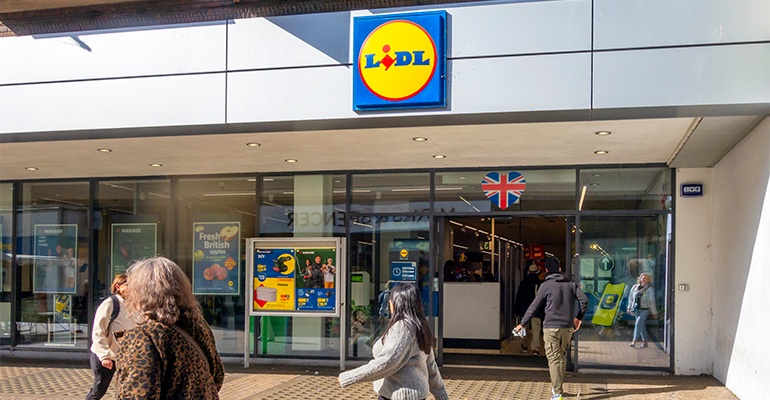
Lidl says Britain 'significantly off track' with healthy and sustainable eating
15 Sep 2026
Discounter retailer Lidl has raised concerns about healthy and sustainable eating habits across Britain, spotlighting how affordability remains a barrier for consumers.
Read more
Do the US dietary guidelines put UPFs under pressure?
10 Sep 2026
Will the US dietary guidelines change the way Americans eat, swapping ultra-processed foods for whole foods? We asked Dr Barry Popkin, renowned nutrition and obesity researcher.
Read more
Food fraud costs UK economy £2bn each year
9 Sep 2026
Food fraud is costing the UK economy up to £2 billion (€2.3 billion) every year although the food sector is more “resilient” than others, according to a recent study.
Read more
Kellogg accelerates work to remove artificial colours from all US cereals
3 Sep 2026
WK Kellogg has announced an accelerated timeline to eliminate all artificial colours and the chemical preservative, BHT, across its full US portfolio of cereals and cereal packaging.
Read more
Skimpflation: An ‘unfair’ and risky approach to keeping prices low
2 Sep 2026
Consumers see skimpflation – reducing the quality of ingredients due to rising costs – as more unfair than shrinkflation, making it a risky strategy according to recent research.
Read more
‘Urgent gaps’ in achieving 2030 food system goals
27 Aug 2026
Global food systems are failing to meet 2030 targets across indicators including health, environment, and resilience, according to a report co-authored by the Food and Agriculture Organisation (FAO).
Read more