
Ingredients Categories
Finished Products
Finished Food Categories
- Bakery
- Beverages / Juices
- Cereal and grain products
- Confectionery
- Cooking Fats & Oils
- Dairy
- Egg products
- Fruits & Vegetables
- Infant & Baby food
- Meat, Poultry & Fish
- Nuts & Seeds products
- Other Finished Food Categories
- Pet Food
- Plant-based foods
- Prepared foods
- Sauces & Seasonings
- Sweet & Savoury Spreads
Specialised Finished Products
- Bee products
- Biotic products
- Dietary supplements
- Energy drinks
- Functional beverages
- Functional confectionery
- Functional food
- Functional powders
- Meal replacement products
- Nutricosmetics
- Other Specialised Finished Products
- Pet Dietary Supplements
- Pharma and OTC products
- Protein products
- Sugar replacers / Sweeteners
Health & Wellness Areas
Delivery Formats
Operations & Services
- 3D printing
- Analysis/ Testing
- Auditing & certifications
- Blending & mixing
- Bottling
- Certification
- Clinical trials
- Co-packing
- Coating
- Consulting
- Contract manufacturing
- Drying
- Electrospinning
- Encapsulating
- Enzymatic processing
- Extracting
- Extrusion
- Fat structuring
- Fermentation
- Filling
- Flavour development
- Freeze drying
- Granulating/ grinding/ milling / mixing
- High-pressure processing
- Labelling
- Other Operations & Services
- Packaging
- Packet filling
- Pasturising
- Quality assurance
- Saccharification
- Shear cell processing
- Spray drying
- Sterilisation
- Storage & Logistics
- Tabletting
- Toasting / roasting
- Ultra-high temperature processing
News
Lampados completes Liteez production facility
26 Apr 2018Lampados International has completed a new plant expansion for the production of Liteez, a vegan, 3D meringue kiss sweetener for hot beverages.

Lampados International has completed a new plant expansion for the production of Liteez, a vegan, 3D meringue kiss sweetener for hot beverages. The new facility was designed according to eco-friendly principles to dramatically reduce energy and water use.
Lampados developed an entirely automatic, closed-system production process for Liteez that is said to ensure product safety and purity according to the strictest certifications, with full control over every step, including packaging.Production of meringue is typically highly sensitive to contamination, the company notes, especially during the foaming stage, and many meringue manufacturers engage this stage manually which also is labour intensive. The new closed system by Lampados is designed to prevent contamination throughout every step, allowing maximum flexibility that enables increasing capacity by 22 times.“When we set out to create a new sweetener, while we certainly strived for exceptional characteristics and functionality, we wanted to do so with responsibility,” said Noam Kaplan, CEO of Lampados. “Consumers—especially millennials—expect manufacturers to be a part of the community and take care of the environment. Part of Lampados’ mission is to make Liteez a better-for-you product in every aspect.”The new production process of the Liteez 3D sweetener allows water and energy savings due to:1. A more controlled foaming system that allows for a reduction of water in the mixture by 9%. This reduction also saves energy in the drying process.2. Heated pipes save 6% energy by getting the material from cold to drying temperature more rapidly.3. Shifting to a continuous process, washing equipment and utensils only once in each production, while still ensuring maximum safety and purity. This saves a further 47% on water usage.“As a family business, Lampados constantly turns back to its roots and core values,” said Kaplan. “We keep searching for innovation in flavor and functionality, but it also is important for us to conserve our precious resources. Water is one of the most valuable resource in Israel, so it is only responsible to reduce waste and at the same time produce our safe sweetener using only simple ingredients.”

Get more of our news on Google
Set Ingredients Network as a 'Preferred Source' to get quicker access to the news you value.
Related news

Reinventing soda: Zero sugar, functional benefits, and new indulgence
30 Sep 2026
Zero-sugar, functional, and indulgent sodas are redefining what a carbonated soft drink can offer in today’s evolving market.
Read more
Is creatine going mainstream in food and drink formulation?
24 Sep 2026
The functional ingredient creatine is gaining traction in the food and drink industry, as brands ramp up production investment and explore new applications.
Read more
New GRAS rules offer consumers confidence but companies are concerned
22 Sep 2026
Public health campaigners are celebrating the US government’s move to close the Generally Recognised as Safe (GRAS) loophole, but companies worry it will stifle innovation.
Read more
Kremlin takes control of Nestlé Russia’s assets
18 Sep 2026
Nestlé says it is committed to “taking all necessary steps to protect its rights” after Russian authorities take temporary control of its operations in the country.
Read more
Immunity, wellness, and nutrition: Nutraceutical promise in the Middle East and Africa
17 Sep 2026
Nutraceuticals continue to gain ground across the Middle East and Africa with vitamins, probiotics, and functional drinks doing particularly well, says Euromonitor.
Read more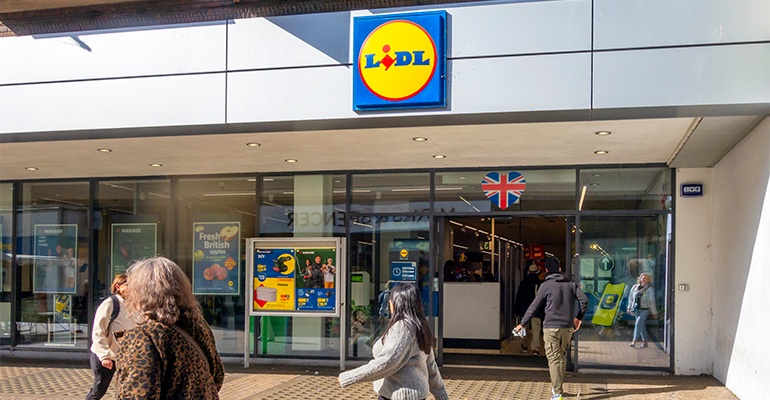
Lidl says Britain 'significantly off track' with healthy and sustainable eating
15 Sep 2026
Discounter retailer Lidl has raised concerns about healthy and sustainable eating habits across Britain, spotlighting how affordability remains a barrier for consumers.
Read more
Do the US dietary guidelines put UPFs under pressure?
10 Sep 2026
Will the US dietary guidelines change the way Americans eat, swapping ultra-processed foods for whole foods? We asked Dr Barry Popkin, renowned nutrition and obesity researcher.
Read more
Food fraud costs UK economy £2bn each year
9 Sep 2026
Food fraud is costing the UK economy up to £2 billion (€2.3 billion) every year although the food sector is more “resilient” than others, according to a recent study.
Read more
Skimpflation: An ‘unfair’ and risky approach to keeping prices low
2 Sep 2026
Consumers see skimpflation – reducing the quality of ingredients due to rising costs – as more unfair than shrinkflation, making it a risky strategy according to recent research.
Read more
NielsenIQ’s EU barometer shows Britain leading in grocery inflation
31 Aug 2026
Britain was the only country to record grocery inflation above 2%, according to NielsenIQ data that compared Europe’s five biggest grocery markets from February to May 2026.
Read more