
Ingredients Categories
Finished Products
Finished Food Categories
- Bakery
- Beverages / Juices
- Cereal and grain products
- Confectionery
- Cooking Fats & Oils
- Dairy
- Egg products
- Fruits & Vegetables
- Infant & Baby food
- Meat, Poultry & Fish
- Nuts & Seeds products
- Other Finished Food Categories
- Pet Food
- Plant-based foods
- Prepared foods
- Sauces & Seasonings
- Sweet & Savoury Spreads
Specialised Finished Products
- Bee products
- Biotic products
- Dietary supplements
- Energy drinks
- Functional beverages
- Functional confectionery
- Functional food
- Functional powders
- Meal replacement products
- Nutricosmetics
- Other Specialised Finished Products
- Pet Dietary Supplements
- Pharma and OTC products
- Protein products
- Sugar replacers / Sweeteners
Health & Wellness Areas
Delivery Formats
Operations & Services
- 3D printing
- Analysis/ Testing
- Auditing & certifications
- Blending & mixing
- Bottling
- Certification
- Clinical trials
- Co-packing
- Coating
- Consulting
- Contract manufacturing
- Drying
- Electrospinning
- Encapsulating
- Enzymatic processing
- Extracting
- Extrusion
- Fat structuring
- Fermentation
- Filling
- Flavour development
- Freeze drying
- Granulating/ grinding/ milling / mixing
- High-pressure processing
- Labelling
- Other Operations & Services
- Packaging
- Packet filling
- Pasturising
- Quality assurance
- Saccharification
- Shear cell processing
- Spray drying
- Sterilisation
- Storage & Logistics
- Tabletting
- Toasting / roasting
- Ultra-high temperature processing
News
Marlow Foods to supply Quorn mycoprotein
1 May 2023
Marlow Foods, the parent company of mycoprotein brand Quorn, is setting up a business division to supply its alternative protein ingredient to other manufacturers.
Under the new division called Marlow Ingredients, the mycoprotein will be available to European manufacturers before being rolled out internationally.
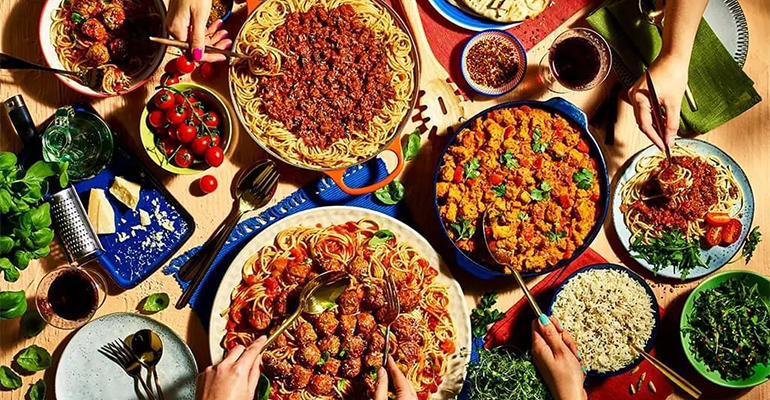
Mycoprotein is made from filamentous fungi, the invisible root structure of mycelia, and is commonly used as the protein base in plant-based meat alternatives (although, strictly speaking, it is a fungus and not a plant).
Mycoprotein has been used in Quorn products for almost 40 years but, with the current boom in demand for plant-based foods, interest in this ingredient has grown. Recent mycelium players include MyForest Foods, which makes whole pieces of plant-based meat; California-based The Better Meat Company which uses a fungus species known as Neurospora crassa; and Meati Foods.
Speaking of Marlow Foods’ expansion to the B2B ingredient space, CEO Marco Bertacca said: "We have been trailblazers in meat free since we sold our first Quorn product in 1985. We see it as our responsibility to provide healthy food for people and planet.
"We recognise the urgent need for humanity to eat more sustainably. By making our mycoprotein available to others, Marlow Ingredients will play a pivotal role in helping us achieve one of our missions – to tackle climate change by making great tasting food.
He added: "Now, backed by decades of research, we know it is one of the best sources of protein there is.”
The ingredient, Marlow mycoprotein, contains all nine essential amino acids, is low in saturated fat, and contains several vitamins and minerals. It is also high in fibre and, according to the company, uses 90% less land and water and produces 98% less carbon emissions than equivalent beef products.
It is used in over 100 branded Quorn products and is used by foodservice operators in Europe such as KFC across Europe, Greggs bakery in the UK, and Quick fast-food restaurants in Belgium.
According to Marco, there is also “huge potential” for mycoprotein use to move beyond meat alternatives to dairy.
"... there's exciting research happening into its ability to create more sustainable versions of other applications, such as dairy alternatives. Marlow Ingredients is initially focussed on building partnerships with food manufacturers, but the potential for the future is very exciting.”

Get more of our news on Google
Set Ingredients Network as a 'Preferred Source' to get quicker access to the news you value.
Related news

Kellogg accelerates work to remove artificial colours from all US cereals
3 Sep 2026
WK Kellogg has announced an accelerated timeline to eliminate all artificial colours and the chemical preservative, BHT, across its full US portfolio of cereals and cereal packaging.
Read more
Skimpflation: An ‘unfair’ and risky approach to keeping prices low
2 Sep 2026
Consumers see skimpflation – reducing the quality of ingredients due to rising costs – as more unfair than shrinkflation, making it a risky strategy according to recent research.
Read more
‘Urgent gaps’ in achieving 2030 food system goals
27 Aug 2026
Global food systems are failing to meet 2030 targets across indicators including health, environment, and resilience, according to a report co-authored by the Food and Agriculture Organisation (FAO).
Read more
Seven-Eleven uses microbial testing tech to extend katsudon shelf life
26 Aug 2026
Japanese retail company Seven-Eleven has improved its factory’s microbial environment to keep comfort-food staple, katsudon, fresher for longer.
Read more
Chimac’s fusion sauces bring Korean flavours to Europe
25 Aug 2026
Irish sauce brand Chimac is tapping into Korea’s culinary traditions, bringing its flavours and products to European consumers who want a taste of K-food.
Read more
Global demand for instant noodles continues to rise
24 Aug 2026
Global demand for instant noodles reached 124.21 billion servings last year, representing a 0.7% year-on-year increase – or 900 million extra servings.
Read more
China beverages: Is herbal innovation the future?
20 Aug 2026
Herbal and botanical innovation in China's drinks market continues to grow, with ingredients like astragalus root, ginger, and ginseng in the spotlight – and focus shifting far beyond refreshment.
Read more
Popular barbecue staples experience sharp price increases
19 Aug 2026
The typical cost of US shoppers’ barbecue baskets has risen by 12% over the past year – the fastest annual rise in a decade, figures from The Economist show.
Read more
Hot NPD: Nissin launches first cold-water Cup Noodles
18 Aug 2026
Nissin is taking one of Japan’s most iconic instant meals in a completely new direction with the launch of the first cold water-only Cup Noodles in the brand’s 55-year history.
Read more
Beyond 'nice to have': A spotlight on US functional beverages
12 Aug 2026
Functional beverage interest in the US is gaining important ground as consumers now expect function rather than see it as "nice to have", and there are clear market gaps for growth, according to Spate.
Read more