
Ingredients Categories
Finished Products
Finished Food Categories
- Bakery
- Beverages / Juices
- Cereal and grain products
- Confectionery
- Cooking Fats & Oils
- Dairy
- Egg products
- Fruits & Vegetables
- Infant & Baby food
- Meat, Poultry & Fish
- Nuts & Seeds products
- Other Finished Food Categories
- Pet Food
- Plant-based foods
- Prepared foods
- Sauces & Seasonings
- Sweet & Savoury Spreads
Specialised Finished Products
- Bee products
- Biotic products
- Dietary supplements
- Energy drinks
- Functional beverages
- Functional confectionery
- Functional food
- Functional powders
- Meal replacement products
- Nutricosmetics
- Other Specialised Finished Products
- Pet Dietary Supplements
- Pharma and OTC products
- Protein products
- Sugar replacers / Sweeteners
Health & Wellness Areas
Delivery Formats
Operations & Services
- 3D printing
- Analysis/ Testing
- Auditing & certifications
- Blending & mixing
- Bottling
- Certification
- Clinical trials
- Co-packing
- Coating
- Consulting
- Contract manufacturing
- Drying
- Electrospinning
- Encapsulating
- Enzymatic processing
- Extracting
- Extrusion
- Fat structuring
- Fermentation
- Filling
- Flavour development
- Freeze drying
- Granulating/ grinding/ milling / mixing
- High-pressure processing
- Labelling
- Other Operations & Services
- Packaging
- Packet filling
- Pasturising
- Quality assurance
- Saccharification
- Shear cell processing
- Spray drying
- Sterilisation
- Storage & Logistics
- Tabletting
- Toasting / roasting
- Ultra-high temperature processing
News
North Carolina company uses CRISPR tech to create seedless berries
Katja Knox, Editorial Account Manager 13 Dec 2021After three years of working with CRISPR technology to edit the genes of various fruits and vegetables, Pairwise said it expects its first products to hit shelves next year, Food Dive reported.
The startup, which was co-founded by Tom Adams, a former vice president of Monsanto, said leafy greens that have been edited to remove their bitterness will be the first produce product to launch commercially. While consumers will be given access to these improved greens on a select basis in 2022, the company expects a broader commercial launch in 2023.
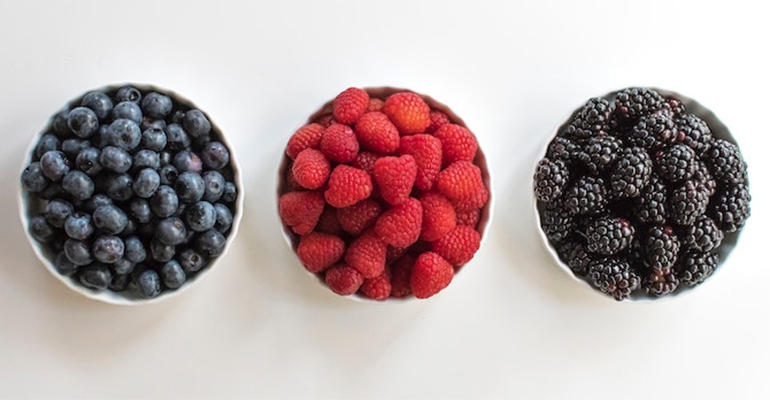
In addition to leafy greens, Pairwise is working on removing the pits from cherries and reducing the number of seeds that are in both blackberries and black raspberries. Development on seedless blackberries has been ongoing since 2018, and the company aims to have a variety with fewer seeds available to the public by the middle of the decade.
Pairwise intends for these genetic changes to be viewed as improvements by consumers and encourage them to consume more fruits and vegetables. According to a press release from the company, its use of CRISPR technology is intended to “build a healthier world by introducing better fruits and vegetables with improved taste, enhanced convenience, increased shelf life, improved yield, simplified harvesting, or lengthened season availability.”
Encouraging the consumption of more fruits and vegetables is something that presents a long runway for growth for this startup. In 2017, only one in ten U.S. adults consumed the federally recommended amount of fruits and vegetables daily, according to a report by the Centers for Disease Control and Prevention (CDC). Such a low figure for daily consumption presents an opportunity for Pairwise that is looking to shake up the $66 billion U.S. retail produce market.
Investors agree with the assessment that CRISPER technology will innovate the industry. Earlier in 2021, Pairwise raised $90 million in a Series B funding round that included investors such as the Ponitfax Global Food, Deerfield Management and Leaps by Bayer. In 2018, Monsanto invested $100 million to underwrite Pairwise’s intellectual property. The St. Louis company is now owned by Bayer, which has participated twice in funding rounds for the new gene-editing startup.
Although eating healthier is an ongoing concern for consumers and has only accelerated as a result of the pandemic, consumers are also interested in where their food is coming from. Genetic modification has seen widespread criticism and gene-editing technology has fallen into this categorization. Despite having a more difficult position to convince consumers to try its altered produce, Pairwise remains confident that facilitating consumption of fruits and vegetables by removing undesirable traits will persuade a larger number of shoppers to select healthier options.
“People see innovation all around them, except in the produce aisle. We will give consumers new options that make healthy eating easier and more exciting,” said Pairwise CEO Tom Adams in a press release earlier this year.

Get more of our news on Google
Set Ingredients Network as a 'Preferred Source' to get quicker access to the news you value.
Related news

Do the US dietary guidelines put UPFs under pressure?
10 Sep 2026
Will the US dietary guidelines change the way Americans eat, swapping ultra-processed foods for whole foods? We asked Dr Barry Popkin, renowned nutrition and obesity researcher.
Read more
Food fraud costs UK economy £2bn each year
9 Sep 2026
Food fraud is costing the UK economy up to £2 billion (€2.3 billion) every year although the food sector is more “resilient” than others, according to a recent study.
Read more
Health and wellness engagement matures across Middle East and Africa
4 Sep 2026
Many consumers in the Middle East and Africa are now proactively engaged in health and wellness, looking to integrate better habits and products into their daily lives, say experts.
Read more
Kellogg accelerates work to remove artificial colours from all US cereals
3 Sep 2026
WK Kellogg has announced an accelerated timeline to eliminate all artificial colours and the chemical preservative, BHT, across its full US portfolio of cereals and cereal packaging.
Read more
Skimpflation: An ‘unfair’ and risky approach to keeping prices low
2 Sep 2026
Consumers see skimpflation – reducing the quality of ingredients due to rising costs – as more unfair than shrinkflation, making it a risky strategy according to recent research.
Read more
‘Urgent gaps’ in achieving 2030 food system goals
27 Aug 2026
Global food systems are failing to meet 2030 targets across indicators including health, environment, and resilience, according to a report co-authored by the Food and Agriculture Organisation (FAO).
Read more
China beverages: Is herbal innovation the future?
20 Aug 2026
Herbal and botanical innovation in China's drinks market continues to grow, with ingredients like astragalus root, ginger, and ginseng in the spotlight – and focus shifting far beyond refreshment.
Read more
Popular barbecue staples experience sharp price increases
19 Aug 2026
The typical cost of US shoppers’ barbecue baskets has risen by 12% over the past year – the fastest annual rise in a decade, figures from The Economist show.
Read more
Women’s hormonal health: Familiar ingredients beat novel actives
13 Aug 2026
Hormonal symptoms affect women across life stages, and FMCG Gurus says the ingredients best placed to support them are those with which they are already familiar.
Read more
Beyond 'nice to have': A spotlight on US functional beverages
12 Aug 2026
Functional beverage interest in the US is gaining important ground as consumers now expect function rather than see it as "nice to have", and there are clear market gaps for growth, according to Spate.
Read more