
Ingredients Categories
Finished Products
Finished Food Categories
- Bakery
- Beverages / Juices
- Cereal and grain products
- Confectionery
- Cooking Fats & Oils
- Dairy
- Egg products
- Fruits & Vegetables
- Infant & Baby food
- Meat, Poultry & Fish
- Nuts & Seeds products
- Other Finished Food Categories
- Pet Food
- Plant-based foods
- Prepared foods
- Sauces & Seasonings
- Sweet & Savoury Spreads
Specialised Finished Products
- Bee products
- Biotic products
- Dietary supplements
- Energy drinks
- Functional beverages
- Functional confectionery
- Functional food
- Functional powders
- Meal replacement products
- Nutricosmetics
- Other Specialised Finished Products
- Pet Dietary Supplements
- Pharma and OTC products
- Protein products
- Sugar replacers / Sweeteners
Health & Wellness Areas
Delivery Formats
Operations & Services
- 3D printing
- Analysis/ Testing
- Auditing & certifications
- Blending & mixing
- Bottling
- Certification
- Clinical trials
- Co-packing
- Coating
- Consulting
- Contract manufacturing
- Drying
- Electrospinning
- Encapsulating
- Enzymatic processing
- Extracting
- Extrusion
- Fat structuring
- Fermentation
- Filling
- Flavour development
- Freeze drying
- Granulating/ grinding/ milling / mixing
- High-pressure processing
- Labelling
- Other Operations & Services
- Packaging
- Packet filling
- Pasturising
- Quality assurance
- Saccharification
- Shear cell processing
- Spray drying
- Sterilisation
- Storage & Logistics
- Tabletting
- Toasting / roasting
- Ultra-high temperature processing
News
Paper-based packaging gaining popularity as solution to waste reduction
Will Chu, Freelance Journalist 27 Jul 2023
With efforts being made to offer alternatives to plastic-based packaging, the food industry has renewed efforts to introduce paper- and even plant-based options to complement the sustainably produced food products they serve to protect.
It’s not just food: Pernod Ricard-owned Absolut Vodka is selling its paper bottle in UK supermarket chain Tesco as part of a three-month pilot test – although the pilot has been subject to accusations of greenwashing.
Fellow UK supermarket Sainsbury’s has this month replaced the plastic packaging on its “by Sainsbury’s” steak range, removing 70% of plastic per tray. The new packaging, which was launched across 10 products, is hoped to save 249 tonnes of plastic per year.
Sainsbury’s Plan for Better commitment aims to reduce plastic use
“As part of our Plan for Better commitments, we are trying to reduce plastic packaging across our own-brand ranges,” said Claire Hughes, director of product and innovation at Sainsbury’s.
“It’s why we are always looking at ways to innovate our packaging and reduce or replace plastic wherever we can, as quickly as we can. We know there is more to do and we are committed to making bold changes that help us achieve our plastic reduction targets.”
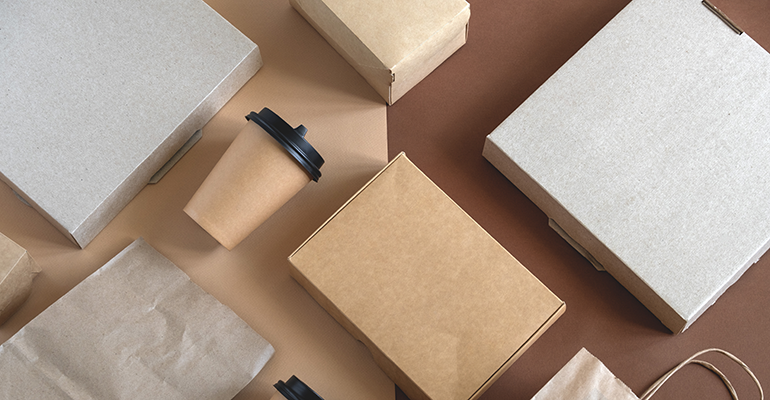
The shift to paper is not only because of its green credentials as a renewable material. Its versatility as food packaging means it is suitable as protection for bread, wrap for chocolates, and containers for ready meals and pizzas.
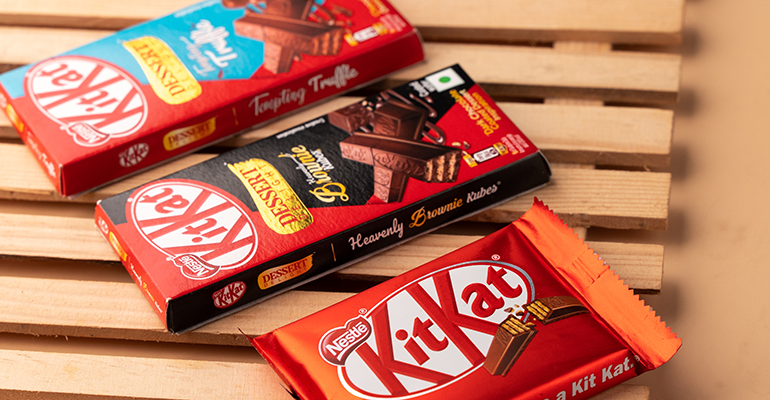
Corporations like Kraft Heinz and Carlsberg are investing millions to produce paper packaging that can do the jobs plastic does to hopefully leave a lighter footprint on the planet. Nestlé, for example, is using paper for its KitKat and Quality Street packaging.
 © AdobeStock/sdx15
PepsiCo trials nanotechnology to cut down on carbon emissions
Another example is PepsiCo, which in March began testing paper-based, recyclable outer packaging on its Walkers Baked six-bag multipacks, following a successful trial with Walkers 22- and 24-bag multipacks last year.
The packaging is a first for savoury snacks, with nanotechnology employed to introduce air bubbles into the film to reduce the amount of plastic used, while retaining the strength and stretch needed.
PepsiCo claims the packaging will result in a 40% reduction in virgin plastic year-on-year compared with the previous film, meaning the conglomerate will reduce its annual carbon emissions by 465 tonnes.
“After more than two years in development, we’re looking forward to testing this paper-based outer material with our consumers to better assess the role it could play in our future packaging portfolio,”said Gareth Callan, packaging sustainability lead at PepsiCo UK & Ireland.
Rachel Smith, senior marketing manager for Walkers, added: “With this latest trial, people can buy a selection of Walkers Baked multipacks in paper-based outer packaging that can be easily and widely recycled with regular recycling at home.”
Plastic-based packaging becomes recyclable with ‘holistic solution’
With all the attention on paper, is there still a role for plastics in packaging? The main problem with this material is its multi-structure composition, where petroleum-based ethylene vinyl alcohol copolymer (EVOH) and met-PET (metallised polyester film) plastics often feature in packaging lids.
EVOH, which is normally included on the thin plastic films of food packaging to serve as an oxygen barrier, is non-recyclable, preventing the entire package from being recyclable.
But Israeli packaging solutions developer Melodea believes it has created a solution to the problem with its new water-based, plant-sourced barrier coating that allows the packaging to be recycled.
Called MelOx NGen, the coating, which was released earlier this month, is designed to line the inside surfaces of plastic food packaging without the use of primers, making it suitable for protecting and extending the shelf-life of snacks, confectionery, nutrition bars, meat, and dairy products.
“The global collective effort to drastically curb plastic use is a long and complex process,” said Shaul Lapidot, CEO and co-founder of Melodea.
“Our holistic solution can help ease the pressure by boosting the integration of plastic packaging into the circular economy, immediately.”
MelOx NGen has been approved as safe for contact with food by the US Food and Drug Administration and the Federal Institute for Risk Assessment in Germany.

Get more of our news on Google
Set Ingredients Network as a 'Preferred Source' to get quicker access to the news you value.
Related news

Do the US dietary guidelines put UPFs under pressure?
10 Sep 2026
Will the US dietary guidelines change the way Americans eat, swapping ultra-processed foods for whole foods? We asked Dr Barry Popkin, renowned nutrition and obesity researcher.
Read more
Food fraud costs UK economy £2bn each year
9 Sep 2026
Food fraud is costing the UK economy up to £2 billion (€2.3 billion) every year although the food sector is more “resilient” than others, according to a recent study.
Read more
Kellogg accelerates work to remove artificial colours from all US cereals
3 Sep 2026
WK Kellogg has announced an accelerated timeline to eliminate all artificial colours and the chemical preservative, BHT, across its full US portfolio of cereals and cereal packaging.
Read more
Skimpflation: An ‘unfair’ and risky approach to keeping prices low
2 Sep 2026
Consumers see skimpflation – reducing the quality of ingredients due to rising costs – as more unfair than shrinkflation, making it a risky strategy according to recent research.
Read more
‘Urgent gaps’ in achieving 2030 food system goals
27 Aug 2026
Global food systems are failing to meet 2030 targets across indicators including health, environment, and resilience, according to a report co-authored by the Food and Agriculture Organisation (FAO).
Read more
Seven-Eleven uses microbial testing tech to extend katsudon shelf life
26 Aug 2026
Japanese retail company Seven-Eleven has improved its factory’s microbial environment to keep comfort-food staple, katsudon, fresher for longer.
Read more
Chimac’s fusion sauces bring Korean flavours to Europe
25 Aug 2026
Irish sauce brand Chimac is tapping into Korea’s culinary traditions, bringing its flavours and products to European consumers who want a taste of K-food.
Read more
Global demand for instant noodles continues to rise
24 Aug 2026
Global demand for instant noodles reached 124.21 billion servings last year, representing a 0.7% year-on-year increase – or 900 million extra servings.
Read more
China beverages: Is herbal innovation the future?
20 Aug 2026
Herbal and botanical innovation in China's drinks market continues to grow, with ingredients like astragalus root, ginger, and ginseng in the spotlight – and focus shifting far beyond refreshment.
Read more
Popular barbecue staples experience sharp price increases
19 Aug 2026
The typical cost of US shoppers’ barbecue baskets has risen by 12% over the past year – the fastest annual rise in a decade, figures from The Economist show.
Read more