
Ingredients Categories
Finished Products
Finished Food Categories
- Bakery
- Beverages / Juices
- Cereal and grain products
- Confectionery
- Cooking Fats & Oils
- Dairy
- Egg products
- Fruits & Vegetables
- Infant & Baby food
- Meat, Poultry & Fish
- Nuts & Seeds products
- Other Finished Food Categories
- Pet Food
- Plant-based foods
- Prepared foods
- Sauces & Seasonings
- Sweet & Savoury Spreads
Specialised Finished Products
- Bee products
- Biotic products
- Dietary supplements
- Energy drinks
- Functional beverages
- Functional confectionery
- Functional food
- Functional powders
- Meal replacement products
- Nutricosmetics
- Other Specialised Finished Products
- Pet Dietary Supplements
- Pharma and OTC products
- Protein products
- Sugar replacers / Sweeteners
Health & Wellness Areas
Delivery Formats
Operations & Services
- 3D printing
- Analysis/ Testing
- Auditing & certifications
- Blending & mixing
- Bottling
- Certification
- Clinical trials
- Co-packing
- Coating
- Consulting
- Contract manufacturing
- Drying
- Electrospinning
- Encapsulating
- Enzymatic processing
- Extracting
- Extrusion
- Fat structuring
- Fermentation
- Filling
- Flavour development
- Freeze drying
- Granulating/ grinding/ milling / mixing
- High-pressure processing
- Labelling
- Other Operations & Services
- Packaging
- Packet filling
- Pasturising
- Quality assurance
- Saccharification
- Shear cell processing
- Spray drying
- Sterilisation
- Storage & Logistics
- Tabletting
- Toasting / roasting
- Ultra-high temperature processing
News
Plant-based whole cuts: The next-evolution of meat analogues
Katja Knox, Editorial Account Manager 9 Mar 2022While there has been significant success in replicating burger patties, sausage and chicken nuggets, one type of meat remains in conspicuously short supply amid the available options: plant-based whole cuts. However, whole-cut protein analogues are in demand by consumers which has prompted companies to focus their innovation capabilities in that direction.
Although whole cuts of vegan meat are not yet as common as their deconstructed counterparts such as ground beef, this is changing as companies look to continue to attract more consumers to the vegetarian meat segment.
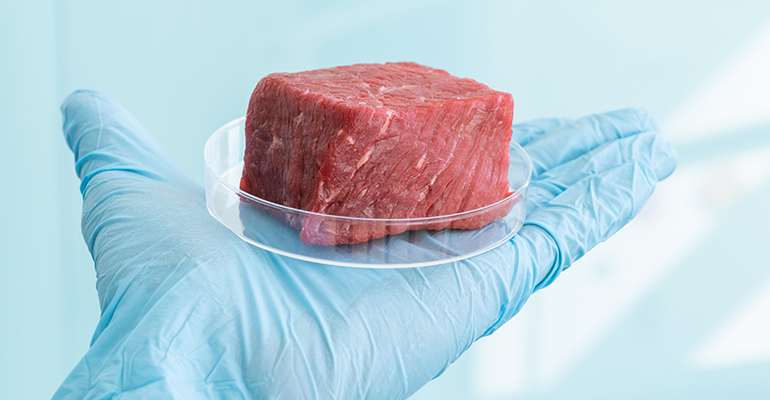
Recently, companies like Canada’s Maple Leaf Foods and the US juggernaut Beyond Meat have reported slower sales in a segment that up until last year was the darling of the food and beverage industry, reporting spectacular growth even amid supply chain and pandemic-related challenges.
Plant-based meat has come a long way from the days of veggie burgers that resembled — and had the texture of — hockey pucks that lacked the meaty flavour that is the hallmark of a beef burger. Today plant-based meat comes in a variety of formulations from a variety of companies, but they all have one thing in common: they are emulating the taste, texture and visual appeal of meat while also touting their sustainability. As vegan substitutes that more closely resemble conventional protein have, unsurprisingly, attracted consumer interest.
Whole-cut meat substitutes with bolster stagnant segment growth
Despite spectacular growth numbers, a new study from the Breakthrough Institute showed that plant-based meat was only able to incite a 1.2% decline in ground beef production. From an agricultural perspective, plant-based meat production only led to a 0.15% decline in US cattle production.
“Consumers’ needs simply were not met and they did not repeat purchases,” he said. “As a result, the category did not reach expected levels of habituation, had very high lapse rates, and very low buy rates. This challenge is not unique to Greenleaf, as all major brands and products across the category are experiencing similar challenges, which largely seems to be driven by consumers’ experience in terms of taste, price, degree of processing, and use of preparation,” Maple Leaf Foods President and COO Curtis Frank said in company’s Q4 earnings call on Feb. 24. Greenleaf Foods is a segregated portfolio company of Maple Leaf Foods that sells plant-based products such as Field Roast and Lightlife.
Solving taste and texture is key
Taste has been an ongoing challenge for manufacturers looking to convert meat eaters to plant-based analogues. In fact, a 2019 white paper from Irish ingredients company Kerry noted that flavour is the No. 1 driver that continues to present a barrier to wider adoption of these vegetarian products. Texture has also presented a stumbling block.
To tackle both these ongoing issues, startups and established manufacturers alike have turned to replicating whole cuts of meat that mimic their animal origins.
Steak, chicken fillets and salmon are all whole cuts of meat that companies worldwide are working to recreate using plant-based ingredients and technology. Singapore’s plant-based meat company Next Gen Foods is working on a chicken product called Tindle, and recently raised $100 million to expand its efforts into US foodservice. US-based Meati Foods has turned to mycelium and biomass fermentation to create steak. Israel’s Plantish recently unveiled whole cut salmon filets and is targeting the US for its product expansion. Also out of Israel is the food-tech company Redefine Meat which is working on 3D printed whole cuts of beef and lamb that “bleed.”
More established companies like Conagra and JBS USA are also turning toward whole cuts as a form of innovation to add appeal to their plant-based product portfolios. In early 2022, JBS USA said it is launching True Bite Plant-Based Chicken Cutlets and Shreds. Conagra’s Gardein's has had a similar product line since last year called the Ultimate Plant-Based Chick'n.
Protein demand is expected to increase
"As time goes on, the demand for protein will only continue to increase and the world won't be able to satisfy that demand with meat-based products alone," said Darcey Macken, Planterra Foods CEO — the plant-protein arm of JBS USA — said in a statement.
However, to convince consumers that these alternatives are not only sustainable for the environment but also tasty enough to repeatedly buy is proving to be a tricky proposition for manufacturers. Whole cuts is the next overture to carnivores as manufacturers look to continue the conversation around and the growth of the plant-based protein segment.

Get more of our news on Google
Set Ingredients Network as a 'Preferred Source' to get quicker access to the news you value.
Related news

Do the US dietary guidelines put UPFs under pressure?
10 Sep 2026
Will the US dietary guidelines change the way Americans eat, swapping ultra-processed foods for whole foods? We asked Dr Barry Popkin, renowned nutrition and obesity researcher.
Read more
Food fraud costs UK economy £2bn each year
9 Sep 2026
Food fraud is costing the UK economy up to £2 billion (€2.3 billion) every year although the food sector is more “resilient” than others, according to a recent study.
Read more
Kellogg accelerates work to remove artificial colours from all US cereals
3 Sep 2026
WK Kellogg has announced an accelerated timeline to eliminate all artificial colours and the chemical preservative, BHT, across its full US portfolio of cereals and cereal packaging.
Read more
Skimpflation: An ‘unfair’ and risky approach to keeping prices low
2 Sep 2026
Consumers see skimpflation – reducing the quality of ingredients due to rising costs – as more unfair than shrinkflation, making it a risky strategy according to recent research.
Read more
‘Urgent gaps’ in achieving 2030 food system goals
27 Aug 2026
Global food systems are failing to meet 2030 targets across indicators including health, environment, and resilience, according to a report co-authored by the Food and Agriculture Organisation (FAO).
Read more
Seven-Eleven uses microbial testing tech to extend katsudon shelf life
26 Aug 2026
Japanese retail company Seven-Eleven has improved its factory’s microbial environment to keep comfort-food staple, katsudon, fresher for longer.
Read more
Chimac’s fusion sauces bring Korean flavours to Europe
25 Aug 2026
Irish sauce brand Chimac is tapping into Korea’s culinary traditions, bringing its flavours and products to European consumers who want a taste of K-food.
Read more
Global demand for instant noodles continues to rise
24 Aug 2026
Global demand for instant noodles reached 124.21 billion servings last year, representing a 0.7% year-on-year increase – or 900 million extra servings.
Read more
China beverages: Is herbal innovation the future?
20 Aug 2026
Herbal and botanical innovation in China's drinks market continues to grow, with ingredients like astragalus root, ginger, and ginseng in the spotlight – and focus shifting far beyond refreshment.
Read more
Popular barbecue staples experience sharp price increases
19 Aug 2026
The typical cost of US shoppers’ barbecue baskets has risen by 12% over the past year – the fastest annual rise in a decade, figures from The Economist show.
Read more