
Ingredients Categories
Finished Products
Finished Food Categories
- Bakery
- Beverages / Juices
- Cereal and grain products
- Confectionery
- Cooking Fats & Oils
- Dairy
- Egg products
- Fruits & Vegetables
- Infant & Baby food
- Meat, Poultry & Fish
- Nuts & Seeds products
- Other Finished Food Categories
- Pet Food
- Plant-based foods
- Prepared foods
- Sauces & Seasonings
- Sweet & Savoury Spreads
Specialised Finished Products
- Bee products
- Biotic products
- Dietary supplements
- Energy drinks
- Functional beverages
- Functional confectionery
- Functional food
- Functional powders
- Meal replacement products
- Nutricosmetics
- Other Specialised Finished Products
- Pet Dietary Supplements
- Pharma and OTC products
- Protein products
- Sugar replacers / Sweeteners
Health & Wellness Areas
Delivery Formats
Operations & Services
- 3D printing
- Analysis/ Testing
- Auditing & certifications
- Blending & mixing
- Bottling
- Certification
- Clinical trials
- Co-packing
- Coating
- Consulting
- Contract manufacturing
- Drying
- Electrospinning
- Encapsulating
- Enzymatic processing
- Extracting
- Extrusion
- Fat structuring
- Fermentation
- Filling
- Flavour development
- Freeze drying
- Granulating/ grinding/ milling / mixing
- High-pressure processing
- Labelling
- Other Operations & Services
- Packaging
- Packet filling
- Pasturising
- Quality assurance
- Saccharification
- Shear cell processing
- Spray drying
- Sterilisation
- Storage & Logistics
- Tabletting
- Toasting / roasting
- Ultra-high temperature processing
News
Sweden’s Green-On develops palm oil alternative from gas and water
13 Sep 2022
Swedish start-up Green-On is producing an edible fat from carbon dioxide, water, and electricity as a sustainable alternative to palm oil, recently attracting the attention of Nordic investors and Big Idea Ventures.
Green-On’s innovation uses electrical energy to “split” water into hydrogen and oxygen. The hydrogen reacts to CO2, producing intermediates that can go on to form a range of plant-based butters and oils.
The process, dubbed ‘electrical photosynthesis,’ has recently caught the attention of Swedish oil and fat producer AAK and Norrsken Impact Accelerator, which both moved to partner up with Green-On in July.

The GMO-free process directly synthesises saturated triglycerides producing the same molecules found in dairy, palm, and coconut oil.
Green-On now looks to produce a test cooking oil and a butter-like fat within 12-24 months with a pilot plant facility operating in 3-4 years, and an eventual market offering in 5-8 years.
Environmental considerations
"Both climate change issues, as well as the securities issues we now see, are urging the world to make food in new ways, '' adds Granéli.
"Our solution bypasses agriculture altogether which means that we are independent of arable land and can produce alternatives to tropical oils and fats anywhere in the world and at any season, solving both the climate and food security issues."
Founded in 2020, Gothenburg-based Green-On is not the only firm looking to create food from almost nothing.
Solar Foods, a Finland-based start-up has taken the brewing of beer as inspiration to create a sustainably produced protein using similar inputs – carbon dioxide, water, and electricity.
The non-modified microbe is ‘fed’ electricity and air’s main elements, namely carbon, hydrogen, oxygen, and nitrogen. The fossil-free electricity is also used to split water from air into hydrogen and oxygen.
The result? A dry powder that Solar Foods calls Solein that is made up of whole cells made up to 70% protein and suitable for use in meat alternatives, noodles, and ice cream.
Start up support
As with all emerging technology, Solar Foods is also in the midst of securing financial backing, most recently securing a €15m investment from Danske Bank Growth in May.
As for Green-On, AAK and Norrsken Impact Accelerator’s backing, coupled with support from Big Idea Ventures, ensures the innovation is a step closer to reaching its promised potential.
“At Big Idea Ventures we help accelerate change by bringing together great companies and strategic corporate partners,” says Andrew Ive, general managing partner at Big Idea Ventures, which came on board in 2021.
Prior to Green-On’s plans to commercialise the concept, its founders Anders Lorén, a researcher and chemist at the Swedish research institute RISE, and colleague Marcus Vestergren, ran the Vinnova-funded project Power to Food.
The seeds were sown here as the two chemists explained that it was easiest to quickly produce a finished fat product. "We have concepts with sugar and protein as well, but we don't yet have a finished product," they told Swedish financial newspaper Dagens Industry.

Get more of our news on Google
Set Ingredients Network as a 'Preferred Source' to get quicker access to the news you value.
Related news

Kellogg accelerates work to remove artificial colours from all US cereals
3 Sep 2026
WK Kellogg has announced an accelerated timeline to eliminate all artificial colours and the chemical preservative, BHT, across its full US portfolio of cereals and cereal packaging.
Read more
Skimpflation: An ‘unfair’ and risky approach to keeping prices low
2 Sep 2026
Consumers see skimpflation – reducing the quality of ingredients due to rising costs – as more unfair than shrinkflation, making it a risky strategy according to recent research.
Read more
‘Urgent gaps’ in achieving 2030 food system goals
27 Aug 2026
Global food systems are failing to meet 2030 targets across indicators including health, environment, and resilience, according to a report co-authored by the Food and Agriculture Organisation (FAO).
Read more
Seven-Eleven uses microbial testing tech to extend katsudon shelf life
26 Aug 2026
Japanese retail company Seven-Eleven has improved its factory’s microbial environment to keep comfort-food staple, katsudon, fresher for longer.
Read more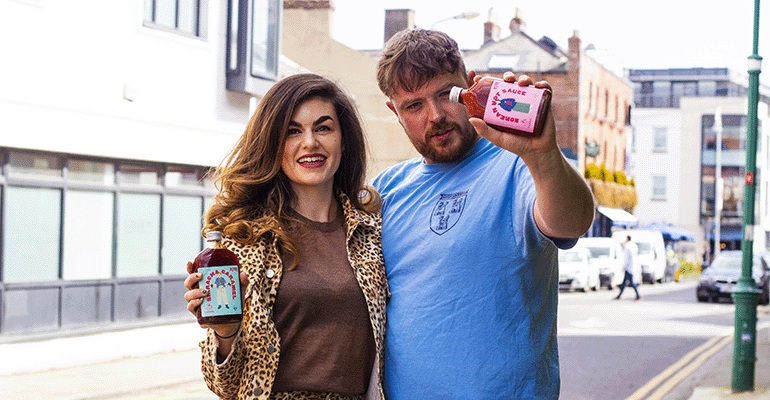
Chimac’s fusion sauces bring Korean flavours to Europe
25 Aug 2026
Irish sauce brand Chimac is tapping into Korea’s culinary traditions, bringing its flavours and products to European consumers who want a taste of K-food.
Read more
Global demand for instant noodles continues to rise
24 Aug 2026
Global demand for instant noodles reached 124.21 billion servings last year, representing a 0.7% year-on-year increase – or 900 million extra servings.
Read more
China beverages: Is herbal innovation the future?
20 Aug 2026
Herbal and botanical innovation in China's drinks market continues to grow, with ingredients like astragalus root, ginger, and ginseng in the spotlight – and focus shifting far beyond refreshment.
Read more
Popular barbecue staples experience sharp price increases
19 Aug 2026
The typical cost of US shoppers’ barbecue baskets has risen by 12% over the past year – the fastest annual rise in a decade, figures from The Economist show.
Read more
Hot NPD: Nissin launches first cold-water Cup Noodles
18 Aug 2026
Nissin is taking one of Japan’s most iconic instant meals in a completely new direction with the launch of the first cold water-only Cup Noodles in the brand’s 55-year history.
Read more
Beyond 'nice to have': A spotlight on US functional beverages
12 Aug 2026
Functional beverage interest in the US is gaining important ground as consumers now expect function rather than see it as "nice to have", and there are clear market gaps for growth, according to Spate.
Read more