
Ingredients Categories
Finished Products
Finished Food Categories
- Bakery
- Beverages / Juices
- Cereal and grain products
- Confectionery
- Cooking Fats & Oils
- Dairy
- Egg products
- Fruits & Vegetables
- Infant & Baby food
- Meat, Poultry & Fish
- Nuts & Seeds products
- Other Finished Food Categories
- Pet Food
- Plant-based foods
- Prepared foods
- Sauces & Seasonings
- Sweet & Savoury Spreads
Specialised Finished Products
- Bee products
- Biotic products
- Dietary supplements
- Energy drinks
- Functional beverages
- Functional confectionery
- Functional food
- Functional powders
- Meal replacement products
- Nutricosmetics
- Other Specialised Finished Products
- Pet Dietary Supplements
- Pharma and OTC products
- Protein products
- Sugar replacers / Sweeteners
Health & Wellness Areas
Delivery Formats
Operations & Services
- 3D printing
- Analysis/ Testing
- Auditing & certifications
- Blending & mixing
- Bottling
- Certification
- Clinical trials
- Co-packing
- Coating
- Consulting
- Contract manufacturing
- Drying
- Electrospinning
- Encapsulating
- Enzymatic processing
- Extracting
- Extrusion
- Fat structuring
- Fermentation
- Filling
- Flavour development
- Freeze drying
- Granulating/ grinding/ milling / mixing
- High-pressure processing
- Labelling
- Other Operations & Services
- Packaging
- Packet filling
- Pasturising
- Quality assurance
- Saccharification
- Shear cell processing
- Spray drying
- Sterilisation
- Storage & Logistics
- Tabletting
- Toasting / roasting
- Ultra-high temperature processing
News
The corporates fighting food insecurity: Are they doing enough?
4 Jul 2022
Brands are increasingly taking steps to combat food insecurity, yet the number of people globally unable to access nutritious food is rising. Is enough being done to ensure the security of the global food system?
In almost every county across the world, people are suffering from extreme hunger and poverty, unable to access the basic food and drink supplies necessary to sustain good human health. Global crises that have taken place over recent years such as the Covid-19 pandemic and Russia’s invasion of Ukraine have had devastating effects on global food insecurity, disproportionately affecting the poorest and most vulnerable proportions of society.

From 2019 to 2020, the number of people who were considered as being acutely food insecure, meaning unable to access safe, sufficient food, rose by close to 40 million to reach a staggering 193 million people, according to the Global Report on Food Crises 2022. This number is on the rise.
Since the pandemic began over two years ago, the number of severely food-insecure people has doubled to over 276 million. As the fallout from ongoing environmental, political, social and economic crises continues to send shockwaves through the global food system, this total is projected to rise to 323 million people by the end of the year, the UN’s World Food Programme (WFP) predicts.
We have now reached a precipice where brands must take responsibility for minimising the most pressing risks to the current food system. Consumers are increasingly demanding that food-related businesses including grocery retailers (70%) and restaurants (62%) prioritise corporate responsibility by committing to environmental, social, and political causes that are in line with their business activities. The findings from a Clutch survey show that for consumers, the top expectations of food manufacturers are tackling food insecurity by feeding those in need (67%), supporting local farmers (48%) and local events (40%), and selling non-GMO foods (40%).
Recently, we have seen key players in the food industry respond to this call for action by implementing partnerships, programmes, and policies which above all, seek to increase access to safe food for the world’s most vulnerable, and improve the reliability and security of global food systems.
Nevertheless, there is still a long way to go before global food security is achieved. What actions are brands taking to safeguard the health of the global population and establish food systems that are sustainable and secure? And what more must be done?
Mars and World Food Programme collaborate to improve food safety
As the environmental, social and governance (ESG) credentials of brands become increasingly important to consumers and the threats to global food security continue to rise, many companies are taking steps to improve the ways in which they produce, distribute, and manage food.
In December 2021, global food giant, Mars, renewed its partnership with the World Food Programme (WFP), the world’s largest humanitarian organisation fighting hunger, to improve the access of vulnerable communities across the globe to safe and nutritious food.
Since 2015, the two organisations have worked collaboratively to strengthen food safety systems and improve access to safe food, in aim of improving the resilience of the global food supply chain. A Food Safety and Quality Programme was set up to support smallholder farmers and suppliers to access knowledge, safeguard livelihoods and preserve crops, as well as training distributors to store and transport food safely.
“The industry-leading knowledge and experience that Mars brings to World Food Programme (WFP) adds considerable value to our work in food safety and quality, helping expand our capacity at global and local levels, through strategic guidance, training, and processes to strengthen resilience throughout our supply chains,” said Virginia Villar Arribas, deputy director of private sector partnerships, World Food Programme.
In addition to exchanging insights, expertise and advice via conferences and events, the collaboration has benefitted millions, from farmers to families to food producers, across the world, according to Mars and WFP.
Cargill pledges $13 million to combat hunger
Similarly, one of the world’s largest food manufacturers, Cargill, has pledged over $13 million in grants to programmes that aim to improve the lives of over one million people across 15 countries globally.
Working alongside over 20 partners comprising the likes of CARE USA and The Nature Conservancy, the grantees range from multinational NGOs to local, grassroots support organisations and focus on scaling long-term, high-impact programmes. Among the core aims of the programme are advancing practices of sustainable agriculture, supporting child nutrition, improving market access and productivity for farmers, and promoting healthy diets while combatting diet-related health conditions in vulnerable communities.
“We’re investing in scalable solutions that make a real difference for people and communities,” said Cargill vice president of corporate affairs, Ruth Rawling. “The private sector can be a catalyst for lasting change by jumpstarting innovation and economic development.”
One grant recipient for instance, Heifer International, uses the capital to fund the expansion of female-run, family-owned poultry farms in China, while another, The Nature Conservancy, seeks to increase its conservation efforts and fight against deforestation in Brazil, Paraguay and the US.
Are brands doing enough?
Despite the pledges from many large corporates such as those mentioned above, the question as to whether these companies are doing enough to incite meaningful and lasting change remains.
A closer look at the figures reveals that the actions of large corporates in combatting food insecurity and world hunger have, in reality, had little overall impact on decreasing the percentage of hungry people in the world, which in the five years to 2019, remained at a steady 9%. Data from the UN Food and Agriculture Organization (FAO) North America and International Food Policy Research Institute (IFPRI) shows that hunger numbers have in fact trended upwards over the past six years, with an additional 60 million plunged into hunger between 2014 – 2019.
Instead of moving away from Zero Hunger, the actions of brands could be seen to be pushing us closer towards it. According to FAO chief economist Maximo Torero, one key driver of this is the unaffordability of healthy food, which results in three billion people unable to access good nutrition.
To truly transform food systems and end food insecurity, brands must be prepared to place people over profit, focussing on improving the efficiencies and lowering the costs of producing nutritious food, Torero said.

Get more of our news on Google
Set Ingredients Network as a 'Preferred Source' to get quicker access to the news you value.
Related news

Kellogg accelerates work to remove artificial colours from all US cereals
3 Sep 2026
WK Kellogg has announced an accelerated timeline to eliminate all artificial colours and the chemical preservative, BHT, across its full US portfolio of cereals and cereal packaging.
Read more
Skimpflation: An ‘unfair’ and risky approach to keeping prices low
2 Sep 2026
Consumers see skimpflation – reducing the quality of ingredients due to rising costs – as more unfair than shrinkflation, making it a risky strategy according to recent research.
Read more
‘Urgent gaps’ in achieving 2030 food system goals
27 Aug 2026
Global food systems are failing to meet 2030 targets across indicators including health, environment, and resilience, according to a report co-authored by the Food and Agriculture Organisation (FAO).
Read more
Seven-Eleven uses microbial testing tech to extend katsudon shelf life
26 Aug 2026
Japanese retail company Seven-Eleven has improved its factory’s microbial environment to keep comfort-food staple, katsudon, fresher for longer.
Read more
Global demand for instant noodles continues to rise
24 Aug 2026
Global demand for instant noodles reached 124.21 billion servings last year, representing a 0.7% year-on-year increase – or 900 million extra servings.
Read more
Popular barbecue staples experience sharp price increases
19 Aug 2026
The typical cost of US shoppers’ barbecue baskets has risen by 12% over the past year – the fastest annual rise in a decade, figures from The Economist show.
Read more
Hot NPD: Nissin launches first cold-water Cup Noodles
18 Aug 2026
Nissin is taking one of Japan’s most iconic instant meals in a completely new direction with the launch of the first cold water-only Cup Noodles in the brand’s 55-year history.
Read more
Savoury protein snacks shake up the on-the-go market
10 Aug 2026
Sweet flavours have dominated the high-protein snack category but savoury snacks, such as cheese bars and meat sticks, can appeal to health-conscious consumers.
Read more
Nestlé invests in regeneratively farmed wheat for KitKat
5 Aug 2026
Nestlé will pay a premium for Wildfarmed’s regeneratively farmed wheat but the CPG remains reticent to promote the move on packs of its KitKat bars.
Read more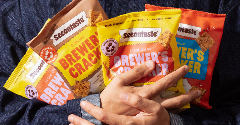
How Secon Taste is putting upcycled snacks on shelves
4 Aug 2026
Hungarian zero-waste startup Secon Taste is turning surplus food into upcycled snacks such as fibre-packed granola, instant porridge, and a circular coffee-tasting box.
Read more