
Ingredients Categories
Finished Products
Finished Food Categories
- Bakery
- Beverages / Juices
- Cereal and grain products
- Confectionery
- Cooking Fats & Oils
- Dairy
- Egg products
- Fruits & Vegetables
- Infant & Baby food
- Meat, Poultry & Fish
- Nuts & Seeds products
- Other Finished Food Categories
- Pet Food
- Plant-based foods
- Prepared foods
- Sauces & Seasonings
- Sweet & Savoury Spreads
Specialised Finished Products
- Bee products
- Biotic products
- Dietary supplements
- Energy drinks
- Functional beverages
- Functional confectionery
- Functional food
- Functional powders
- Meal replacement products
- Nutricosmetics
- Other Specialised Finished Products
- Pet Dietary Supplements
- Pharma and OTC products
- Protein products
- Sugar replacers / Sweeteners
Health & Wellness Areas
Delivery Formats
Operations & Services
- 3D printing
- Analysis/ Testing
- Auditing & certifications
- Blending & mixing
- Bottling
- Certification
- Clinical trials
- Co-packing
- Coating
- Consulting
- Contract manufacturing
- Drying
- Electrospinning
- Encapsulating
- Enzymatic processing
- Extracting
- Extrusion
- Fat structuring
- Fermentation
- Filling
- Flavour development
- Freeze drying
- Granulating/ grinding/ milling / mixing
- High-pressure processing
- Labelling
- Other Operations & Services
- Packaging
- Packet filling
- Pasturising
- Quality assurance
- Saccharification
- Shear cell processing
- Spray drying
- Sterilisation
- Storage & Logistics
- Tabletting
- Toasting / roasting
- Ultra-high temperature processing
News
Amazon Grocery launch aims to balance quality with affordability
Natasha Spencer-Jolliffe, Freelance Journalist 22 Oct 2025Global e-commerce giant Amazon has introduced a new private-label food brand, combining existing Amazon Fresh and Happy Belly products with new everyday items.
The launch of Amazon Grocery is hoped to simplify the retail experience for consumers buying food and drink essentials and pantry staples.
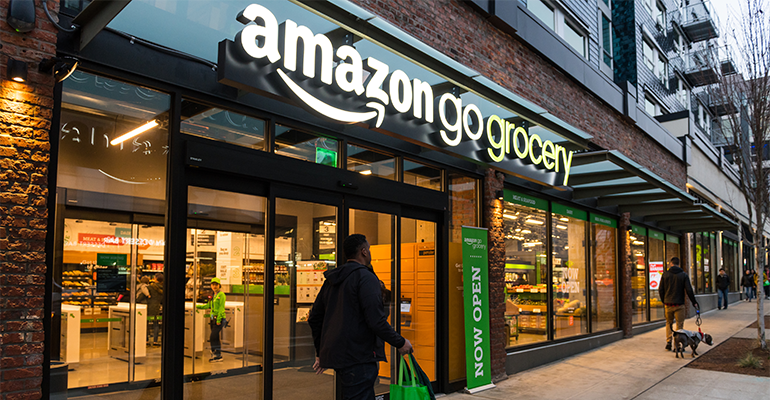
Stocked with over 1,000 products, the platform aims to combine high-quality items rated four stars or higher with value for money, with Amazon stating that most products in its new e-commerce grocery store are priced under $5 (€4.29).
According to Statista, revenue in the grocery delivery market is expected to reach $943 billion in 2025 (€808 billion). Most of the revenue will come from the US, which is projected to generate $328 billion (€281 billion) this year.
Over the next five years, the grocery delivery market is anticipated to grow at an annual rate of 9.72%, reaching a market volume of $1.5 trillion (€1.29 trillion) by 2030.
Making its mark on the $1 trillion grocery delivery sector
Existing brands Amazon Fresh and Happy Belly will fall under the Amazon Grocery shopping hub, as will new offerings from a diverse range of brands.
Amazon hopes to inspire shoppers to use the grocery site in the same way they use e-commerce platforms to purchase everyday items.
“With Amazon Grocery, we’re simplifying how customers discover and shop our extensive private-label food selection, while maintaining the quality and value our customers expect and deserve,” said Jason Buechel, vice-president of Amazon Worldwide Grocery Stores and CEO at Whole Foods Market.
In what it calls “one cohesive grocery essentials collection”, Amazon Grocery’s extensive range will span everyday items like fresh produce, meat, seafood, and milk, as well as pantry staples including olive oil and honey.
The hub will also feature new product rollouts, spanning fresh-baked cinnamon rolls, refrigerated pizza dough, bottled spring water, and refrigerated lemonade.
“During a time when consumers are particularly price conscious, Amazon Grocery delivers more than 1,000 quality grocery items across all categories that don’t compromise on quality or taste–from fresh food items to crave-worthy snacks and pantry essentials – all at low, competitive prices that help customers stretch their grocery budgets further,” Buechel added.
In the coming months, the site will add more items to its lineup, including new frozen pasta meals, pie fillings, granola, and sliced loaf cakes, as well as expanded ranges of deli meats, canned beans, and frozen vegetables.
Convenience, resilience and price sensitivity resonate in 2026
In its Global Food and Drink Predictions for 2026 report, market intelligence provider Mintel highlighted how consumers and companies want to feel prepared, flexible, and creative in the face of ongoing, complex problems.
Convenience, reliability, and trust have become even more critical.
Through Amazon Grocery, the global e-commerce leader aims to build on its existing food-based brands and deliver consistent quality, value, selection, and convenience.
Its launch follows the increasing popularity of private-label brands. In 2024, Amazon customers bought 15% more private-label items than in 2023 across Amazon.com, Whole Foods Market, and Amazon Fresh. The e-commerce giant attributes shoppers’ interest and subsequent sales growth to its focus on providing value across its range of high-quality, competitively priced private-label items.
Amid the “polycrisis” – a series of consecutive, interlinked shocks, or disasters – of the past five years, including climate change, supply chain volatility, and a rise in chronic health conditions, the focus in 2026 will be on empathetic brands that can support consumers to thrive rather than merely survive.
“Being resilient is a lasting lesson from Covid-19, but Mintel’s global food and drink analysts predict perseverance will emerge as a motto for 2026,” Mintel’s report stated.
Inclusive diets that move away from maxing out on one particular food group and replacing it with diverse ingredients to absorb functional benefits will be a key trend.
Mitigating the detrimental impacts of consumers’ convenience-focused lifestyles is expected to resonate with consumers, too. As such, products rich in protein and fibre, for example, are expected to require solutions that tap into efficacy, affordability, and desirability to encourage uptake and acceptance.
Bringing past rituals into the present through contemporary reinventions is also a core theme in food and drink launches in 2026. Shoppers’ respect for the past will lead to an emphasis on the value of resourcefulness.
“‘Upcycled’ will be re-branded as ‘resourceful,” Mintel wrote. Brands that offer a genuine, fresh take on upcycling to create new experiences will appeal to consumers.
A focus on seasonal eating, fermentation, and natural preservation will also tap into shoppers’ growing interest in nature. It will be a strong purchasing factor within price-sensitive markets where resilience is a necessity rather than a mere value proposition.

Get more of our news on Google
Set Ingredients Network as a 'Preferred Source' to get quicker access to the news you value.
Related news

Do the US dietary guidelines put UPFs under pressure?
10 Sep 2026
Will the US dietary guidelines change the way Americans eat, swapping ultra-processed foods for whole foods? We asked Dr Barry Popkin, renowned nutrition and obesity researcher.
Read more
Food fraud costs UK economy £2bn each year
9 Sep 2026
Food fraud is costing the UK economy up to £2 billion (€2.3 billion) every year although the food sector is more “resilient” than others, according to a recent study.
Read more
Kellogg accelerates work to remove artificial colours from all US cereals
3 Sep 2026
WK Kellogg has announced an accelerated timeline to eliminate all artificial colours and the chemical preservative, BHT, across its full US portfolio of cereals and cereal packaging.
Read more
Skimpflation: An ‘unfair’ and risky approach to keeping prices low
2 Sep 2026
Consumers see skimpflation – reducing the quality of ingredients due to rising costs – as more unfair than shrinkflation, making it a risky strategy according to recent research.
Read more
NielsenIQ’s EU barometer shows Britain leading in grocery inflation
31 Aug 2026
Britain was the only country to record grocery inflation above 2%, according to NielsenIQ data that compared Europe’s five biggest grocery markets from February to May 2026.
Read more
‘Urgent gaps’ in achieving 2030 food system goals
27 Aug 2026
Global food systems are failing to meet 2030 targets across indicators including health, environment, and resilience, according to a report co-authored by the Food and Agriculture Organisation (FAO).
Read more
Chimac’s fusion sauces bring Korean flavours to Europe
25 Aug 2026
Irish sauce brand Chimac is tapping into Korea’s culinary traditions, bringing its flavours and products to European consumers who want a taste of K-food.
Read more
Global demand for instant noodles continues to rise
24 Aug 2026
Global demand for instant noodles reached 124.21 billion servings last year, representing a 0.7% year-on-year increase – or 900 million extra servings.
Read more
Popular barbecue staples experience sharp price increases
19 Aug 2026
The typical cost of US shoppers’ barbecue baskets has risen by 12% over the past year – the fastest annual rise in a decade, figures from The Economist show.
Read more
Hot NPD: Nissin launches first cold-water Cup Noodles
18 Aug 2026
Nissin is taking one of Japan’s most iconic instant meals in a completely new direction with the launch of the first cold water-only Cup Noodles in the brand’s 55-year history.
Read more