
Ingredients Categories
Finished Products
Finished Food Categories
- Bakery
- Beverages / Juices
- Cereal and grain products
- Confectionery
- Cooking Fats & Oils
- Dairy
- Egg products
- Fruits & Vegetables
- Infant & Baby food
- Meat, Poultry & Fish
- Nuts & Seeds products
- Other Finished Food Categories
- Pet Food
- Plant-based foods
- Prepared foods
- Sauces & Seasonings
- Sweet & Savoury Spreads
Specialised Finished Products
- Bee products
- Biotic products
- Dietary supplements
- Energy drinks
- Functional beverages
- Functional confectionery
- Functional food
- Functional powders
- Meal replacement products
- Nutricosmetics
- Other Specialised Finished Products
- Pet Dietary Supplements
- Pharma and OTC products
- Protein products
- Sugar replacers / Sweeteners
Health & Wellness Areas
Delivery Formats
Operations & Services
- 3D printing
- Analysis/ Testing
- Auditing & certifications
- Blending & mixing
- Bottling
- Certification
- Clinical trials
- Co-packing
- Coating
- Consulting
- Contract manufacturing
- Drying
- Electrospinning
- Encapsulating
- Enzymatic processing
- Extracting
- Extrusion
- Fat structuring
- Fermentation
- Filling
- Flavour development
- Freeze drying
- Granulating/ grinding/ milling / mixing
- High-pressure processing
- Labelling
- Other Operations & Services
- Packaging
- Packet filling
- Pasturising
- Quality assurance
- Saccharification
- Shear cell processing
- Spray drying
- Sterilisation
- Storage & Logistics
- Tabletting
- Toasting / roasting
- Ultra-high temperature processing
News
Chocolate giants slated over ethical cocoa sourcing concerns
Will Chu, Freelance Journalist 27 Nov 2023
Starbucks, Lindt, Godiva, and Kellogg's have scored badly for tackling deforestation and climate in their chocolate supply chains, according to a survey by Be Slavery Free.
The Chocolate Scorecard, led by Australian campaign group Be Slavery Free, revealed that big names including Starbucks and Godiva, fared badly in criteria such as deforestation and climate.

“The grim reality is that around 40% of cocoa remains untraceable with beans from deforested land still entering global supply chains,” explained Dr Julian Oram, senior director, Africa, at Mighty Earth, which also contributed to the report. “Companies are sitting on information that could shed light onto these ‘dark’ chocolate origins.
“Some of the biggest brands including Starbucks, Lindt, Godiva and Kellogg's have scored badly for tackling deforestation and climate. We know they can do better and will be encouraging them to do so.
“Others such as Mondelez, Unilever and Tesco have stayed silent and refused to take part this year, which begs the question: What are they hiding?”
Côte d’Ivoire and Ghana identified as largest chocolate producers
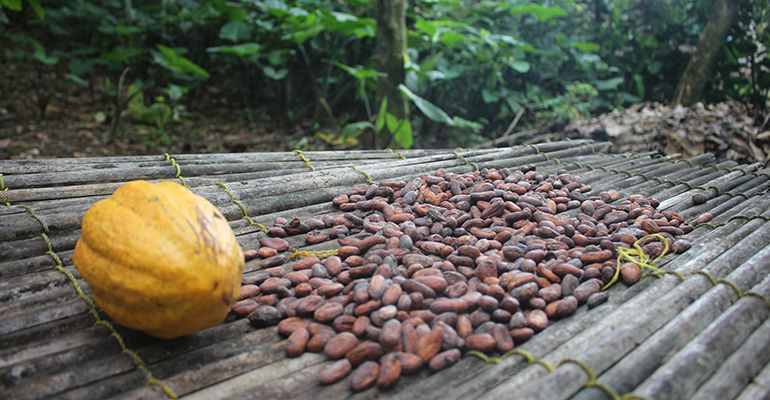
The survey identifies West Africa as a region producing three-quarters of the world’s cocoa, with Côte d’Ivoire and Ghana being the largest producers.
 © AdobeStock/Amelie
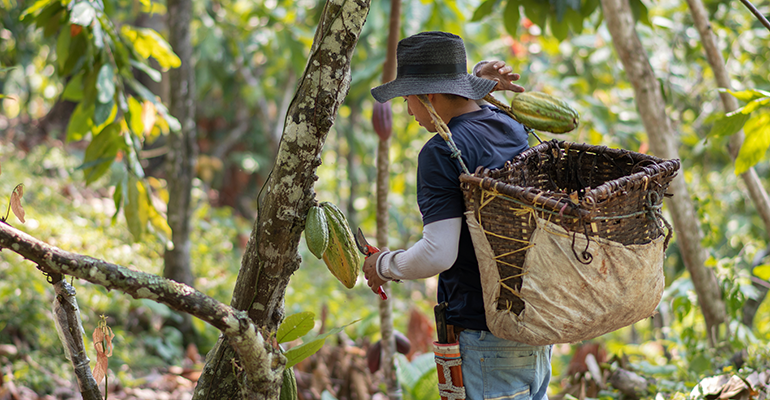
The two countries and the confectionery giants that operate there often receive much criticism for failures in tackling claims of illegal deforestation, child labour, and dismissing workers’ rights.
Revealing details on how the survey was conducted, Be Slavery Free said that five companies, namely FrieslandCampina, General Mills, Krüger Group, Unilever, and Mondelēz, opted not to participate.
This is the second year General Mills has not participated. Unilever and Mondelēz have participated previously. This is the first year the Krüger Group opted not to participate.
“Starbucks and Storck agreed to participate in 2023 after declining in 2022. We welcome them on board and genuinely appreciate their participation,” the campaign group said.
Smaller chocolate manufacturers leading the way in ethical sourcing
Now in its fourth edition, The Chocolate Scorecard 2023 also revealed Original Beans, Tony's Chocolonely, Beyond Good, Halba, Ferrero, Nestlé, and Mars as the best performing companies in addressing deforestation.
Commenting on the ranking, Swiss chocolate manufacturer Halba said, “This distinction is the result of Halba's many years of commitment to sustainability, which includes pioneering sustainability projects and activities at the source.”
These companies are also leading the way in tackling child and forced labour in their supply chains, alongside Alter Eco, Whittaker’s and Hershey.
Ben & Jerry’s was also included on this list, despite the latter’s parent company, Unilever, refusing to take part and claiming to be deforestation free in its cocoa supply chain by 2023.
 © AdobeStock/Andrés Rivas
Nestlé, Mars-Wrigley and Hershey make improvements in Chocolate Scoreboard ranking
Be Slavery Free pointed out that Nestlé and its rival chocolate makers, Mars-Wrigley and Hershey, have improved their Chocolate Scoreboard performance when compared to last year.
In January 2022, Nestlé agreed to a $1.4bn initiative that would pay African cocoa farmers directly to tackle poverty as the root cause of child labour.
Nestlé’s plan followed a lawsuit by International Rights Advocates against the food giants and Cargill, which claimed the two food corporations were complicit in the use of forced child labour. The case was heard at the US Supreme Court, where it was eventually thrown out.
“Child labour and modern slavery are part of the cocoa industry and present in the chocolate we buy,” said Andrew Wallis OBE, CEO at anti-slavery charity Unseen.
“This year’s Scorecard shows that of the 56 companies taking part, only nine achieved the best rating for addressing child and forced labour in their supply chains.
“We hope consumers use this information to buy ethical chocolate free of human rights’ abuses.”

Get more of our news on Google
Set Ingredients Network as a 'Preferred Source' to get quicker access to the news you value.
Related news

Do the US dietary guidelines put UPFs under pressure?
10 Sep 2026
Will the US dietary guidelines change the way Americans eat, swapping ultra-processed foods for whole foods? We asked Dr Barry Popkin, renowned nutrition and obesity researcher.
Read more
Food fraud costs UK economy £2bn each year
9 Sep 2026
Food fraud is costing the UK economy up to £2 billion (€2.3 billion) every year although the food sector is more “resilient” than others, according to a recent study.
Read more
Kellogg accelerates work to remove artificial colours from all US cereals
3 Sep 2026
WK Kellogg has announced an accelerated timeline to eliminate all artificial colours and the chemical preservative, BHT, across its full US portfolio of cereals and cereal packaging.
Read more
Skimpflation: An ‘unfair’ and risky approach to keeping prices low
2 Sep 2026
Consumers see skimpflation – reducing the quality of ingredients due to rising costs – as more unfair than shrinkflation, making it a risky strategy according to recent research.
Read more
‘Urgent gaps’ in achieving 2030 food system goals
27 Aug 2026
Global food systems are failing to meet 2030 targets across indicators including health, environment, and resilience, according to a report co-authored by the Food and Agriculture Organisation (FAO).
Read more
Seven-Eleven uses microbial testing tech to extend katsudon shelf life
26 Aug 2026
Japanese retail company Seven-Eleven has improved its factory’s microbial environment to keep comfort-food staple, katsudon, fresher for longer.
Read more
Global demand for instant noodles continues to rise
24 Aug 2026
Global demand for instant noodles reached 124.21 billion servings last year, representing a 0.7% year-on-year increase – or 900 million extra servings.
Read more
Popular barbecue staples experience sharp price increases
19 Aug 2026
The typical cost of US shoppers’ barbecue baskets has risen by 12% over the past year – the fastest annual rise in a decade, figures from The Economist show.
Read more
Hot NPD: Nissin launches first cold-water Cup Noodles
18 Aug 2026
Nissin is taking one of Japan’s most iconic instant meals in a completely new direction with the launch of the first cold water-only Cup Noodles in the brand’s 55-year history.
Read more
Savoury protein snacks shake up the on-the-go market
10 Aug 2026
Sweet flavours have dominated the high-protein snack category but savoury snacks, such as cheese bars and meat sticks, can appeal to health-conscious consumers.
Read more