
Ingredients Categories
Finished Products
Finished Food Categories
- Bakery
- Beverages / Juices
- Cereal and grain products
- Confectionery
- Cooking Fats & Oils
- Dairy
- Egg products
- Fruits & Vegetables
- Infant & Baby food
- Meat, Poultry & Fish
- Nuts & Seeds products
- Other Finished Food Categories
- Pet Food
- Plant-based foods
- Prepared foods
- Sauces & Seasonings
- Sweet & Savoury Spreads
Specialised Finished Products
- Bee products
- Biotic products
- Dietary supplements
- Energy drinks
- Functional beverages
- Functional confectionery
- Functional food
- Functional powders
- Meal replacement products
- Nutricosmetics
- Other Specialised Finished Products
- Pet Dietary Supplements
- Pharma and OTC products
- Protein products
- Sugar replacers / Sweeteners
Health & Wellness Areas
Delivery Formats
Operations & Services
- 3D printing
- Analysis/ Testing
- Auditing & certifications
- Blending & mixing
- Bottling
- Certification
- Clinical trials
- Co-packing
- Coating
- Consulting
- Contract manufacturing
- Drying
- Electrospinning
- Encapsulating
- Enzymatic processing
- Extracting
- Extrusion
- Fat structuring
- Fermentation
- Filling
- Flavour development
- Freeze drying
- Granulating/ grinding/ milling / mixing
- High-pressure processing
- Labelling
- Other Operations & Services
- Packaging
- Packet filling
- Pasturising
- Quality assurance
- Saccharification
- Shear cell processing
- Spray drying
- Sterilisation
- Storage & Logistics
- Tabletting
- Toasting / roasting
- Ultra-high temperature processing
News
Lidl top for climate progress – but gaps remain in the retail sector
Kacey Culliney, Freelance Journalist 2 Mar 2026Lidl is “setting the pace” in Europe's transition towards sustainable food systems. How did other European supermarkets score, according to Superlist Environment Europe 2026?
Dutch think tank Questionmark Foundation published its Superlist Environment Europe 2026 report last month, benchmarking European supermarkets on their climate plans against goals outlined in The Paris Agreement, the United Nation's global treaty on climate change. The report looked at two key areas: near-term climate action and efforts to promote plant-rich diets.
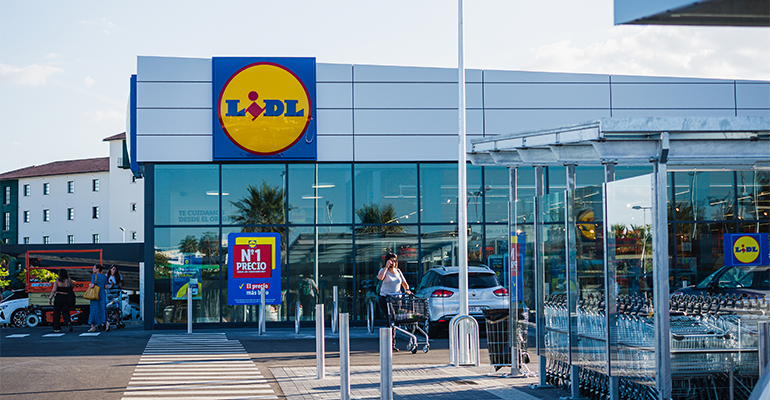
While there were some positives, it found that wide gaps remain between ambition and action on climate plans within the European food and beverage retail sector, according to an international benchmark report.
Compiled in collaboration with non-profit WWF Netherlands, international climate advocacy group Madre Brava and German non-profit ProVeg International, the report covered 27 major supermarkets across eight countries: France, Germany, the Netherlands, Poland, Spain, Sweden, Switzerland and the United Kingdom.
The supermarket chains covered were: Albert Heijn, Aldi Nord, Aldi Süd, Asda, Biedronka, Carrefour, Coop, Coop Group, Denner, Dino, Edeka, E.Leclerc, ICA, Intermarché, Jumbo, Kaufland, Lidl, Mercadona, Migros, Rewe, Sainsbury's, Tesco, and Willys/Hemköp.
Roadmaps, emissions and protein transitions
Report findings showed seven of the 27 supermarkets had publicly disclosed detailed roadmaps to reduce emissions in the near term, though more clarity was needed though to verify whether the targets fully aligned with the Paris Agreement's ambition of limiting global warming to 1.5°C.
Five supermarkets had reduced total emissions since they began reporting, though the emissions of many other European supermarkets continued to rise, with no clear decline. And two-thirds of supermarkets acknowledged their role in transitioning towards more plant-rich diets, with eight supermarkets publishing a protein target in line with the Planetary Health Diet, but nine supermarkets made no mention of such action.
Overall, results indicated that supermarkets in Germany, the Netherlands and particularly Lidl throughout Europe were “setting the pace” in Europe's transition towards sustainable food systems.
“Lidl's success in Europe is evident, as it ranks high compared to its local competitors in all countries where the supermarket chain is assessed,” Questionmark said. “The lower-ranked supermarkets are falling behind because they show little ambition in climate plans and make little to no effort to rebalance protein sales.”
The groups behind the report said European supermarkets had to improve climate plan reporting and action. Specifically, Scope 3 targets had to be set on emissions for 2035; clear roadmaps had to be developed and shared publicly; and actions had to be prioritised to create short-term impact, like rebalancing protein sales, reorganising transport, and reducing product packaging.
European supermarkets have “pivotal role to play”
Charlotte Linnebank, general director at Questionmark, described the report as a “first-of-its-kind” to benchmark climate progress being made across the European retail sector.
“Supermarkets hold tremendous influence over what ends up on our plates and, ultimately, the health of our planet,” Linnebank said. “With Superlist, we at Questionmark want to help ensure that this influence is used for good: by measuring, comparing and motivating supermarkets to accelerate the transition toward a more sustainable and plant-rich food system.”
Corné van Dooren, senior advisor for sustainable diets at WWF Netherlands, added: “Nature and climate are under severe pressure, and our current food system is one of the biggest drivers of crossing planetary boundaries. European supermarkets have a pivotal role to play: they are central actors in food chains and key enablers of the sustainability transition.”
Aligning to the Planetary Health Diet
According to the report, rebalancing protein sales to align with the Planetary Health Diet recommendations – a plant-rich flexitarian diet – was a “key lever” when working to reduce indirect Scope 3 emissions and creating short-term impact.
“Without supermarket ambition and transparency on plant-rich diets, a vital piece of the roadmap towards mitigating the worst impacts of climate change is missing,” said Joanna Trewern, director of partnerships and institutional engagement at ProVeg International.
Supermarkets, Trewen said, held the key to “reshaping food environments and consumer norms” to reflect a future better for people, animals and planet.
Nico Muzi, co-founder and chief programme officer at Madre Brava, added: “In Europe, we need to eat more fruit, vegetables and legumes, and less meat, cheese and animal fats. So says the Planetary Health Diet, the latest global scientific consensus on healthy and sustainable diets.
“Supermarkets largely determine what food is produced and how, so they have both the responsibility and power to make the healthy and sustainable food – in short, good food – the easiest choice for consumers.”

Get more of our news on Google
Set Ingredients Network as a 'Preferred Source' to get quicker access to the news you value.
Related news

Do the US dietary guidelines put UPFs under pressure?
10 Sep 2026
Will the US dietary guidelines change the way Americans eat, swapping ultra-processed foods for whole foods? We asked Dr Barry Popkin, renowned nutrition and obesity researcher.
Read more
Food fraud costs UK economy £2bn each year
9 Sep 2026
Food fraud is costing the UK economy up to £2 billion (€2.3 billion) every year although the food sector is more “resilient” than others, according to a recent study.
Read more
Kellogg accelerates work to remove artificial colours from all US cereals
3 Sep 2026
WK Kellogg has announced an accelerated timeline to eliminate all artificial colours and the chemical preservative, BHT, across its full US portfolio of cereals and cereal packaging.
Read more
Skimpflation: An ‘unfair’ and risky approach to keeping prices low
2 Sep 2026
Consumers see skimpflation – reducing the quality of ingredients due to rising costs – as more unfair than shrinkflation, making it a risky strategy according to recent research.
Read more
NielsenIQ’s EU barometer shows Britain leading in grocery inflation
31 Aug 2026
Britain was the only country to record grocery inflation above 2%, according to NielsenIQ data that compared Europe’s five biggest grocery markets from February to May 2026.
Read more
‘Urgent gaps’ in achieving 2030 food system goals
27 Aug 2026
Global food systems are failing to meet 2030 targets across indicators including health, environment, and resilience, according to a report co-authored by the Food and Agriculture Organisation (FAO).
Read more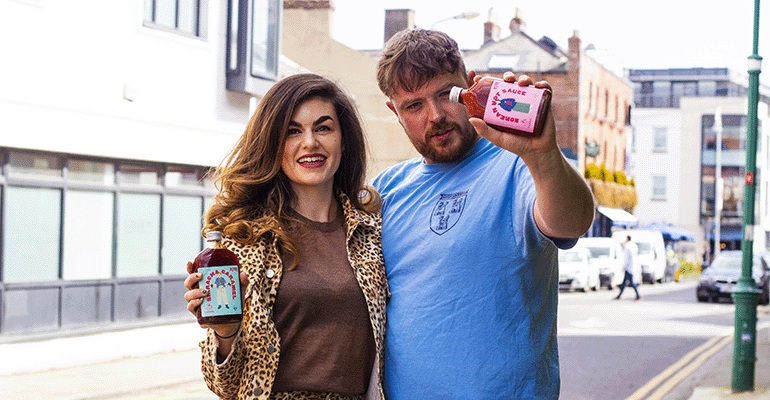
Chimac’s fusion sauces bring Korean flavours to Europe
25 Aug 2026
Irish sauce brand Chimac is tapping into Korea’s culinary traditions, bringing its flavours and products to European consumers who want a taste of K-food.
Read more
Global demand for instant noodles continues to rise
24 Aug 2026
Global demand for instant noodles reached 124.21 billion servings last year, representing a 0.7% year-on-year increase – or 900 million extra servings.
Read more
Popular barbecue staples experience sharp price increases
19 Aug 2026
The typical cost of US shoppers’ barbecue baskets has risen by 12% over the past year – the fastest annual rise in a decade, figures from The Economist show.
Read more
Hot NPD: Nissin launches first cold-water Cup Noodles
18 Aug 2026
Nissin is taking one of Japan’s most iconic instant meals in a completely new direction with the launch of the first cold water-only Cup Noodles in the brand’s 55-year history.
Read more