
Ingredients Categories
Finished Products
Finished Food Categories
- Bakery
- Beverages / Juices
- Cereal and grain products
- Confectionery
- Cooking Fats & Oils
- Dairy
- Egg products
- Fruits & Vegetables
- Infant & Baby food
- Meat, Poultry & Fish
- Nuts & Seeds products
- Other Finished Food Categories
- Pet Food
- Plant-based foods
- Prepared foods
- Sauces & Seasonings
- Sweet & Savoury Spreads
Specialised Finished Products
- Bee products
- Biotic products
- Dietary supplements
- Energy drinks
- Functional beverages
- Functional confectionery
- Functional food
- Functional powders
- Meal replacement products
- Nutricosmetics
- Other Specialised Finished Products
- Pet Dietary Supplements
- Pharma and OTC products
- Protein products
- Sugar replacers / Sweeteners
Health & Wellness Areas
Delivery Formats
Operations & Services
- 3D printing
- Analysis/ Testing
- Auditing & certifications
- Blending & mixing
- Bottling
- Certification
- Clinical trials
- Co-packing
- Coating
- Consulting
- Contract manufacturing
- Drying
- Electrospinning
- Encapsulating
- Enzymatic processing
- Extracting
- Extrusion
- Fat structuring
- Fermentation
- Filling
- Flavour development
- Freeze drying
- Granulating/ grinding/ milling / mixing
- High-pressure processing
- Labelling
- Other Operations & Services
- Packaging
- Packet filling
- Pasturising
- Quality assurance
- Saccharification
- Shear cell processing
- Spray drying
- Sterilisation
- Storage & Logistics
- Tabletting
- Toasting / roasting
- Ultra-high temperature processing
News
Coca-Cola reveals its new paper bottle prototype
11 Nov 2020Atlanta-based beverage company Coca-Cola announced that it is testing a paper bottle prototype this month for both still and carbonated beverages. While this prototype will be tested in limited markets, Coca-Cola said that it is “too early” to specifically outline when this packaging will be released for widespread use.
As part of the Paboco Pioneer Community – an initiative led by Coca-Cola, Carlsberg, Pernod Ricard and L’Oréal that is exploring the feasibility of paper packaging – Coca-Cola is working in tandem with these other companies to perfect paper packaging that is equipped for mass production and scale. Currently, Coke’s paper bottle prototype has a paper shell but is still lined with plastic, albeit from a 100% recycled source.

Its current model is the first stage in this experimental packaging development, but the company is striving to devise a solution that does not require the use of any plastic. “Our vision is to create a paper bottle that can be recycled like any other type of paper,” Stijn Franssen, the R&D packaging innovation manager at Coca-Cola said in a statement.
To accomplish this goal, Coke is putting its bottle through comprehensive testing to determine its performance on shelves, in the refrigerator and to understand how well it protects the drinks inside the packaging.
Removing the plastic liner from these paper bottles, which is currently necessary to properly package liquid, is an effort that the members of the Paboco Community are working toward collaboratively. Already Carlsberg and Pernod Ricard-owned Absolut have paper bottle prototypes that are also undergoing extensive testing. While these companies have not been definitive as to the extent or duration of these tests, Coca-Cola’s announcement clarifies that the widespread appearance of these paper bottles on the mass market is still at an undetermined point in the future. “At this stage, the project is evolving every day and it’s too early to talk about the specifics,” a spokesperson for Coca-Cola told Food Navigator.
However, when these paper bottles do appear commercially, they will be a game changer. Consumers are increasingly demanding sustainable practices rather than promises from companies, and a Nielsen study showed that 48% of U.S. shoppers are likely to alter their purchasing habits to meet environmental standards.
Packaging has proved to be a particular pain point for consumers as only a portion of the plastic used in packaging is recycled. In 2018, consumers recycled 9.4 million tons of plastic, according to Plastics Europe, but 396 million tons of plastics are produced annually worldwide. Coca-Cola said in 2019 that it produced 3 million tons of plastic packaging per year, The Guardian reported.
Although the beverage giant has made moves to reduce its plastic usage, including updating its Dasani bottles to aluminum cans, the company told the BBC earlier this year that it plans to retain plastic bottles in its portfolio. At the same time, consumers are pushing companies to make strides in sustainability, so the R&D department at Coca-Cola is likely to continue to looks to expand its packaging options in hopes of increasing its overall consumer base.

Get more of our news on Google
Set Ingredients Network as a 'Preferred Source' to get quicker access to the news you value.
Related news
Reinventing soda: Zero sugar, functional benefits, and new indulgence
30 Sep 2026
Zero-sugar, functional, and indulgent sodas are redefining what a carbonated soft drink can offer in today’s evolving market.
Read more
Is creatine going mainstream in food and drink formulation?
24 Sep 2026
The functional ingredient creatine is gaining traction in the food and drink industry, as brands ramp up production investment and explore new applications.
Read more
New GRAS rules offer consumers confidence but companies are concerned
22 Sep 2026
Public health campaigners are celebrating the US government’s move to close the Generally Recognised as Safe (GRAS) loophole, but companies worry it will stifle innovation.
Read more
Kremlin takes control of Nestlé Russia’s assets
18 Sep 2026
Nestlé says it is committed to “taking all necessary steps to protect its rights” after Russian authorities take temporary control of its operations in the country.
Read more
Immunity, wellness, and nutrition: Nutraceutical promise in the Middle East and Africa
17 Sep 2026
Nutraceuticals continue to gain ground across the Middle East and Africa with vitamins, probiotics, and functional drinks doing particularly well, says Euromonitor.
Read more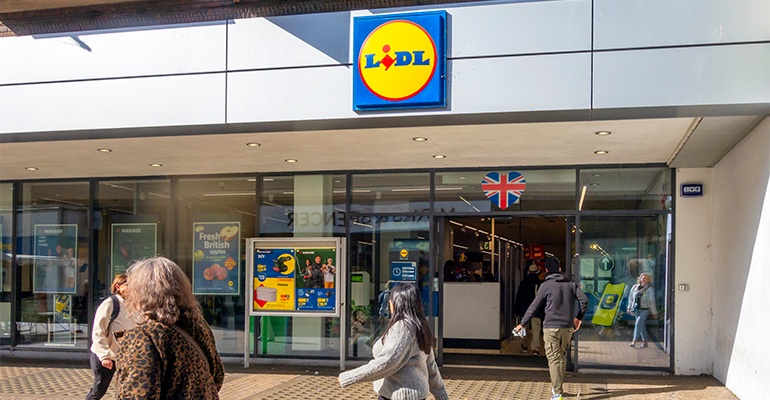
Lidl says Britain 'significantly off track' with healthy and sustainable eating
15 Sep 2026
Discounter retailer Lidl has raised concerns about healthy and sustainable eating habits across Britain, spotlighting how affordability remains a barrier for consumers.
Read more
Do the US dietary guidelines put UPFs under pressure?
10 Sep 2026
Will the US dietary guidelines change the way Americans eat, swapping ultra-processed foods for whole foods? We asked Dr Barry Popkin, renowned nutrition and obesity researcher.
Read more
Food fraud costs UK economy £2bn each year
9 Sep 2026
Food fraud is costing the UK economy up to £2 billion (€2.3 billion) every year although the food sector is more “resilient” than others, according to a recent study.
Read more
Skimpflation: An ‘unfair’ and risky approach to keeping prices low
2 Sep 2026
Consumers see skimpflation – reducing the quality of ingredients due to rising costs – as more unfair than shrinkflation, making it a risky strategy according to recent research.
Read more
NielsenIQ’s EU barometer shows Britain leading in grocery inflation
31 Aug 2026
Britain was the only country to record grocery inflation above 2%, according to NielsenIQ data that compared Europe’s five biggest grocery markets from February to May 2026.
Read more