
Ingredients Categories
Finished Products
Finished Food Categories
- Bakery
- Beverages / Juices
- Cereal and grain products
- Confectionery
- Cooking Fats & Oils
- Dairy
- Egg products
- Fruits & Vegetables
- Infant & Baby food
- Meat, Poultry & Fish
- Nuts & Seeds products
- Other Finished Food Categories
- Pet Food
- Plant-based foods
- Prepared foods
- Sauces & Seasonings
- Sweet & Savoury Spreads
Specialised Finished Products
- Bee products
- Biotic products
- Dietary supplements
- Energy drinks
- Functional beverages
- Functional confectionery
- Functional food
- Functional powders
- Meal replacement products
- Nutricosmetics
- Other Specialised Finished Products
- Pet Dietary Supplements
- Pharma and OTC products
- Protein products
- Sugar replacers / Sweeteners
Health & Wellness Areas
Delivery Formats
Operations & Services
- 3D printing
- Analysis/ Testing
- Auditing & certifications
- Blending & mixing
- Bottling
- Certification
- Clinical trials
- Co-packing
- Coating
- Consulting
- Contract manufacturing
- Drying
- Electrospinning
- Encapsulating
- Enzymatic processing
- Extracting
- Extrusion
- Fat structuring
- Fermentation
- Filling
- Flavour development
- Freeze drying
- Granulating/ grinding/ milling / mixing
- High-pressure processing
- Labelling
- Other Operations & Services
- Packaging
- Packet filling
- Pasturising
- Quality assurance
- Saccharification
- Shear cell processing
- Spray drying
- Sterilisation
- Storage & Logistics
- Tabletting
- Toasting / roasting
- Ultra-high temperature processing
News
Confectionery wars: Italian artisans battle Swiss firm Lindt over chocolate recipe
Will Chu, Freelance Journalist 18 Jan 2024Italian artisan chocolate makers are going head-to-head with the Swiss confection giant Lindt over gianduiotto, a delicacy from Turin that is the subject of heated discussion over its ingredients.
The issue has become so serious that 40 artisan chocolatiers, along with commercial chocolate makers Ferrero, Venchi and Domori, have applied for a Protected Geographical Indication (PGI) from the EU.
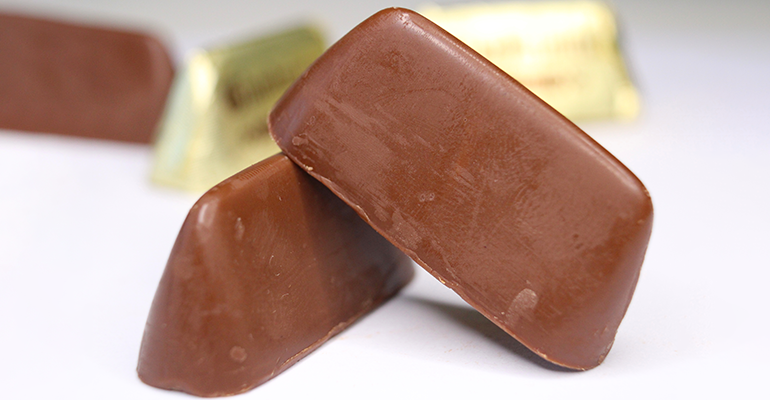
The PGI emphasises the relationship between a specific geographic region and the product, where a particular quality, reputation or other characteristic is essentially attributable to its geographical origin.
However, the consortium is facing a number of obstacles, primarily from Lindt, the parent owners of the Italian firm Caffarel, which has staked a claim as the inventors of gianduiotto.
"Our objective is to find an agreement which satisfies all parties and which allows Caffarel to protect the historic value of its brand," the company told AFP.
The Luserna San Giovanni-based firm added that it had never opposed the recognition of a PGI certificate, recognising that the mark of quality would, "contribute to the prestige of gianduiotto in Italy and across the world".
Caffarel fears another gianduiotto PGI would cause consumer confusion
Caffarel currently has its own brand of gianduiotto, ‘Gianduia 1865’, which the firm claims is the original that it invented in 1865. Caffarel’s fear is that another PGI would “cause confusion”.
Its argument has the backing of Roberto Lofaro, a Turin-based consultant and writer, who focuses on services and R&D in technology and data.
Posting on LinkedIn, Lofaro highlighted moves by the local producers to “invoke a right to follow their own path and have a de facto takeover of the brand by linking it exclusively to local produce for a premium positioning”.
“I did not see back then a local consortium of defenders of local brands making a better offer to retain the local heritage,” he added.
“It would be [idealistic] if the PGI on a brand created by a company were based on the ‘loyalty to the original recipe’ – as if a company were unable to evolve its own recipes and still retain them.”
 © iStock/JHVEPhoto
Lindt request the inclusion of milk to the gianduiotto’s ingredient line-up
Lofaro refers to Caffarel’s insistence that powdered milk should be included to the list of gianduiotto’s ingredients, which currently include cocoa, sugar and hazelnuts.
More specifically, Lindt is proposing that 10% of powdered milk be added to the current recipe as well as a lower amount of hazelnuts, approximately 26% compared to the current 30-45%.
“The majority of our consumers prefer our versions that contain milk,” Lindt & Sprüngli told POLITICO.
“We do not want to change the recipe for the traditional specialty,” they added. “However, in our opinion, a wider scope, allowing milk, is also well established and common.”
At the time of writing, the chocolatier’s case has so far been met with resistance by Italy's ministry of agriculture.
Regulatory situation on the future of gianduiotto
However, on the European front, there appeared to be movement with European Commissioner for Agriculture, with Janusz Wojciechowski, stating in a meeting late last year that the Commission, “would do everything in its power to defend the link between product brands and their city or region of origin”.
“In the light of the checks carried out, the Region and the Committee intend to continue the request forwarded to the Ministry….of the correctness of their claims to the protection of their territory.”
 © iStock/primipil
Guido Castagna, president of the Gianduiotto Committee in Turin told AFP: “For us, adding powdered milk to chocolate is like diluting wine with water."
"We don't want to take anything away from Caffarel. We're not fighting a war against Caffarel. For us Caffarel can easily continue its production," he added.
Antonio Borra, a lawyer for the PGI committee said, “Caffarel knows where to find us and if they think there may be an opening, we are ready to discuss it with them.”
He warned: "There are points on which we cannot compromise, starting with the name of Turin, which belongs to the whole territory, not a single company."

Get more of our news on Google
Set Ingredients Network as a 'Preferred Source' to get quicker access to the news you value.
Related news

Do the US dietary guidelines put UPFs under pressure?
10 Sep 2026
Will the US dietary guidelines change the way Americans eat, swapping ultra-processed foods for whole foods? We asked Dr Barry Popkin, renowned nutrition and obesity researcher.
Read more
Food fraud costs UK economy £2bn each year
9 Sep 2026
Food fraud is costing the UK economy up to £2 billion (€2.3 billion) every year although the food sector is more “resilient” than others, according to a recent study.
Read more
Kellogg accelerates work to remove artificial colours from all US cereals
3 Sep 2026
WK Kellogg has announced an accelerated timeline to eliminate all artificial colours and the chemical preservative, BHT, across its full US portfolio of cereals and cereal packaging.
Read more
Skimpflation: An ‘unfair’ and risky approach to keeping prices low
2 Sep 2026
Consumers see skimpflation – reducing the quality of ingredients due to rising costs – as more unfair than shrinkflation, making it a risky strategy according to recent research.
Read more
NielsenIQ’s EU barometer shows Britain leading in grocery inflation
31 Aug 2026
Britain was the only country to record grocery inflation above 2%, according to NielsenIQ data that compared Europe’s five biggest grocery markets from February to May 2026.
Read more
‘Urgent gaps’ in achieving 2030 food system goals
27 Aug 2026
Global food systems are failing to meet 2030 targets across indicators including health, environment, and resilience, according to a report co-authored by the Food and Agriculture Organisation (FAO).
Read more
Manam Chocolate aims to bring premium Indian cacao to 'the world stage'
11 Aug 2026
Craft chocolate brand Manam Chocolate is investing in local expansion and supply chain innovation throughout India as it works to build out the premium reputation of its locally produced cacao products.
Read more
Digital twin technology gains ground in food manufacturing
6 Aug 2026
Food and beverage companies are increasingly turning to digital twins to optimise and automate manufacturing processes, but opportunities stretch far beyond this, say experts.
Read more
Nestlé invests in regeneratively farmed wheat for KitKat
5 Aug 2026
Nestlé will pay a premium for Wildfarmed’s regeneratively farmed wheat but the CPG remains reticent to promote the move on packs of its KitKat bars.
Read more
EU sets maximum MOAH levels to protect human health
28 Jul 2026
The EU will adopt maximum levels for mineral oil aromatic hydrocarbons (MOAH) in food to protect human health. What do manufacturers need to know?
Read more