
Ingredients Categories
Finished Products
Finished Food Categories
- Bakery
- Beverages / Juices
- Cereal and grain products
- Confectionery
- Cooking Fats & Oils
- Dairy
- Egg products
- Fruits & Vegetables
- Infant & Baby food
- Meat, Poultry & Fish
- Nuts & Seeds products
- Other Finished Food Categories
- Pet Food
- Plant-based foods
- Prepared foods
- Sauces & Seasonings
- Sweet & Savoury Spreads
Specialised Finished Products
- Bee products
- Biotic products
- Dietary supplements
- Energy drinks
- Functional beverages
- Functional confectionery
- Functional food
- Functional powders
- Meal replacement products
- Nutricosmetics
- Other Specialised Finished Products
- Pet Dietary Supplements
- Pharma and OTC products
- Protein products
- Sugar replacers / Sweeteners
Health & Wellness Areas
Delivery Formats
Operations & Services
- 3D printing
- Analysis/ Testing
- Auditing & certifications
- Blending & mixing
- Bottling
- Certification
- Clinical trials
- Co-packing
- Coating
- Consulting
- Contract manufacturing
- Drying
- Electrospinning
- Encapsulating
- Enzymatic processing
- Extracting
- Extrusion
- Fat structuring
- Fermentation
- Filling
- Flavour development
- Freeze drying
- Granulating/ grinding/ milling / mixing
- High-pressure processing
- Labelling
- Other Operations & Services
- Packaging
- Packet filling
- Pasturising
- Quality assurance
- Saccharification
- Shear cell processing
- Spray drying
- Sterilisation
- Storage & Logistics
- Tabletting
- Toasting / roasting
- Ultra-high temperature processing
News
Digital energy management will fuel food production in 2026
Natasha Spencer-Jolliffe, Freelance Journalist 9 Feb 2026Using AI to manage digital energy consumption in factories is the latest strategy in manufacturers’ toolbox for sustainable operations and efficient energy use.
Energy is vital to every stage of our agrifood systems, enabling producers to deliver the world’s food to our growing global population. However, the energy required to feed our communities has a considerable impact on our planet’s sustainability.
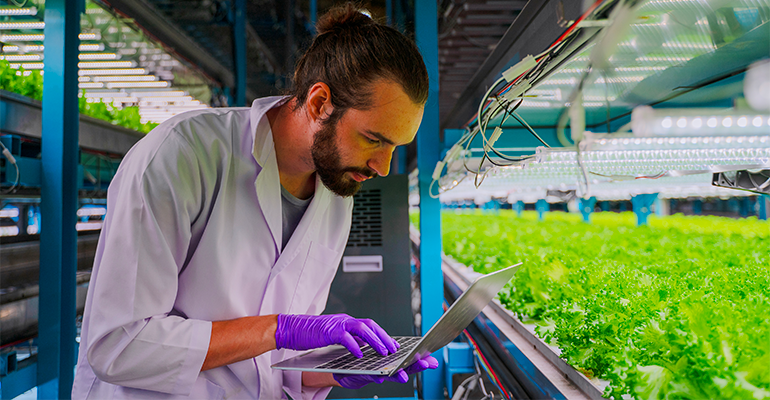
According to the United Nations’ (UN) Food and Agriculture Organization (FAO), food systems account for around 30% of global energy consumption and 31% of greenhouse gas (GHG) emissions.
To meet the demands of global agrifood systems, the food and beverage production landscape needs to consume sufficient energy to enable its supply chains to function and its operations to perform.
“Energy remains the industry’s most significant cost driver,” Sandra Perletti, global head of consumer packaged goods at Siemens Smart Infrastructure, told Ingredients Network.
Measuring energy consumption across the supply chain
Digital energy management (DEM) leverages real-time data to monitor, analyse, and optimise energy consumption in production facilities. Rather than relying on manual inspections, DEM consolidates all the relevant information necessary to help manufacturers manage their energy and keeps this within a centralised digital platform.
“The result [is] lower energy costs, reduced inefficiencies, and measurable progress
toward long-term sustainability goals,” said Perletti.
Sensors and smart meters capture energy data throughout food factories. Advanced technologies such as (AI and cloud computing analyse the gathered output. By applying these technologies in food and beverage production facilities, companies can gain a transparent, comprehensive view of where and how energy is consumed. Manufacturers can then use this data to support informed decision-making and targeted optimisation measures.
DEM solutions and services enable manufacturers to reduce energy costs, minimise system downtime, and stay on track with ambitious climate targets. Adopting the advanced technologies that support DEM enables manufacturers to also integrate their renewable energy sources into existing operations.
“The impact is already tangible, and in many cases transformative,” said Perletti. For instance, Siemens shared that Coca‑Cola HBC Austria has implemented various efficiency measures at its Edelstal site to reduce its CO₂ emissions. As a result, the facility has lowered its emissions to 17.5 grams per litre of beverage produced in 2019, a 50% reduction from 2010.
Real-world repercussions for R&D
Focusing on energy efficiency by monitoring consumption habits in real time can significantly shape manufacturers’ research and development (R&D) processes. “Energy efficiency is no longer solely an operational concern, it’s increasingly influencing product development itself,” Perletti said.
Today’s R&D teams are using tools such as digital twins to create virtual models of products and production lines. Building out production capabilities without upfront investment enables manufacturers to simulate different scenarios, forecast energy consumption, and optimise designs before developing any physical prototypes.
DEM systems enable companies to automate energy reporting and reduce unplanned downtime, freeing up staff resources for more strategic initiatives, including product development. Simultaneously, real-time insights into energy use during food manufacturing help producers develop processes and formulations that are inherently less energy intensive.
“Ultimately, this data-driven approach supports sustainability objectives while giving organisations greater flexibility to focus on new product launches, reformulations and long-term innovation,” Perletti added.

Get more of our news on Google
Set Ingredients Network as a 'Preferred Source' to get quicker access to the news you value.
Related news

Do the US dietary guidelines put UPFs under pressure?
10 Sep 2026
Will the US dietary guidelines change the way Americans eat, swapping ultra-processed foods for whole foods? We asked Dr Barry Popkin, renowned nutrition and obesity researcher.
Read more
Health and wellness engagement matures across Middle East and Africa
4 Sep 2026
Many consumers in the Middle East and Africa are now proactively engaged in health and wellness, looking to integrate better habits and products into their daily lives, say experts.
Read more
Skimpflation: An ‘unfair’ and risky approach to keeping prices low
2 Sep 2026
Consumers see skimpflation – reducing the quality of ingredients due to rising costs – as more unfair than shrinkflation, making it a risky strategy according to recent research.
Read more
‘Urgent gaps’ in achieving 2030 food system goals
27 Aug 2026
Global food systems are failing to meet 2030 targets across indicators including health, environment, and resilience, according to a report co-authored by the Food and Agriculture Organisation (FAO).
Read more
Seven-Eleven uses microbial testing tech to extend katsudon shelf life
26 Aug 2026
Japanese retail company Seven-Eleven has improved its factory’s microbial environment to keep comfort-food staple, katsudon, fresher for longer.
Read more
Chimac’s fusion sauces bring Korean flavours to Europe
25 Aug 2026
Irish sauce brand Chimac is tapping into Korea’s culinary traditions, bringing its flavours and products to European consumers who want a taste of K-food.
Read more
Global demand for instant noodles continues to rise
24 Aug 2026
Global demand for instant noodles reached 124.21 billion servings last year, representing a 0.7% year-on-year increase – or 900 million extra servings.
Read more
Popular barbecue staples experience sharp price increases
19 Aug 2026
The typical cost of US shoppers’ barbecue baskets has risen by 12% over the past year – the fastest annual rise in a decade, figures from The Economist show.
Read more
Hot NPD: Nissin launches first cold-water Cup Noodles
18 Aug 2026
Nissin is taking one of Japan’s most iconic instant meals in a completely new direction with the launch of the first cold water-only Cup Noodles in the brand’s 55-year history.
Read more
Manam Chocolate aims to bring premium Indian cacao to 'the world stage'
11 Aug 2026
Craft chocolate brand Manam Chocolate is investing in local expansion and supply chain innovation throughout India as it works to build out the premium reputation of its locally produced cacao products.
Read more