
Ingredients Categories
Finished Products
Finished Food Categories
- Bakery
- Beverages / Juices
- Cereal and grain products
- Confectionery
- Cooking Fats & Oils
- Dairy
- Egg products
- Fruits & Vegetables
- Infant & Baby food
- Meat, Poultry & Fish
- Nuts & Seeds products
- Other Finished Food Categories
- Pet Food
- Plant-based foods
- Prepared foods
- Sauces & Seasonings
- Sweet & Savoury Spreads
Specialised Finished Products
- Bee products
- Biotic products
- Dietary supplements
- Energy drinks
- Functional beverages
- Functional confectionery
- Functional food
- Functional powders
- Meal replacement products
- Nutricosmetics
- Other Specialised Finished Products
- Pet Dietary Supplements
- Pharma and OTC products
- Protein products
- Sugar replacers / Sweeteners
Health & Wellness Areas
Delivery Formats
Operations & Services
- 3D printing
- Analysis/ Testing
- Auditing & certifications
- Blending & mixing
- Bottling
- Certification
- Clinical trials
- Co-packing
- Coating
- Consulting
- Contract manufacturing
- Drying
- Electrospinning
- Encapsulating
- Enzymatic processing
- Extracting
- Extrusion
- Fat structuring
- Fermentation
- Filling
- Flavour development
- Freeze drying
- Granulating/ grinding/ milling / mixing
- High-pressure processing
- Labelling
- Other Operations & Services
- Packaging
- Packet filling
- Pasturising
- Quality assurance
- Saccharification
- Shear cell processing
- Spray drying
- Sterilisation
- Storage & Logistics
- Tabletting
- Toasting / roasting
- Ultra-high temperature processing
News
CSDDD approval raises hopes of better tackling child labour in the cocoa industry
Simon Pitman, Freelance Journalist 31 May 2024
The EU has given the green light to the Corporate Sustainability Due Diligence Directive (CSDDD), impacting the entire value chain, including the cocoa and chocolate industry.
The directive, approved on 24 May 2024 by the Council of the European Union, has been a long time coming. Now ratified, the entire cocoa supply chain will have to get to grips with tougher rules that emphasise a greater level of transparency.
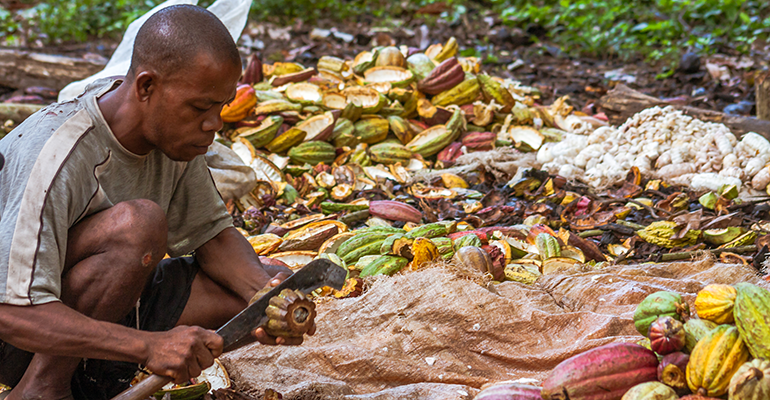
In a nutshell, the directive means that companies will be obliged to identify and address any negative impact from their business on the environment or human rights throughout the supply chain. Sarah Dekkiche, International Cocoa Initiative (ICI) director of policy and partnerships explains what all this means to the cocoa industry.
Implementation should happen as of mid-2027
“The timeline for this directive has changed many times, but now EU Member States will provide the last step for the approval in Council at the end of May. Following this, the directive will be published in full in the EU Official Journal in mid-June, and will then be implemented as of mid-2027,” said Dekkiche.
Dekkiche explained that the legislation is the same for all companies in scope, meaning that every aspect of the cocoa supply chain has to be accounted for to ensure they comply with environmental and child labour standards. As ICI is focused on addressing child labour in West Africa, supporting the practical implementation of the legislation will be one of the key areas of the organisation’s work.
“If you want to identify your risk, you have to have an enhanced understanding of your supply chain by maximising its traceability. We know that child labour and forced labour are among the most significant human rights issues in the cocoa sector, so the directive makes it an imperative that manufacturers know what is going on with respect to this,” said Dekkiche.
“For cocoa and chocolate companies, this means they have to identify problems relating to labour issues and implement the right interventions to remedy the problems. Today many chocolate and cocoa companies are already implementing Child Labour Monitoring and Remediation Systems (CLMRS). One implication of this new legislation is to strengthen these systems, meaning to make them more efficient and to scale them-up to cover all cocoa-producing households.”
Larger chocolate players will be directly impacted by the legislation
The ICI works with some of the biggest chocolate and cocoa manufacturers in the world, including names like Cargill, Barry Callebaut, Unilever, Marks & Spencer, Nestlé, Ferrero and Hershey. Dekkiche explained that the legislation targets these larger-scale manufacturers directly, while smaller companies are not directly impacted.
“However, because of the expectation to conduct due diligence across the full supply chain, smaller companies are indirectly impacted by the changes through their business relationships with larger companies,” Dekkiche added.
“The legislation is an opportunity to enhance responsible business conduct in general, encouraging sustainable purchasing practices and a better income for farmers, helping them out of poverty. This is also something that benefits chocolate manufacturers, as they are required to communicate about their human rights due diligence efforts and the impact these measures are having on cocoa farming communities.”
The long-term goal is improved human rights
When it comes to the long-term goal of the CSDDD legislation, ICI has a firm goal of ensuring that there are fewer human rights violations in the cocoa supply chain and that the cocoa and chocolate products that consumers buy are as ethically produced as possible.
“Moving forward, the big challenge is that the legislation is very new, so there will be a lot of new questions to address, namely competent authorities if Member States will have to interpret what it means in practice. Indeed, individual courts in Member States will have to be able to judge whether or not a company has or has not done appropriate human rights (and environmental) due diligence” explained Dekkiche.
“When you build and define a new law that has never existed before, there is always a period of time required to fully determine the jurisprudence. But at the beginning companies will probably face a certain amount of grey area as Member States define it at the national level.”

Get more of our news on Google
Set Ingredients Network as a 'Preferred Source' to get quicker access to the news you value.
Related news

Do the US dietary guidelines put UPFs under pressure?
10 Sep 2026
Will the US dietary guidelines change the way Americans eat, swapping ultra-processed foods for whole foods? We asked Dr Barry Popkin, renowned nutrition and obesity researcher.
Read more
Health and wellness engagement matures across Middle East and Africa
4 Sep 2026
Many consumers in the Middle East and Africa are now proactively engaged in health and wellness, looking to integrate better habits and products into their daily lives, say experts.
Read more
Skimpflation: An ‘unfair’ and risky approach to keeping prices low
2 Sep 2026
Consumers see skimpflation – reducing the quality of ingredients due to rising costs – as more unfair than shrinkflation, making it a risky strategy according to recent research.
Read more
‘Urgent gaps’ in achieving 2030 food system goals
27 Aug 2026
Global food systems are failing to meet 2030 targets across indicators including health, environment, and resilience, according to a report co-authored by the Food and Agriculture Organisation (FAO).
Read more
Seven-Eleven uses microbial testing tech to extend katsudon shelf life
26 Aug 2026
Japanese retail company Seven-Eleven has improved its factory’s microbial environment to keep comfort-food staple, katsudon, fresher for longer.
Read more
Chimac’s fusion sauces bring Korean flavours to Europe
25 Aug 2026
Irish sauce brand Chimac is tapping into Korea’s culinary traditions, bringing its flavours and products to European consumers who want a taste of K-food.
Read more
Global demand for instant noodles continues to rise
24 Aug 2026
Global demand for instant noodles reached 124.21 billion servings last year, representing a 0.7% year-on-year increase – or 900 million extra servings.
Read more
Popular barbecue staples experience sharp price increases
19 Aug 2026
The typical cost of US shoppers’ barbecue baskets has risen by 12% over the past year – the fastest annual rise in a decade, figures from The Economist show.
Read more
Hot NPD: Nissin launches first cold-water Cup Noodles
18 Aug 2026
Nissin is taking one of Japan’s most iconic instant meals in a completely new direction with the launch of the first cold water-only Cup Noodles in the brand’s 55-year history.
Read more
Manam Chocolate aims to bring premium Indian cacao to 'the world stage'
11 Aug 2026
Craft chocolate brand Manam Chocolate is investing in local expansion and supply chain innovation throughout India as it works to build out the premium reputation of its locally produced cacao products.
Read more