
Ingredients Categories
Finished Products
Finished Food Categories
- Bakery
- Beverages / Juices
- Cereal and grain products
- Confectionery
- Cooking Fats & Oils
- Dairy
- Egg products
- Fruits & Vegetables
- Infant & Baby food
- Meat, Poultry & Fish
- Nuts & Seeds products
- Other Finished Food Categories
- Pet Food
- Plant-based foods
- Prepared foods
- Sauces & Seasonings
- Sweet & Savoury Spreads
Specialised Finished Products
- Bee products
- Biotic products
- Dietary supplements
- Energy drinks
- Functional beverages
- Functional confectionery
- Functional food
- Functional powders
- Meal replacement products
- Nutricosmetics
- Other Specialised Finished Products
- Pet Dietary Supplements
- Pharma and OTC products
- Protein products
- Sugar replacers / Sweeteners
Health & Wellness Areas
Delivery Formats
Operations & Services
- 3D printing
- Analysis/ Testing
- Auditing & certifications
- Blending & mixing
- Bottling
- Certification
- Clinical trials
- Co-packing
- Coating
- Consulting
- Contract manufacturing
- Drying
- Electrospinning
- Encapsulating
- Enzymatic processing
- Extracting
- Extrusion
- Fat structuring
- Fermentation
- Filling
- Flavour development
- Freeze drying
- Granulating/ grinding/ milling / mixing
- High-pressure processing
- Labelling
- Other Operations & Services
- Packaging
- Packet filling
- Pasturising
- Quality assurance
- Saccharification
- Shear cell processing
- Spray drying
- Sterilisation
- Storage & Logistics
- Tabletting
- Toasting / roasting
- Ultra-high temperature processing
News
Europe to tighten import controls for pesticides
Kacey Culliney, Freelance Journalist 26 Feb 2026The European Commission will tighten controls on food and feed imports and may extend France's ban on products containing prohibited pesticides.
Earlier this month, the French ministry of Agriculture and Food issued an interministerial decree to suspend the importation of food items produced with EU-prohibited herbicides and fungicides. The ban halts the import and sale of a range of fruits, vegetables, and grains made using five compounds – carbendazim, benomyl, glufosinate, thiophanate-methyl, and mancozeb – for products like oranges, lemons, mangos, avocados, potatoes, oats, and wheat.
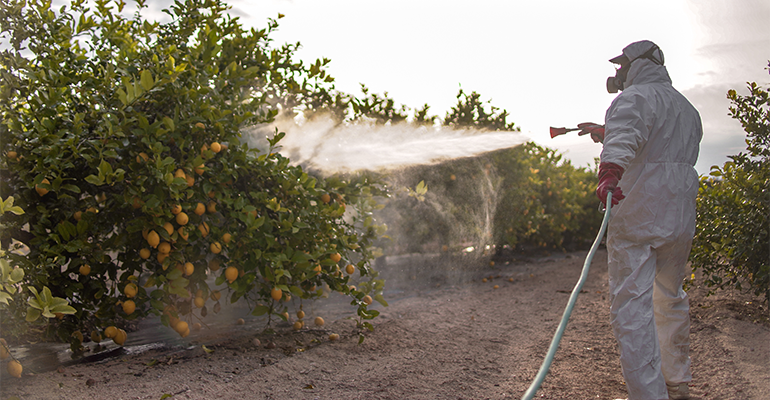
Operators involved in the import, processing and marketing of imported products must now ensure there are no residues of these prohibited substances. French state services will conduct checks and take samples to ensure proper implementation of the national decree.
French decree: ‘Fairness for farmers and consumers cannot wait’
France also presented its decree to the European Commission in the hope the measures could be extended to EU policy level.
“The products we are banning because of the substances they are treated with must not be allowed to return,” said Annie Genevard, French minister for agriculture, food sovereignty, and forestry.
“This is a matter of common sense, one we have been advocating to the European Commission for several months. Fairness and justice for our farmers and our consumers cannot wait. This decree therefore puts an end to an incomprehensible double standard and cleans up the shelves.”
The decree was presented to the Commission and Member States on 20 January 2026, at the Standing Committee on Plants, Animals, Food and Feed, following calls from Genevard late last year to lower maximum residue limits for several food products made using these pesticides.
One week later, on 26 January 2026, the European Commission established a new Task Force to strengthen import controls on food safety. The Task Force will be specifically focused on food and feed safety, pesticide residues, and coordinated EU monitoring actions on specific imported products.
According to the Commission, the goal is to further harmonise import controls across the EU; develop recommendations for joint actions between the Commission and member states; and identify where additional administrative or regulatory measures are needed to strengthen controls.
Potential for extended EU policy?
Speaking to Ingredients Network, EU regulatory expert Luca Bucchini, owner and managing director of Hylobates Consulting, said the French decree may be used to define a wider EU policy.
“Rather than similar initiatives by other member states, the Commission may extend the same policy at EU level,” Bucchinin said. “The Commission had already considered action and may align with France given the toxicity of the substances. France has put pressure on the process.”
Discussing the potential impact this ban will have on food trade into France, the expert said it will mainly impact tropical fruits and off-season citrus fruits; prices on some products could also change for consumers.
For suppliers working globally or within Europe, the decree creates differentiating standards, he said, which is “always a problem”.
French companies will now have to “scramble to find suitable suppliers”, he added.
Monitoring imports and trade
In terms of upholding the ban, Bucchini said that whilst France has “strong capabilities at imports”, it will be impossible to screen every product entering the country. There is also the issue of international products arriving via other member states whereupon EU checks will be conducted on arrival into that country but not re-checked on arrival into France, he explained. In this case, random controls and compliant food business operators will be key to ensuring the ban is upheld.
“This is a difficult time to keep together the traditional rule-making process of the EU – slow and deliberative – with the pressures of politics and international trade,” Bucchini said. “While France has, in many cases, forced the EU's hand, more similar initiatives are likely to follow, potentially making the EU's position more difficult or fragmenting food law.”
Crucially, this is all happening within the backdrop of the ongoing EU-Mercosur trade deal which has been stalled and referred to the EU Court of Justice – a deal that would see the EU and four Mercosur countries Argentina, Brazil, Paraguay and Uruguay strengthen bilateral trade and investment.

Get more of our news on Google
Set Ingredients Network as a 'Preferred Source' to get quicker access to the news you value.
Related news

Do the US dietary guidelines put UPFs under pressure?
10 Sep 2026
Will the US dietary guidelines change the way Americans eat, swapping ultra-processed foods for whole foods? We asked Dr Barry Popkin, renowned nutrition and obesity researcher.
Read more
Health and wellness engagement matures across Middle East and Africa
4 Sep 2026
Many consumers in the Middle East and Africa are now proactively engaged in health and wellness, looking to integrate better habits and products into their daily lives, say experts.
Read more
Skimpflation: An ‘unfair’ and risky approach to keeping prices low
2 Sep 2026
Consumers see skimpflation – reducing the quality of ingredients due to rising costs – as more unfair than shrinkflation, making it a risky strategy according to recent research.
Read more
‘Urgent gaps’ in achieving 2030 food system goals
27 Aug 2026
Global food systems are failing to meet 2030 targets across indicators including health, environment, and resilience, according to a report co-authored by the Food and Agriculture Organisation (FAO).
Read more
Seven-Eleven uses microbial testing tech to extend katsudon shelf life
26 Aug 2026
Japanese retail company Seven-Eleven has improved its factory’s microbial environment to keep comfort-food staple, katsudon, fresher for longer.
Read more
Chimac’s fusion sauces bring Korean flavours to Europe
25 Aug 2026
Irish sauce brand Chimac is tapping into Korea’s culinary traditions, bringing its flavours and products to European consumers who want a taste of K-food.
Read more
Global demand for instant noodles continues to rise
24 Aug 2026
Global demand for instant noodles reached 124.21 billion servings last year, representing a 0.7% year-on-year increase – or 900 million extra servings.
Read more
Popular barbecue staples experience sharp price increases
19 Aug 2026
The typical cost of US shoppers’ barbecue baskets has risen by 12% over the past year – the fastest annual rise in a decade, figures from The Economist show.
Read more
Hot NPD: Nissin launches first cold-water Cup Noodles
18 Aug 2026
Nissin is taking one of Japan’s most iconic instant meals in a completely new direction with the launch of the first cold water-only Cup Noodles in the brand’s 55-year history.
Read more
Manam Chocolate aims to bring premium Indian cacao to 'the world stage'
11 Aug 2026
Craft chocolate brand Manam Chocolate is investing in local expansion and supply chain innovation throughout India as it works to build out the premium reputation of its locally produced cacao products.
Read more