
Ingredients Categories
Finished Products
Finished Food Categories
- Bakery
- Beverages / Juices
- Cereal and grain products
- Confectionery
- Cooking Fats & Oils
- Dairy
- Egg products
- Fruits & Vegetables
- Infant & Baby food
- Meat, Poultry & Fish
- Nuts & Seeds products
- Other Finished Food Categories
- Pet Food
- Plant-based foods
- Prepared foods
- Sauces & Seasonings
- Sweet & Savoury Spreads
Specialised Finished Products
- Bee products
- Biotic products
- Dietary supplements
- Energy drinks
- Functional beverages
- Functional confectionery
- Functional food
- Functional powders
- Meal replacement products
- Nutricosmetics
- Other Specialised Finished Products
- Pet Dietary Supplements
- Pharma and OTC products
- Protein products
- Sugar replacers / Sweeteners
Health & Wellness Areas
Delivery Formats
Operations & Services
- 3D printing
- Analysis/ Testing
- Auditing & certifications
- Blending & mixing
- Bottling
- Certification
- Clinical trials
- Co-packing
- Coating
- Consulting
- Contract manufacturing
- Drying
- Electrospinning
- Encapsulating
- Enzymatic processing
- Extracting
- Extrusion
- Fat structuring
- Fermentation
- Filling
- Flavour development
- Freeze drying
- Granulating/ grinding/ milling / mixing
- High-pressure processing
- Labelling
- Other Operations & Services
- Packaging
- Packet filling
- Pasturising
- Quality assurance
- Saccharification
- Shear cell processing
- Spray drying
- Sterilisation
- Storage & Logistics
- Tabletting
- Toasting / roasting
- Ultra-high temperature processing
News
Canada adopts front-of-package nutrition warning labels
Kacey Culliney, Freelance Journalist 19 Feb 2026Food and drink products in Canada must now carry warning labels for high saturated fat, sugar, and sodium content – a move designed to help consumers make more informed purchasing decisions.
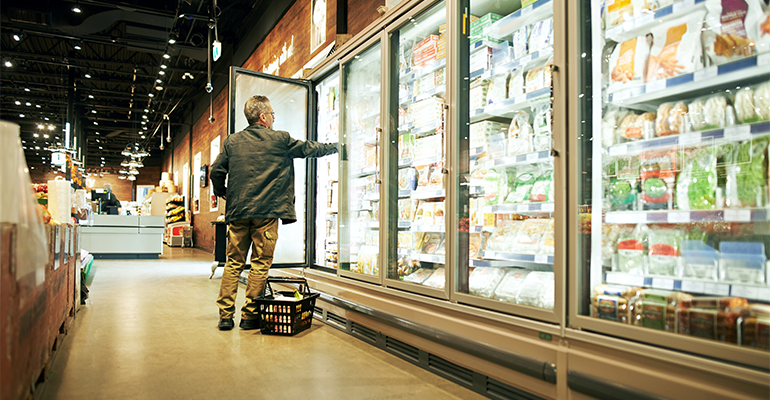
All food and beverage products sold in Canada must now feature front-of-package nutrition warning labels in English and French. The country's new packaging policy came into force at the beginning of this year, on 1 January 2026, following a three and a half year transition period after amendments to the country's Food and Drug Regulations in July 2022.
Introduced by the country's federal institution Health Canada, the warning labels require products high in one or more of saturated fat, sugars, or sodium to display a black and white warning symbol front-of-package.
“We're improving food labels,” said Health Canada. The goal of the nutrition warning label is to help consumers make “quick and informed decisions”, the institution said, as well as support health professionals in educating people about foods high in sodium, sugars, and saturated fat.
Certain exemptions apply, including smaller packaged products where it is not technically possible to feature the symbol; foods with a protective effect on health like fruits and vegetables; certain dairy products considered important sources of calcium; raw, single ingredient whole cut and ground meats; and actual butter, sugar, and salt.
Industry transition and enforcement
Kristina Farrell, CEO of Food and Beverage Canada, said that whilst industry widely supports the objective of helping Canadians make informed food choices and recognises the intent behind the front-of-package labelling requirements, the association has been pushing for longer transition times.
“Our members have invested significant time and resources to prepare for compliance with the January 2026 timeline. At the same time, changes to packaging regulations are complex, costly, and require long lead times to implement,” Farrell told Ingredients Network. “A rigid enforcement approach risks forcing manufacturers to discard millions of dollars' worth of usable packaging, creating unnecessary waste and undermining both environmental and economic objectives – particularly for small- and medium-sized businesses.”
Food and Beverage Canada, therefore, has been urging the Canadian Food Inspection Agency (CFIA) to adopt a “flexible, phased compliance approach throughout 2026”, she said, which would allow manufacturers to work with local inspectors on “reasonable transition plans to exhaust existing packaging inventory”. This collaborative approach, Farrell said, would support regulatory integrity, supply chain stability and responsible resource management whilst maintaining the policy's intent.
The CFIA said there will be “no enforcement discretion” after January 2026, noting it had issued a clear implementation plan back in July 2022. Products imported, manufactured in Canada or packaged at retail before January 2026 could still be sold and remain on store shelves but any products imported, manufactured in Canada or packaged at retail on or after 1 January will be subject to the “standard regulatory response process”.
An expert eye
Food and nutrition expert Marion Nestle, Paulette Goddard professor of nutrition, food studies and public health at New York University, Emerita, said Canada's new nutrition warning label “does the job”.
“It could have been more prominent, but that's nit-picking. With all the attention on ultra-processing these days, warning labels need to consider that too. But that it exists at all in face of what must have been enormous food industry opposition is already terrific,” Nestle said.
In terms of impact, she said it would be interesting to see if the warning label affects sales and whether it induces food companies to reduce the amounts of sugar, salt and saturated fat in their products – impacts seen in Latin American countries where warning labels had already been introduced.

Get more of our news on Google
Set Ingredients Network as a 'Preferred Source' to get quicker access to the news you value.
Related news

Do the US dietary guidelines put UPFs under pressure?
10 Sep 2026
Will the US dietary guidelines change the way Americans eat, swapping ultra-processed foods for whole foods? We asked Dr Barry Popkin, renowned nutrition and obesity researcher.
Read more
Health and wellness engagement matures across Middle East and Africa
4 Sep 2026
Many consumers in the Middle East and Africa are now proactively engaged in health and wellness, looking to integrate better habits and products into their daily lives, say experts.
Read more
Skimpflation: An ‘unfair’ and risky approach to keeping prices low
2 Sep 2026
Consumers see skimpflation – reducing the quality of ingredients due to rising costs – as more unfair than shrinkflation, making it a risky strategy according to recent research.
Read more
‘Urgent gaps’ in achieving 2030 food system goals
27 Aug 2026
Global food systems are failing to meet 2030 targets across indicators including health, environment, and resilience, according to a report co-authored by the Food and Agriculture Organisation (FAO).
Read more
Seven-Eleven uses microbial testing tech to extend katsudon shelf life
26 Aug 2026
Japanese retail company Seven-Eleven has improved its factory’s microbial environment to keep comfort-food staple, katsudon, fresher for longer.
Read more
Chimac’s fusion sauces bring Korean flavours to Europe
25 Aug 2026
Irish sauce brand Chimac is tapping into Korea’s culinary traditions, bringing its flavours and products to European consumers who want a taste of K-food.
Read more
Global demand for instant noodles continues to rise
24 Aug 2026
Global demand for instant noodles reached 124.21 billion servings last year, representing a 0.7% year-on-year increase – or 900 million extra servings.
Read more
Popular barbecue staples experience sharp price increases
19 Aug 2026
The typical cost of US shoppers’ barbecue baskets has risen by 12% over the past year – the fastest annual rise in a decade, figures from The Economist show.
Read more
Hot NPD: Nissin launches first cold-water Cup Noodles
18 Aug 2026
Nissin is taking one of Japan’s most iconic instant meals in a completely new direction with the launch of the first cold water-only Cup Noodles in the brand’s 55-year history.
Read more
Manam Chocolate aims to bring premium Indian cacao to 'the world stage'
11 Aug 2026
Craft chocolate brand Manam Chocolate is investing in local expansion and supply chain innovation throughout India as it works to build out the premium reputation of its locally produced cacao products.
Read more