
Ingredients Categories
Finished Products
Finished Food Categories
- Bakery
- Beverages / Juices
- Cereal and grain products
- Confectionery
- Cooking Fats & Oils
- Dairy
- Egg products
- Fruits & Vegetables
- Infant & Baby food
- Meat, Poultry & Fish
- Nuts & Seeds products
- Other Finished Food Categories
- Pet Food
- Plant-based foods
- Prepared foods
- Sauces & Seasonings
- Sweet & Savoury Spreads
Specialised Finished Products
- Bee products
- Biotic products
- Dietary supplements
- Energy drinks
- Functional beverages
- Functional confectionery
- Functional food
- Functional powders
- Meal replacement products
- Nutricosmetics
- Other Specialised Finished Products
- Pet Dietary Supplements
- Pharma and OTC products
- Protein products
- Sugar replacers / Sweeteners
Health & Wellness Areas
Delivery Formats
Operations & Services
- 3D printing
- Analysis/ Testing
- Auditing & certifications
- Blending & mixing
- Bottling
- Certification
- Clinical trials
- Co-packing
- Coating
- Consulting
- Contract manufacturing
- Drying
- Electrospinning
- Encapsulating
- Enzymatic processing
- Extracting
- Extrusion
- Fat structuring
- Fermentation
- Filling
- Flavour development
- Freeze drying
- Granulating/ grinding/ milling / mixing
- High-pressure processing
- Labelling
- Other Operations & Services
- Packaging
- Packet filling
- Pasturising
- Quality assurance
- Saccharification
- Shear cell processing
- Spray drying
- Sterilisation
- Storage & Logistics
- Tabletting
- Toasting / roasting
- Ultra-high temperature processing
News
Cultivated seafood company roe-volutionising the caviar market
Tessa Wiles, Content Editor - Food 21 Feb 2025A Singapore-based startup is targeting premium markets and younger consumers with its latest innovation – cultivated caviar.
UMAMI Bioworks developed the caviar alternative using a blend of plant-based ingredients and cultured sturgeon cells – the species of wild fish whose roe is referred to as caviar.
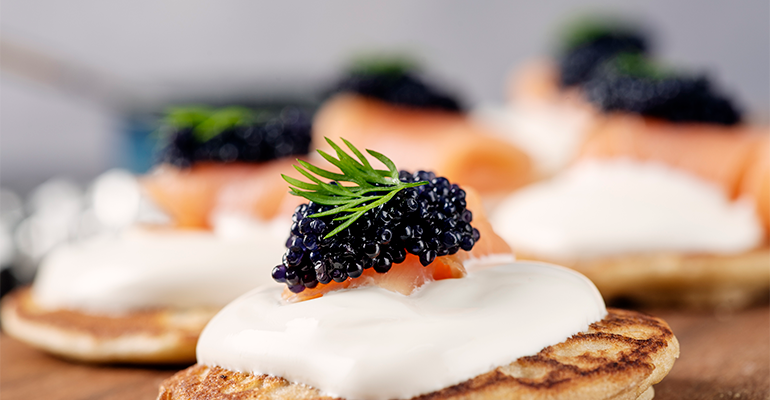
The company says its cultivated caviar has the same “rich, buttery taste and velvety texture of its traditional counterpart”, while offering a nutrient profile rich in omega-3 fatty acids, antioxidants, and essential nutrients.
Gayathri Mani, product manager at UMAMI Bioworks, told Ingredients Network that the company is currently engaging with select partners, including high-end restaurants, chefs, and premium retailers, to co-create customised applications and refine the product for launch.
“While the exact timeline depends on regulatory processes in key regions, we aim to first roll out our cultivated caviar in markets where demand for sustainable luxury products is high,” she said.
Key regions will include North America, Europe, and parts of Asia.
“Caviar has long been associated with luxury and indulgence, and our cultivated caviar reflects that heritage,” Mani explained, adding that the company anticipates that its product will be priced on par with traditional caviar, as a way to honour its position as a premium experience.
Caviar on the brink of collapse
Caviar has been considered a delicacy for millennia. Records show that as far back as 1240 AD, caviar was an established part of Russian tradition. As of the 16th century, caviar began to be considered decadent and penetrated wider markets across Europe. Sturgeons – the only fish species whose roe is considered caviar – are highly sought after because of this.
However, this comes at a price – 90% of sturgeon species are endangered and on the brink of extinction due to overfishing, illegal caviar trade, and habitat loss.
Organisations such as the World Wildlife Fund (WWF) have initiatives to target the black market and illegal caviar trade, raising public awareness and advocating for stronger enforcement policies. WWF also has long-term initiatives including engaging with local fishing communities about sturgeon conservation.
While these initiatives have an impact, companies like UMAMI Bioworks are trying to tackle the problem from another avenue, offering consumers the same luxurious experience, while driving ethical sourcing and putting sustainability at the fore.
Sustainable luxury targeted at millennials and gen Z
According to Grand View Research, in 2023, the global caviar market generated a revenue of $417.4 million, and by 2030, it is expected to reach $709 million.
Thanks, in part, to the viral TikTok trend of “caviar bumps”, where people eat caviar off the back of their hand, the delicacy is gaining traction among everyday consumers, and is no longer segmented to the rich and famous. As of October 2024, the hashtag CaviarBumps had around 15 million views.
According to Mani, millennial and gen Z consumers are UMAMI Bioworks’ ideal. She explained that these demographics are redefining luxury with a focus on sustainability, ethics, and culinary experiences, alongside valuing transparency, innovation, and premium quality, making them a natural fit for cultivated caviar.
The future of cultivated food, according to UMAMI Bioworks
UMAMI Bioworks anticipates that as awareness of sustainability and ethical sourcing continues to grow, the cultivated caviar market will expand significantly, driven by consumers seeking luxury products that align with their values.
“Cultivated caviar has the potential to become a centrepiece of sustainable fine dining, offering an alternative to traditional caviar that supports marine conservation and biodiversity,” Mani said.
“UMAMI Bioworks aims to lead this evolution by setting new standards for quality, sustainability, and innovation in cultivated food. Through strategic partnerships and a focus on scalability, we are committed to making cultivated caviar a symbol of responsible luxury that inspires change across the food industry.”
UMAMI Bioworks making waves in the seafood industry
Singapore became the first country in the world to approve cultivated meat in 2020, ahead of the US and Israel.
Thanks to Singapore’s favourable regulatory environment, the country is ripe with cultivated innovations. While many companies are developing meat alternatives, UMAMI Bioworks – formerly known as UMAMI Meats until 2023 – has found its niche in the seafood market.
The startup was founded in 2020 by Mihir Pershad, whose aim was to leverage technology to enable consumers to eat the same seafood they eat today, for generations to come. Since its launch, UMAMI Bioworks has been working towards the commercialisation of various cultivated fish products.
In 2022, it partnered with Ingredion, a US-based ingredient firm to develop and launch cell-cultured fish fillets and crab cakes.
In 2023, the company formed three partnerships: a collaboration with Israeli-based Stakeholder Foods to develop cultivated fish and form them into filets using a 3D printer; a joint venture with the Japanese company Maruha Nichiro, aimed at building the infrastructure of Japan’s cultivated seafood industry, and scaling up UMAMI Bioworks’ process; and a partnership with Canada-based Cult Food Science to develop cultivated cat food. The latter product, Marina Cat, was expected to reach the market in 2024, but as of February 2025 is yet to be launched.
In 2024, UMAMI Bioworks partnered with US-based Friends & Family Pet Food Co to develop a range of cultivated pet foods, expected to launch in Q1 of 2025.

Get more of our news on Google
Set Ingredients Network as a 'Preferred Source' to get quicker access to the news you value.
Related news

M&S launches own-brand pet food range
11 Sep 2026
UK retailer Marks & Spencer has launched its own-brand pet food line Paws & Pals – a well-timed and strategic move that will appeal to loyal shoppers, says a marketing expert.
Read more
Do the US dietary guidelines put UPFs under pressure?
10 Sep 2026
Will the US dietary guidelines change the way Americans eat, swapping ultra-processed foods for whole foods? We asked Dr Barry Popkin, renowned nutrition and obesity researcher.
Read more
Food fraud costs UK economy £2bn each year
9 Sep 2026
Food fraud is costing the UK economy up to £2 billion (€2.3 billion) every year although the food sector is more “resilient” than others, according to a recent study.
Read more
Health and wellness engagement matures across Middle East and Africa
4 Sep 2026
Many consumers in the Middle East and Africa are now proactively engaged in health and wellness, looking to integrate better habits and products into their daily lives, say experts.
Read more
Kellogg accelerates work to remove artificial colours from all US cereals
3 Sep 2026
WK Kellogg has announced an accelerated timeline to eliminate all artificial colours and the chemical preservative, BHT, across its full US portfolio of cereals and cereal packaging.
Read more
Skimpflation: An ‘unfair’ and risky approach to keeping prices low
2 Sep 2026
Consumers see skimpflation – reducing the quality of ingredients due to rising costs – as more unfair than shrinkflation, making it a risky strategy according to recent research.
Read more
Royal Canin launches ‘freshly-cooked’ therapeutic dog food
1 Sep 2026
Mars-owned Royal Canin has moved into the therapeutic diet sector with the launch of its Fresh Veterinary Diets range for dogs with health conditions. We asked a veterinary nutritionist for her opinion.
Read more
NielsenIQ’s EU barometer shows Britain leading in grocery inflation
31 Aug 2026
Britain was the only country to record grocery inflation above 2%, according to NielsenIQ data that compared Europe’s five biggest grocery markets from February to May 2026.
Read more
‘Urgent gaps’ in achieving 2030 food system goals
27 Aug 2026
Global food systems are failing to meet 2030 targets across indicators including health, environment, and resilience, according to a report co-authored by the Food and Agriculture Organisation (FAO).
Read more
Seven-Eleven uses microbial testing tech to extend katsudon shelf life
26 Aug 2026
Japanese retail company Seven-Eleven has improved its factory’s microbial environment to keep comfort-food staple, katsudon, fresher for longer.
Read more