
Ingredients Categories
Finished Products
Finished Food Categories
- Bakery
- Beverages / Juices
- Cereal and grain products
- Confectionery
- Cooking Fats & Oils
- Dairy
- Egg products
- Fruits & Vegetables
- Infant & Baby food
- Meat, Poultry & Fish
- Nuts & Seeds products
- Other Finished Food Categories
- Pet Food
- Plant-based foods
- Prepared foods
- Sauces & Seasonings
- Sweet & Savoury Spreads
Specialised Finished Products
- Bee products
- Biotic products
- Dietary supplements
- Energy drinks
- Functional beverages
- Functional confectionery
- Functional food
- Functional powders
- Meal replacement products
- Nutricosmetics
- Other Specialised Finished Products
- Pet Dietary Supplements
- Pharma and OTC products
- Protein products
- Sugar replacers / Sweeteners
Health & Wellness Areas
Delivery Formats
Operations & Services
- 3D printing
- Analysis/ Testing
- Auditing & certifications
- Blending & mixing
- Bottling
- Certification
- Clinical trials
- Co-packing
- Coating
- Consulting
- Contract manufacturing
- Drying
- Electrospinning
- Encapsulating
- Enzymatic processing
- Extracting
- Extrusion
- Fat structuring
- Fermentation
- Filling
- Flavour development
- Freeze drying
- Granulating/ grinding/ milling / mixing
- High-pressure processing
- Labelling
- Other Operations & Services
- Packaging
- Packet filling
- Pasturising
- Quality assurance
- Saccharification
- Shear cell processing
- Spray drying
- Sterilisation
- Storage & Logistics
- Tabletting
- Toasting / roasting
- Ultra-high temperature processing
News
Despite healthy attitudes, sweet sales are growing
Katja Knox, Editorial Account Manager 4 Apr 2022
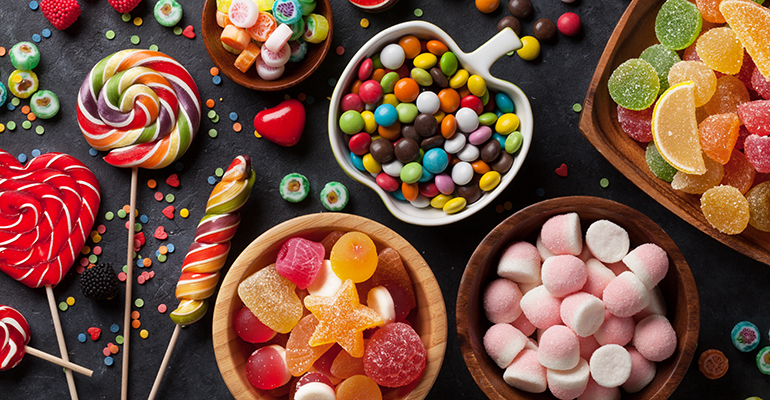
Sales of confectionery and chocolate in the US and Europe are on the rise - despite consumer ongoing interest in better-for-your foods.
In the US, chocolate and candy sales hit a record $36.9 billion (€33.60 billion) according to data from the National Confectioners' Association. Similarly, chocolate sales in Europe roared back to life in 2021 after being stymied for a portion of the pandemic.
In Switzerland, Lindt & Sprüngli saw its sales jump 17.4% in the first half of 2021 compared to 2020. In the UK, sales from the brand Hotel Chocolat jumped even higher, posting a 21% increase in revenue for its 2021 fiscal year that ended last June at £165 million (€195 million).
Europe has historically been a large chocolate-consuming region. According to the Centre for the Promotion of Imports, while the world’s average chocolate consumption amounts to an estimated 0.9 kg per capita per year, in Europe, that figure is 5 kg.
In Western Europe, North America and South America, the chocolate confectionery market grew 2.8%, 2.8% and 8.8% between 2020 and 2021, respectively, according to data from market research company Statista.
Michele Buck, The Hershey Company CEO noted in a press release that "In 2021, we delivered a record year of production and double-digit sales and earnings growth.” As one of the US’s chocolate titans, Hershey posted 10.1% growth last year.
To respond to this demand for more chocolate from consumers, manufacturers have been able to tap into a larger supply of raw materials. The European Cocoa Association (ECA) found a year-over-year increase in the supply of cocoa grindings, which grew 8.7% from 345,730 tonnes to 375,811 tonnes between 2019 and 2020.
Other sweets in the spotlight of consumer attention
Chocolate is not the only sweet treat to post sales numbers that are reflecting a growing demand. Candy sales, which dipped in 2020 according to the National Confectioners Association, rose last year. Seasonal candy in particular saw noticeable gains with a 13.5% year-over-year growth in dollar sales.
According to the 2022 Flavor and Trend forecast by the flavour company Novotaste, consumers continue to be caught between their desire for comfort and indulgence and the search for healthier options to consume.
Dark chocolate and citrus are straightforward points from which manufacturers can build sweets that are positioned for shoppers looking for healthier options. Functional candy such as gummy vitamins are also on the rise, Forbes reported.
Sugar-free sweets are yet an alternate route. The study from the National Confectioners Association found 44% of consumers are interested in trying low-sugar and sugar-free treats. Already many options on the market are bridging this gap such as sugar-free candy company Behave and the stevia-driven candy company Lily’s.

Get more of our news on Google
Set Ingredients Network as a 'Preferred Source' to get quicker access to the news you value.
Related news

Do the US dietary guidelines put UPFs under pressure?
10 Sep 2026
Will the US dietary guidelines change the way Americans eat, swapping ultra-processed foods for whole foods? We asked Dr Barry Popkin, renowned nutrition and obesity researcher.
Read more
Food fraud costs UK economy £2bn each year
9 Sep 2026
Food fraud is costing the UK economy up to £2 billion (€2.3 billion) every year although the food sector is more “resilient” than others, according to a recent study.
Read more
Kellogg accelerates work to remove artificial colours from all US cereals
3 Sep 2026
WK Kellogg has announced an accelerated timeline to eliminate all artificial colours and the chemical preservative, BHT, across its full US portfolio of cereals and cereal packaging.
Read more
Skimpflation: An ‘unfair’ and risky approach to keeping prices low
2 Sep 2026
Consumers see skimpflation – reducing the quality of ingredients due to rising costs – as more unfair than shrinkflation, making it a risky strategy according to recent research.
Read more
‘Urgent gaps’ in achieving 2030 food system goals
27 Aug 2026
Global food systems are failing to meet 2030 targets across indicators including health, environment, and resilience, according to a report co-authored by the Food and Agriculture Organisation (FAO).
Read more
Seven-Eleven uses microbial testing tech to extend katsudon shelf life
26 Aug 2026
Japanese retail company Seven-Eleven has improved its factory’s microbial environment to keep comfort-food staple, katsudon, fresher for longer.
Read more
Chimac’s fusion sauces bring Korean flavours to Europe
25 Aug 2026
Irish sauce brand Chimac is tapping into Korea’s culinary traditions, bringing its flavours and products to European consumers who want a taste of K-food.
Read more
Global demand for instant noodles continues to rise
24 Aug 2026
Global demand for instant noodles reached 124.21 billion servings last year, representing a 0.7% year-on-year increase – or 900 million extra servings.
Read more
China beverages: Is herbal innovation the future?
20 Aug 2026
Herbal and botanical innovation in China's drinks market continues to grow, with ingredients like astragalus root, ginger, and ginseng in the spotlight – and focus shifting far beyond refreshment.
Read more
Popular barbecue staples experience sharp price increases
19 Aug 2026
The typical cost of US shoppers’ barbecue baskets has risen by 12% over the past year – the fastest annual rise in a decade, figures from The Economist show.
Read more