
Ingredients Categories
Finished Products
Finished Food Categories
- Bakery
- Beverages / Juices
- Cereal and grain products
- Confectionery
- Cooking Fats & Oils
- Dairy
- Egg products
- Fruits & Vegetables
- Infant & Baby food
- Meat, Poultry & Fish
- Nuts & Seeds products
- Other Finished Food Categories
- Pet Food
- Plant-based foods
- Prepared foods
- Sauces & Seasonings
- Sweet & Savoury Spreads
Specialised Finished Products
- Bee products
- Biotic products
- Dietary supplements
- Energy drinks
- Functional beverages
- Functional confectionery
- Functional food
- Functional powders
- Meal replacement products
- Nutricosmetics
- Other Specialised Finished Products
- Pet Dietary Supplements
- Pharma and OTC products
- Protein products
- Sugar replacers / Sweeteners
Health & Wellness Areas
Delivery Formats
Operations & Services
- 3D printing
- Analysis/ Testing
- Auditing & certifications
- Blending & mixing
- Bottling
- Certification
- Clinical trials
- Co-packing
- Coating
- Consulting
- Contract manufacturing
- Drying
- Electrospinning
- Encapsulating
- Enzymatic processing
- Extracting
- Extrusion
- Fat structuring
- Fermentation
- Filling
- Flavour development
- Freeze drying
- Granulating/ grinding/ milling / mixing
- High-pressure processing
- Labelling
- Other Operations & Services
- Packaging
- Packet filling
- Pasturising
- Quality assurance
- Saccharification
- Shear cell processing
- Spray drying
- Sterilisation
- Storage & Logistics
- Tabletting
- Toasting / roasting
- Ultra-high temperature processing
News
Will postbiotics become the go-to functional ingredient?
Natasha Spencer-Jolliffe, Freelance Journalist 3 Nov 2025Postbiotics show significant promise for the functional foods market due to their safety profile and beneficial bioactive properties, research suggests.
A Frontiers in Food Science and Technology study published in September examining the market potential of postbiotics found that they offer benefits including high safety, easy storage, and convenient production parameters, particularly when compared with probiotics.
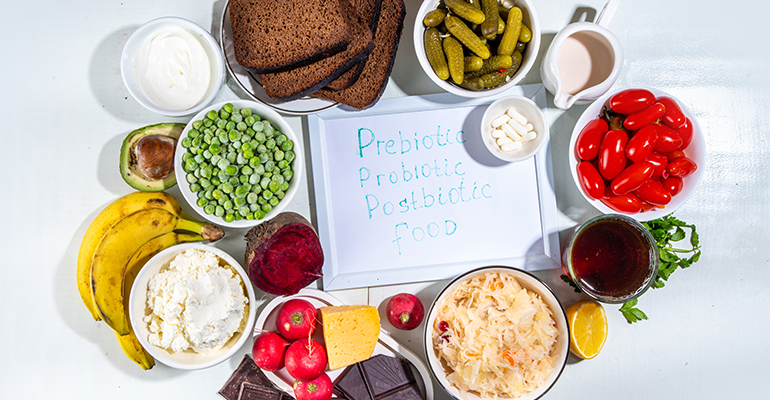
Alongside their advantageous production capabilities, postbiotics also have broad consumer appeal as they allow formulators to pack unique flavours and nutritional benefits into finished products, the researchers concluded.
The role of postbiotics in global F&B production
Innova Market Insights says postbiotics is recognised as a “relatively new biotic term”. The International Scientific Association for Probiotics and Prebiotics (ISAPP) defines postbiotics as “a preparation of inanimate microorganisms and/or their components that confers a health benefit on the host”.
After this definition was made in 2021, there was a flurry of research activity into postbiotics and corresponding product launches.
A 2024 study seeking to map the trend identified China, Poland, Italy, Iran, and India as the countries conducting the most research into postbiotics. However, despite growing awareness of the ingredient, the researchers concluded: “The ever-growing number of reviews regarding postbiotics is perhaps disproportionate to the actual original research in the field.”
Postbiotics have traditionally been launched on the food supplements market, which is expected to receive investment growth of 8.9%, reaching up to $308 billion (€260 billion) by 2028. However, they are now being tipped as a candidate for functional food launches.
“The most promising advances in gut health ingredients, as well as the future of functional F&B, specifically revolve around postbiotics – which are considered the next frontier in this field,” Vaughn DuBow, senior director of product portfolio marketing in health and wellness at ADM, told Ingredients Network.
Postbiotics’ robust nature means manufacturers can incorporate them into various applications, including gummies, snack packs, drinkable yoghurts, carbonated soft drinks, and ready-to-drink teas.
“These convenient and functional foods align with consumers’ various life stages and unique lifestyles,” said DuBow.
Could postbiotics surpass pre- and probiotics?
A 2024 study states that, compared with their more conventional counterparts prebiotics and probiotics, postbiotics have higher targeting and absorption capabilities, as well as a longer shelf life.
Research published in August supports the advantageous strain activity and stability that postbiotics demonstrate. Unlike probiotics, they do not contain live microorganisms. This enables them to withstand tough processing conditions, such as high heat, which is common in many food formulations.
Lactobacillus postbiotics are used to create many common products. However, 2025 research found that postbiotics can be derived from other strains, such as yeasts and fungi, indicating a promising area for new development.
Also in 2025, food nutrition researchers from India’s University of Agriculture and Technology and the Institute of Agricultural Sciences at Banaras Hindu University investigated how manufacturers can bridge the postbiotics gap to real-world production applications.
They found that postbiotics can support gut barrier functioning, immune modulation, metabolic regulation, and brain-gut signalling, showing promise for manufacturers seeking to formulate for the gut-brain axis.
Despite their potential, however, the growing body of research into postbiotics highlights gaps and areas for improvement, including a lack of clinical data and safety evaluations, indicating that a deeper understanding is needed to gauge the effectiveness of postbiotics.
For instance, in the current production environment, core challenges exist in identifying bioactives, securing clinical validation, and regulation.
To ensure consistent and reliable real-world postbiotics applications, the researchers recommended that future studies analyse how to improve industrial scalability, optimise production protocols, and develop robust safety and efficacy standards.
Postbiotics’ role in improving health and wellness
Consumers are increasingly seeking solutions to support their gut and digestive health, as well as other key aspects of their overall wellbeing.
And shoppers are now taking notice. In an October 2024 survey, ADM found that in the US, 89% of respondents said they were open to trying postbiotics based on their perceived health benefits.
According to ADM’s Global Ingredients, Flavours, and Colour Associations 2025 report, relaxation/sleep, digestion, and immune function are among the top areas of wellness that consumers wish to proactively improve.
“The industry’s growing body of evidence has revealed the microbiome’s profound role not only in gut and digestive health, but also in connection to mood regulation, sleep support, weight management, immune support, skin health, muscle health, and more,” DuBow added.
According to Innova’s latest global postbiotics research, clean labels and sustainable sourcing appeal to consumers’ calls for products that support both individuals’ and planetary health.
Brands that position postbiotic formulations with claims related to immunity and holistic wellbeing also capture consumers’ attention. Areas for new product development (NPD) are expected to focus on supporting digestion and helping consumers manage their weight

Get more of our news on Google
Set Ingredients Network as a 'Preferred Source' to get quicker access to the news you value.
Related news

M&S launches own-brand pet food range
11 Sep 2026
UK retailer Marks & Spencer has launched its own-brand pet food line Paws & Pals – a well-timed and strategic move that will appeal to loyal shoppers, says a marketing expert.
Read more
Do the US dietary guidelines put UPFs under pressure?
10 Sep 2026
Will the US dietary guidelines change the way Americans eat, swapping ultra-processed foods for whole foods? We asked Dr Barry Popkin, renowned nutrition and obesity researcher.
Read more
Food fraud costs UK economy £2bn each year
9 Sep 2026
Food fraud is costing the UK economy up to £2 billion (€2.3 billion) every year although the food sector is more “resilient” than others, according to a recent study.
Read more
Health and wellness engagement matures across Middle East and Africa
4 Sep 2026
Many consumers in the Middle East and Africa are now proactively engaged in health and wellness, looking to integrate better habits and products into their daily lives, say experts.
Read more
Kellogg accelerates work to remove artificial colours from all US cereals
3 Sep 2026
WK Kellogg has announced an accelerated timeline to eliminate all artificial colours and the chemical preservative, BHT, across its full US portfolio of cereals and cereal packaging.
Read more
Skimpflation: An ‘unfair’ and risky approach to keeping prices low
2 Sep 2026
Consumers see skimpflation – reducing the quality of ingredients due to rising costs – as more unfair than shrinkflation, making it a risky strategy according to recent research.
Read more
Royal Canin launches ‘freshly-cooked’ therapeutic dog food
1 Sep 2026
Mars-owned Royal Canin has moved into the therapeutic diet sector with the launch of its Fresh Veterinary Diets range for dogs with health conditions. We asked a veterinary nutritionist for her opinion.
Read more
NielsenIQ’s EU barometer shows Britain leading in grocery inflation
31 Aug 2026
Britain was the only country to record grocery inflation above 2%, according to NielsenIQ data that compared Europe’s five biggest grocery markets from February to May 2026.
Read more
‘Urgent gaps’ in achieving 2030 food system goals
27 Aug 2026
Global food systems are failing to meet 2030 targets across indicators including health, environment, and resilience, according to a report co-authored by the Food and Agriculture Organisation (FAO).
Read more
Seven-Eleven uses microbial testing tech to extend katsudon shelf life
26 Aug 2026
Japanese retail company Seven-Eleven has improved its factory’s microbial environment to keep comfort-food staple, katsudon, fresher for longer.
Read more