
Ingredients Categories
Finished Products
Finished Food Categories
- Bakery
- Beverages / Juices
- Cereal and grain products
- Confectionery
- Cooking Fats & Oils
- Dairy
- Egg products
- Fruits & Vegetables
- Infant & Baby food
- Meat, Poultry & Fish
- Nuts & Seeds products
- Other Finished Food Categories
- Pet Food
- Plant-based foods
- Prepared foods
- Sauces & Seasonings
- Sweet & Savoury Spreads
Specialised Finished Products
- Bee products
- Biotic products
- Dietary supplements
- Energy drinks
- Functional beverages
- Functional confectionery
- Functional food
- Functional powders
- Meal replacement products
- Nutricosmetics
- Other Specialised Finished Products
- Pet Dietary Supplements
- Pharma and OTC products
- Protein products
- Sugar replacers / Sweeteners
Health & Wellness Areas
Delivery Formats
Operations & Services
- 3D printing
- Analysis/ Testing
- Auditing & certifications
- Blending & mixing
- Bottling
- Certification
- Clinical trials
- Co-packing
- Coating
- Consulting
- Contract manufacturing
- Drying
- Electrospinning
- Encapsulating
- Enzymatic processing
- Extracting
- Extrusion
- Fat structuring
- Fermentation
- Filling
- Flavour development
- Freeze drying
- Granulating/ grinding/ milling / mixing
- High-pressure processing
- Labelling
- Other Operations & Services
- Packaging
- Packet filling
- Pasturising
- Quality assurance
- Saccharification
- Shear cell processing
- Spray drying
- Sterilisation
- Storage & Logistics
- Tabletting
- Toasting / roasting
- Ultra-high temperature processing
News
Despite pushes for alternatives, plastic packaging to remain a future solution
Katja Knox, Editorial Account Manager 21 Mar 2022
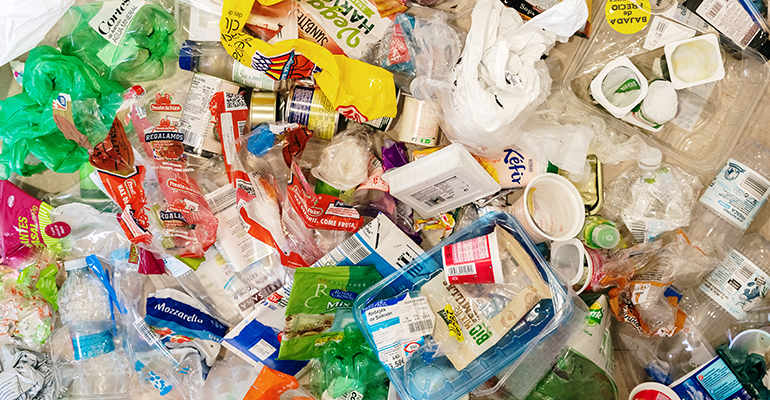
As governments move to reduce the use of plastic (both single-use and packaging) through legislation and consumers push for fewer options that harm the environment, companies have progressively moved away from this versatile, flexible packaging option — until the Covid-19 pandemic.
The disposable nature of plastic and its flexibility to wrap individual portions positioned this material as both a convenient and a safe packaging material. A Bloomberg article from early 2020 noted that fast-food chains like Starbucks revised their policies on customers bringing reusable cups. The company instead opted to take precautions against the virus and use disposable alternatives. Similarly, the intensification of home delivery purchases increased the use of mostly non-renewable food packaging.
Consumers still like plastic packaging
In a study published in the Wiley Public Health Emergency Collection journal, researchers found “a clear decline in support for tighter regulations or bans on single‐use plastics, along with an increase in consumers’ willingness to pay for biodegradable alternatives.” These findings suggest that plastic has once again found a favourable reception among consumers and that it will be difficult to eradicate its use through legislation. At the same time, it also presents an opportunity for innovative companies looking to create plastic alternatives that can compete with this controversial packaging option.
Prior to the pandemic, the BBC reported that Coca-Cola took a stance to say that plastic bottles were not going to be eradicated from its portfolio because consumers still liked to use them. Nevertheless, the company has still looked for more sustainable alternatives, including introducing bottles made from recycled plastic in early 2021 and more recently saying it will strive globally to make 25% of its packaging reusable by 2030.
The search for alternative packaging continues
Even with the pandemic pumping the breaks on the increase in plastic packaging alternatives, there remains a concerted effort to find alternatives. One option that is getting a second look is glass. This retro packaging has reappeared in a big way in recent years. When the French-American brand Yoplait launched its Oui French-style yoghurt in 2017, the company chose to do so in glass jars, which are the same packaging that the yoghurt is cultured in. The American soup stock company College Inn uses glass containers for some of its higher-end stocks and broths.
Other companies have turned to aluminium as an alternative to plastic. In 2019 PepsiCo announced it would begin bottling its Aquafina water in aluminium cans. That same year, Coca-Cola and Vita Coco said they would package their Dasani and Ever&Ever brand waters in aluminum.
Recently, Kraft Heinz, the third largest food-and-beverage company in North America, agreed to set a goal to reduce its total use of virgin plastic following the filing of a shareholder proposal spearheaded by As You Sow. The shareholder advocacy nonprofit similarly made headway with Keurig Dr Pepper, Mondelez International and PepsiCo, all of which agreed to curtail their use of virgin plastic in packaging. Keurig Dr. Pepper agreed to reduce its use of this material in brand packaging by 20% and Mondelez agreed to a 5% reduction — all by 2025. PepsiCo agreed to a 20% cut by 2030.
To help achieve this collective goal of developing sustainable packaging options, there are also scientific breakthroughs on the horizon. The French chemistry firm Carbios discovered an enzyme that can break down PET plastic into food-grade material in a matter of hours. In 2020, it partnered with PepsiCo, Nestlé and Suntory to commercialize its technology. In 2021, the company revealed its first enzymatically-recycled bottles.

Get more of our news on Google
Set Ingredients Network as a 'Preferred Source' to get quicker access to the news you value.
Related news

Do the US dietary guidelines put UPFs under pressure?
10 Sep 2026
Will the US dietary guidelines change the way Americans eat, swapping ultra-processed foods for whole foods? We asked Dr Barry Popkin, renowned nutrition and obesity researcher.
Read more
Food fraud costs UK economy £2bn each year
9 Sep 2026
Food fraud is costing the UK economy up to £2 billion (€2.3 billion) every year although the food sector is more “resilient” than others, according to a recent study.
Read more
Kellogg accelerates work to remove artificial colours from all US cereals
3 Sep 2026
WK Kellogg has announced an accelerated timeline to eliminate all artificial colours and the chemical preservative, BHT, across its full US portfolio of cereals and cereal packaging.
Read more
Skimpflation: An ‘unfair’ and risky approach to keeping prices low
2 Sep 2026
Consumers see skimpflation – reducing the quality of ingredients due to rising costs – as more unfair than shrinkflation, making it a risky strategy according to recent research.
Read more
‘Urgent gaps’ in achieving 2030 food system goals
27 Aug 2026
Global food systems are failing to meet 2030 targets across indicators including health, environment, and resilience, according to a report co-authored by the Food and Agriculture Organisation (FAO).
Read more
Seven-Eleven uses microbial testing tech to extend katsudon shelf life
26 Aug 2026
Japanese retail company Seven-Eleven has improved its factory’s microbial environment to keep comfort-food staple, katsudon, fresher for longer.
Read more
Global demand for instant noodles continues to rise
24 Aug 2026
Global demand for instant noodles reached 124.21 billion servings last year, representing a 0.7% year-on-year increase – or 900 million extra servings.
Read more
Popular barbecue staples experience sharp price increases
19 Aug 2026
The typical cost of US shoppers’ barbecue baskets has risen by 12% over the past year – the fastest annual rise in a decade, figures from The Economist show.
Read more
Hot NPD: Nissin launches first cold-water Cup Noodles
18 Aug 2026
Nissin is taking one of Japan’s most iconic instant meals in a completely new direction with the launch of the first cold water-only Cup Noodles in the brand’s 55-year history.
Read more
Savoury protein snacks shake up the on-the-go market
10 Aug 2026
Sweet flavours have dominated the high-protein snack category but savoury snacks, such as cheese bars and meat sticks, can appeal to health-conscious consumers.
Read more