
Ingredients Categories
Finished Products
Finished Food Categories
- Bakery
- Beverages / Juices
- Cereal and grain products
- Confectionery
- Cooking Fats & Oils
- Dairy
- Egg products
- Fruits & Vegetables
- Infant & Baby food
- Meat, Poultry & Fish
- Nuts & Seeds products
- Other Finished Food Categories
- Pet Food
- Plant-based foods
- Prepared foods
- Sauces & Seasonings
- Sweet & Savoury Spreads
Specialised Finished Products
- Bee products
- Biotic products
- Dietary supplements
- Energy drinks
- Functional beverages
- Functional confectionery
- Functional food
- Functional powders
- Meal replacement products
- Nutricosmetics
- Other Specialised Finished Products
- Pet Dietary Supplements
- Pharma and OTC products
- Protein products
- Sugar replacers / Sweeteners
Health & Wellness Areas
Delivery Formats
Operations & Services
- 3D printing
- Analysis/ Testing
- Auditing & certifications
- Blending & mixing
- Bottling
- Certification
- Clinical trials
- Co-packing
- Coating
- Consulting
- Contract manufacturing
- Drying
- Electrospinning
- Encapsulating
- Enzymatic processing
- Extracting
- Extrusion
- Fat structuring
- Fermentation
- Filling
- Flavour development
- Freeze drying
- Granulating/ grinding/ milling / mixing
- High-pressure processing
- Labelling
- Other Operations & Services
- Packaging
- Packet filling
- Pasturising
- Quality assurance
- Saccharification
- Shear cell processing
- Spray drying
- Sterilisation
- Storage & Logistics
- Tabletting
- Toasting / roasting
- Ultra-high temperature processing
News
EFSA approve roasted and popped water lily seeds
28 Sep 2022
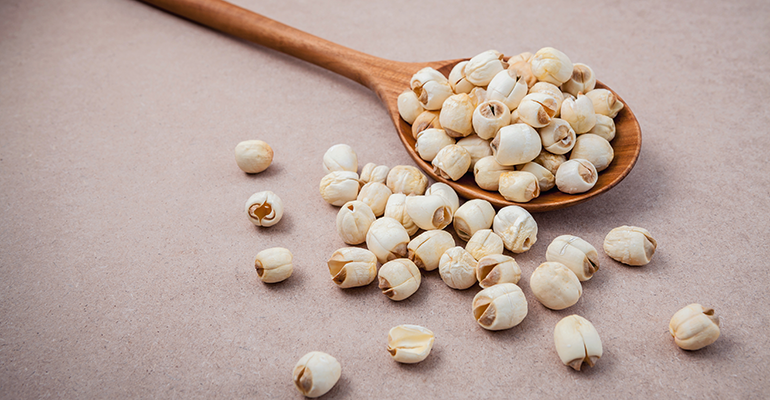
The European Food Safety Authority (EFSA) recently granted authorisation to Zenko Superfoods to place roasted and popped kernels from the seeds of prickly water lily plants on the market, paving the way for more innovation with this ingredient.
Zenko Superfoods, Singapore-based healthy snack company, has successfully received authorisation from EFSA to trade its roasted and popped kernels from the seeds of Euryale ferox Salisb., commonly known as prickly water lily, as a traditional food from a third country (TF), in line with Article 14 of Regulation (EU) 2015/2283. The decision, which was published by the European Commission on 18 July 2022, will allow for the sale of the roasted and popped kernels as a snack in the European Union (EU).
A healthier alternative to popcorn
The product, branded Water Lily Pops, is a non-GMO, gluten-free, plant-based snack made by roasting and popping the kernels of the plant and adding a selection of natural seasonings for flavour. The Water Lily Pops are available in four flavour varieties: Himalayan pink salt, spicy, cheddar cheese, and original.
The plant that the seeds are sourced from, a prickly waterlily, is an aquatic crop which grows in stagnant water bodies such as ponds and lakes and originates from the Himalayan foothills in India. The seeds of the flower are harvested, dried, roasted using refined olive oil or olive pomace oil, and popped, in Bihar, the northeast region of India, to produce a light and crunchy, nutritious snack, the company says.
Research shows that the water lily plant has been cultivated in India and China for more than 3,000 years, where seeds were eaten raw before fully ripe or roasted; or boiled when mature.
EFSA approved specifications for use
Appealing to the healthy snack market, the seeds can be compared to popcorn yet contain 50% less fat and 20% fewer calories, the company claims. According to Zenko’s product description, as per its EFSA application, makhana, the common name for the plant, should be “soft and chewy, little white puffy balls, just like popcorn, and crunchier after the pop roasting.”
Following this approval, Zenko will be authorised to market its Water Lily Pops on the EU market with a recommended serving size of 28 g and a maximum daily intake of four servings (112 g/day).
Catering for a growing health and environment conscious consumer base
In line with the ‘better for you’ trend that has rapidly grown in popularity over recent years, a growing number of brands are already experimenting with water lily seeds and currently have products on the both the European and global food markets.
One vegan snack brand, Oh Lily! is producing cheesy vegan popped water lily seeds which are dusted with nutritional yeast and black pepper, for sale in the German market. The naturally gluten-free, zero-sugar snack is described by the company as an “innovative, healthy, vegan snacking experience” as well as a good source of protein, iron, magnesium and amino acids and a source of fibre.
Similarly in the US market, where the availability, authenticity and variety of Indian flavours is a growing trend, the Tikka Masala Water Lily Pops from New-York based natural food company, Taali Foods, are one of several new lily seed products available.
Containing six grams of protein per bag, no artificial ingredients or flavours and no gluten, soy, dairy, corn, or trans fats, the product is suitable and catered towards the ever-growing contingent of vegan, health-conscious consumers.
This recent approval calls into question the role of EFSA
The availability of water lily seeds in the EU prior to their official approval as a novel food raises questions over the weight that EFSA opinions carry in the market.
According to Dr Mark Tallon, managing partner of Legal Foods, a European food law firm specialising in regulated products, the novel food process falls short in several regards including the long wait times of the approval process and lack of uniform enforcement across markets.
“A reconsideration of the [novel food] legislation being fit for purpose is needed, based on what is happening in the real world, and not the construct of rules and regulations at an EU level which are, for many, ignored,” Tallon said.
It is worth noting, however, that the role of EFSA is purely to give scientific opinions – requested by the European Institutions or on its own initiative - based on which the Commission can make a proposal for legislation.
“It is of the responsibility of food business operators to comply with the relevant EU and national legislation, and it is for Member States to enforce the legislation,” an European Commission spokesperson told Ingredient’s Network.

Get more of our news on Google
Set Ingredients Network as a 'Preferred Source' to get quicker access to the news you value.
Related news

Kellogg accelerates work to remove artificial colours from all US cereals
3 Sep 2026
WK Kellogg has announced an accelerated timeline to eliminate all artificial colours and the chemical preservative, BHT, across its full US portfolio of cereals and cereal packaging.
Read more
Skimpflation: An ‘unfair’ and risky approach to keeping prices low
2 Sep 2026
Consumers see skimpflation – reducing the quality of ingredients due to rising costs – as more unfair than shrinkflation, making it a risky strategy according to recent research.
Read more
‘Urgent gaps’ in achieving 2030 food system goals
27 Aug 2026
Global food systems are failing to meet 2030 targets across indicators including health, environment, and resilience, according to a report co-authored by the Food and Agriculture Organisation (FAO).
Read more
Seven-Eleven uses microbial testing tech to extend katsudon shelf life
26 Aug 2026
Japanese retail company Seven-Eleven has improved its factory’s microbial environment to keep comfort-food staple, katsudon, fresher for longer.
Read more
Chimac’s fusion sauces bring Korean flavours to Europe
25 Aug 2026
Irish sauce brand Chimac is tapping into Korea’s culinary traditions, bringing its flavours and products to European consumers who want a taste of K-food.
Read more
Global demand for instant noodles continues to rise
24 Aug 2026
Global demand for instant noodles reached 124.21 billion servings last year, representing a 0.7% year-on-year increase – or 900 million extra servings.
Read more
China beverages: Is herbal innovation the future?
20 Aug 2026
Herbal and botanical innovation in China's drinks market continues to grow, with ingredients like astragalus root, ginger, and ginseng in the spotlight – and focus shifting far beyond refreshment.
Read more
Popular barbecue staples experience sharp price increases
19 Aug 2026
The typical cost of US shoppers’ barbecue baskets has risen by 12% over the past year – the fastest annual rise in a decade, figures from The Economist show.
Read more
Hot NPD: Nissin launches first cold-water Cup Noodles
18 Aug 2026
Nissin is taking one of Japan’s most iconic instant meals in a completely new direction with the launch of the first cold water-only Cup Noodles in the brand’s 55-year history.
Read more
Beyond 'nice to have': A spotlight on US functional beverages
12 Aug 2026
Functional beverage interest in the US is gaining important ground as consumers now expect function rather than see it as "nice to have", and there are clear market gaps for growth, according to Spate.
Read more