
Ingredients Categories
Finished Products
Finished Food Categories
- Bakery
- Beverages / Juices
- Cereal and grain products
- Confectionery
- Cooking Fats & Oils
- Dairy
- Egg products
- Fruits & Vegetables
- Infant & Baby food
- Meat, Poultry & Fish
- Nuts & Seeds products
- Other Finished Food Categories
- Pet Food
- Plant-based foods
- Prepared foods
- Sauces & Seasonings
- Sweet & Savoury Spreads
Specialised Finished Products
- Bee products
- Biotic products
- Dietary supplements
- Energy drinks
- Functional beverages
- Functional confectionery
- Functional food
- Functional powders
- Meal replacement products
- Nutricosmetics
- Other Specialised Finished Products
- Pet Dietary Supplements
- Pharma and OTC products
- Protein products
- Sugar replacers / Sweeteners
Health & Wellness Areas
Delivery Formats
Operations & Services
- 3D printing
- Analysis/ Testing
- Auditing & certifications
- Blending & mixing
- Bottling
- Certification
- Clinical trials
- Co-packing
- Coating
- Consulting
- Contract manufacturing
- Drying
- Electrospinning
- Encapsulating
- Enzymatic processing
- Extracting
- Extrusion
- Fat structuring
- Fermentation
- Filling
- Flavour development
- Freeze drying
- Granulating/ grinding/ milling / mixing
- High-pressure processing
- Labelling
- Other Operations & Services
- Packaging
- Packet filling
- Pasturising
- Quality assurance
- Saccharification
- Shear cell processing
- Spray drying
- Sterilisation
- Storage & Logistics
- Tabletting
- Toasting / roasting
- Ultra-high temperature processing
News
EU lowers maximum levels for dioxins and dioxin-like PCBs in food
21 Nov 2022
The European Commission (EC) has moved to lower maximum levels for dioxins and dioxin-like polychlorinated biphenyls (PCBs) found in foodstuffs produced in or imported into the EU.
In legislation that enters into force this week, the revised levels are in response to increased levels of the toxic chemicals found in food and feed that increase the risks to animal and human health.

“It is appropriate to establish maximum levels for dioxins and for the sum of dioxins and dioxin-like PCBs for foodstuffs not yet covered by Union legislation and for which occurrence data have been recently made available in the Authority’s database,” the EC stated.
The updated legislation sets maximum levels for products not previously covered such as meat and meat products from all bovine and caprine animals, horses, rabbits, wild boar, wild game birds, and venison.
 © AdobeStock/panimoni
The EC also lowered maximum levels for dioxins and the sum of dioxins and dioxin-like PCBs in milk and dairy products taking available occurrence data into account and considerations for vulnerable population groups.
Additionally, maximum levels for crustaceans will now apply to the muscle meat of the abdomen. Further amendments extend to limits for milk and dairy products, which are reduced on the basis of the occurrence data.
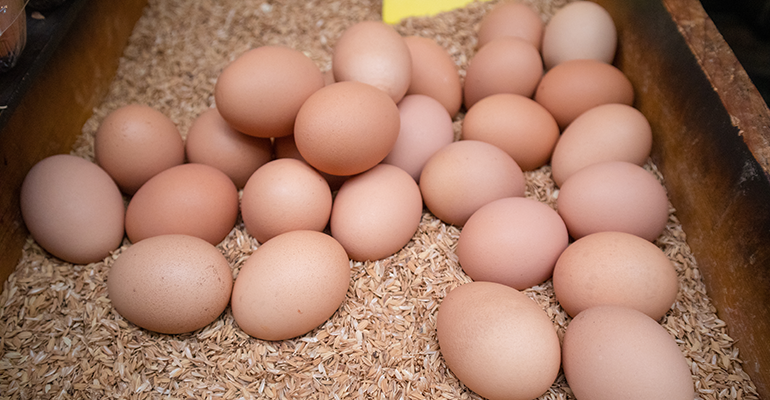
The existing maximum level for hen eggs was also extended to all poultry eggs with the exception of goose eggs.
EFSA opinion taken into account
Determination of final levels have been guided by a 2018 scientific opinion by the European Food Safety Authority (EFSA) that established a tolerable weekly intake of two picograms toxic equivalence (TEQ) per kilogram body weight per week for the sum of dioxins and dioxin-like PCBs.
EFSA stated that estimates of chronic human dietary exposure to dioxins and dioxin-like PCBs based on available data indicated a “significant exceedance” of the tolerable weekly intake for populations of all age groups.
In its scientific opinion, EFSA also highlighted the impending review of current WHO2005-TEFs (Toxic Equivalence Factors) set by the World Health Organisation (WHO).
In harmonizing TEFs for dioxin and dioxin-like compounds at an international level, recommendations can therefore be given to national regulatory authorities.
The review will take into account new in vivo and in vitro data, in particular that of PCB-126 and is set to be completed in 2023.
The Commission’s amendment will apply from 1 January 2023 and also covers products with a long shelf life that were lawfully placed on the market before the date of application.
Under the new legislation, the products can remain on the market until their date of minimum durability or use-by-date.
 © AdobeStock/Marko
Dioxin & PCB levels in eggs exceed limits
The extended maximum level for most poultry eggs coincided with a study that found levels of dioxins and polychlorinated biphenyls (PCBs) in free-range eggs exceeded EU regulatory food limits.
Data from Asia, Africa, Europe, and North and South Africa revealed the highest dioxin-contaminated eggs were found near an e-waste site in Agbogbloshie, Ghana.
The Czech-based team said a child eating one egg from the site would ingest more dioxins than the EFSA considered a “tolerable intake” for five years.

Get more of our news on Google
Set Ingredients Network as a 'Preferred Source' to get quicker access to the news you value.
Related news

Kellogg accelerates work to remove artificial colours from all US cereals
3 Sep 2026
WK Kellogg has announced an accelerated timeline to eliminate all artificial colours and the chemical preservative, BHT, across its full US portfolio of cereals and cereal packaging.
Read more
‘Urgent gaps’ in achieving 2030 food system goals
27 Aug 2026
Global food systems are failing to meet 2030 targets across indicators including health, environment, and resilience, according to a report co-authored by the Food and Agriculture Organisation (FAO).
Read more
Chimac’s fusion sauces bring Korean flavours to Europe
25 Aug 2026
Irish sauce brand Chimac is tapping into Korea’s culinary traditions, bringing its flavours and products to European consumers who want a taste of K-food.
Read more
Savoury protein snacks shake up the on-the-go market
10 Aug 2026
Sweet flavours have dominated the high-protein snack category but savoury snacks, such as cheese bars and meat sticks, can appeal to health-conscious consumers.
Read more
Nestlé invests in regeneratively farmed wheat for KitKat
5 Aug 2026
Nestlé will pay a premium for Wildfarmed’s regeneratively farmed wheat but the CPG remains reticent to promote the move on packs of its KitKat bars.
Read more
How Secon Taste is putting upcycled snacks on shelves
4 Aug 2026
Hungarian zero-waste startup Secon Taste is turning surplus food into upcycled snacks such as fibre-packed granola, instant porridge, and a circular coffee-tasting box.
Read more
Codex sets global thresholds for ‘may contain’ labels
3 Aug 2026
Codex Alimentarius has adopted its first global guidance on when to use “may contain” allergen warnings, setting thresholds intended to stop the label being used as blanket legal cover.
Read more
EU sets maximum MOAH levels to protect human health
28 Jul 2026
The EU will adopt maximum levels for mineral oil aromatic hydrocarbons (MOAH) in food to protect human health. What do manufacturers need to know?
Read more
UK publishes guidance on SPS food trade agreement with EU
27 Jul 2026
The UK government has shared guidance on how food businesses can prepare for its upcoming Sanitary and Phytosanitary (SPS) agreement with the EU.
Read more
Industry hits back at UK’s proposed healthy food rules
24 Jul 2026
Food brands, including Haribo, have hit out against the UK’s proposed nutrient profiling model, which places a new focus on free sugars that are added during manufacturing.
Read more