
Ingredients Categories
Finished Products
Finished Food Categories
- Bakery
- Beverages / Juices
- Cereal and grain products
- Confectionery
- Cooking Fats & Oils
- Dairy
- Egg products
- Fruits & Vegetables
- Infant & Baby food
- Meat, Poultry & Fish
- Nuts & Seeds products
- Other Finished Food Categories
- Pet Food
- Plant-based foods
- Prepared foods
- Sauces & Seasonings
- Sweet & Savoury Spreads
Specialised Finished Products
- Bee products
- Biotic products
- Dietary supplements
- Energy drinks
- Functional beverages
- Functional confectionery
- Functional food
- Functional powders
- Meal replacement products
- Nutricosmetics
- Other Specialised Finished Products
- Pet Dietary Supplements
- Pharma and OTC products
- Protein products
- Sugar replacers / Sweeteners
Health & Wellness Areas
Delivery Formats
Operations & Services
- 3D printing
- Analysis/ Testing
- Auditing & certifications
- Blending & mixing
- Bottling
- Certification
- Clinical trials
- Co-packing
- Coating
- Consulting
- Contract manufacturing
- Drying
- Electrospinning
- Encapsulating
- Enzymatic processing
- Extracting
- Extrusion
- Fat structuring
- Fermentation
- Filling
- Flavour development
- Freeze drying
- Granulating/ grinding/ milling / mixing
- High-pressure processing
- Labelling
- Other Operations & Services
- Packaging
- Packet filling
- Pasturising
- Quality assurance
- Saccharification
- Shear cell processing
- Spray drying
- Sterilisation
- Storage & Logistics
- Tabletting
- Toasting / roasting
- Ultra-high temperature processing
News
Dog food brand shakes up sector with ‘human-quality’ meat
Natasha Spencer-Jolliffe, Freelance Journalist 17 Apr 2026UK pet food startup Years designs its premium meals based on a dog’s breed, life stage, and health, using wholefood recipes and clear plastic packaging.
“Years started with loss,” Tom O’Mara, online marketing manager at Years, told Ingredients Network. When Darren, the brand’s founder, lost his dog, Bracken, he reflected and realised he had never questioned what was in her bowl. He had trusted the big brands, trusted the marketing and not looked beyond the label.

“The deeper he dug into the pet food industry, the worse it got,” O’Mara said.
The inspiration behind Years came after Darren saw how fresh and raw brands were charging premium prices for low-grade ingredients.
“Labels like ‘chicken mince’ designed to sound good while hiding the truth,” said O’Mara. “Most of the industry was built around marketing, not nutrition.”
That frustration became the startup’s mission: to provide an alternative to dog food buyers and their pets. Darren teamed up with Ivan, and together they brought in Luke, a chef who had developed food for brands like household names M&S and Charlie Bigham's, along with a canine nutritionist.
“The brief was simple: create food that genuinely puts dogs' health first. Real, wholefood ingredients. No cheap fillers. No misleading claims,” said O’Mara.
Increasingly, pet owners want foods that support their pets’ health, and consider the nutritional profile of the products available. Protein is a popular pet food product claim, with pet owners prioritising functional health in their purchases.
According to Innova Market Insights, gut health is the leading claim, followed by microbiome health. Between 2024 and 2025, brands launched 63 pet food patents for gut health.
Using ‘human quality’ meat for dogs
Years’ recipes are made with fresh wholefood ingredients and named, ‘human quality meat’ such as salmon fillet or forequarter steak. Describing its recipes as “nutritionally-complete”, O’Mara added these are “ingredients you would eat yourself”. The ingredients do not contain derivatives or vague ‘animal protein’, and there are no preservatives or additives.
The recipes also contain vegetables, chosen for specific functional benefits. The brand formulates with fibre for digestion, vitamins for coat health and seek to provide natural energy support. Each ingredient is listed on Years’ meals, along with the percentages it contains, in an effort to provide full transparency to consumers.
“Everything is formulated to be complete and balanced, so owners can save money without needing supplements,” said O’Mara. Years’ meals are freshly steamed inside of the tray, as a way to lock in all of the nutrients. This approach means consumers can open the pack and see exactly what their dog is eating.
Years is built for dog owners who care about what goes into their dog's bowl. “People who read labels, question ingredients and refuse to settle for heavily processed food just because that's what the pet aisle has always offered,” said O’Mara.
The brand aims to give those owners fresh, premium dog food made with named ingredients, and pre-portioned meals to give their dog exactly what they need. “Good nutrition that's easy to access and easy to trust,” O’Mara added.
Factoring in footprint
Sustainability is a consideration at Years and features in its operations. “Years is one step closer to being carbon-free with over 300 solar panels helping power the creation of dog’s meals,” O’Mara said.
As it matures as a business, the brand is taking further sustainable steps, relating to responsible sourcing, tight production to minimise waste and packaging designed to do its job – protecting freshness and shelf life – without unnecessary excess.
“Packaging hasn't been solved overnight, but the business is actively working on more sustainable solutions as materials and technology improve,” O’Mara added.

Get more of our news on Google
Set Ingredients Network as a 'Preferred Source' to get quicker access to the news you value.
Related news

M&S launches own-brand pet food range
11 Sep 2026
UK retailer Marks & Spencer has launched its own-brand pet food line Paws & Pals – a well-timed and strategic move that will appeal to loyal shoppers, says a marketing expert.
Read more
Do the US dietary guidelines put UPFs under pressure?
10 Sep 2026
Will the US dietary guidelines change the way Americans eat, swapping ultra-processed foods for whole foods? We asked Dr Barry Popkin, renowned nutrition and obesity researcher.
Read more
Food fraud costs UK economy £2bn each year
9 Sep 2026
Food fraud is costing the UK economy up to £2 billion (€2.3 billion) every year although the food sector is more “resilient” than others, according to a recent study.
Read more
Kellogg accelerates work to remove artificial colours from all US cereals
3 Sep 2026
WK Kellogg has announced an accelerated timeline to eliminate all artificial colours and the chemical preservative, BHT, across its full US portfolio of cereals and cereal packaging.
Read more
‘Urgent gaps’ in achieving 2030 food system goals
27 Aug 2026
Global food systems are failing to meet 2030 targets across indicators including health, environment, and resilience, according to a report co-authored by the Food and Agriculture Organisation (FAO).
Read more
Chimac’s fusion sauces bring Korean flavours to Europe
25 Aug 2026
Irish sauce brand Chimac is tapping into Korea’s culinary traditions, bringing its flavours and products to European consumers who want a taste of K-food.
Read more
Savoury protein snacks shake up the on-the-go market
10 Aug 2026
Sweet flavours have dominated the high-protein snack category but savoury snacks, such as cheese bars and meat sticks, can appeal to health-conscious consumers.
Read more
Nestlé invests in regeneratively farmed wheat for KitKat
5 Aug 2026
Nestlé will pay a premium for Wildfarmed’s regeneratively farmed wheat but the CPG remains reticent to promote the move on packs of its KitKat bars.
Read more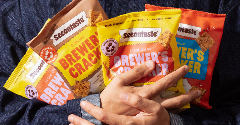
How Secon Taste is putting upcycled snacks on shelves
4 Aug 2026
Hungarian zero-waste startup Secon Taste is turning surplus food into upcycled snacks such as fibre-packed granola, instant porridge, and a circular coffee-tasting box.
Read more
Codex sets global thresholds for ‘may contain’ labels
3 Aug 2026
Codex Alimentarius has adopted its first global guidance on when to use “may contain” allergen warnings, setting thresholds intended to stop the label being used as blanket legal cover.
Read more